
UK Supreme Court grants Palestine Action appeal as hundreds arrested in London
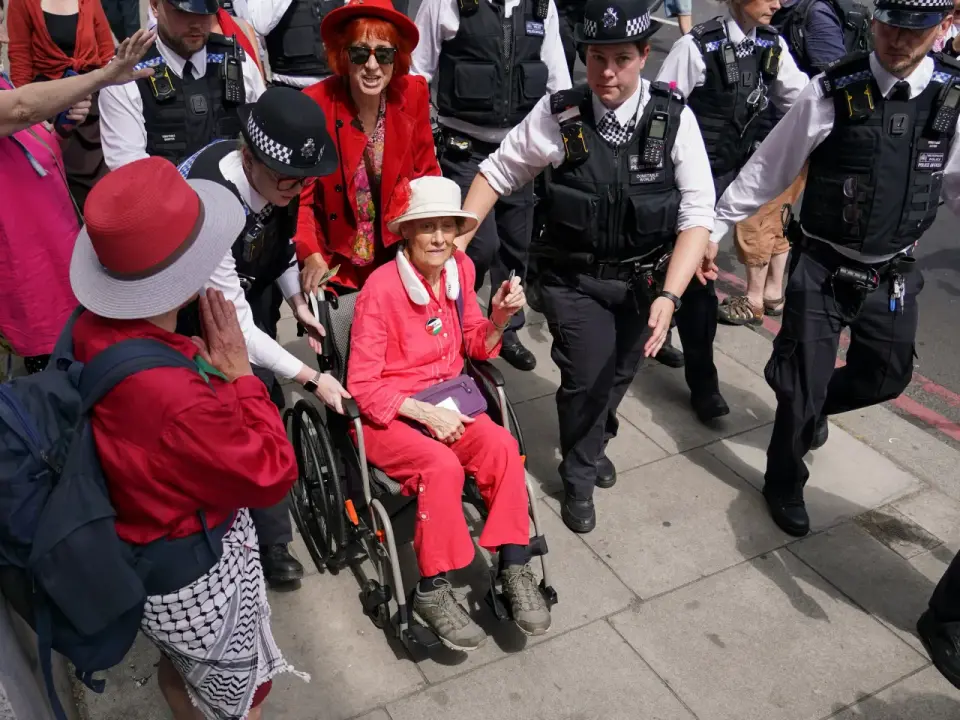
The UK Supreme Court has granted permission for Palestine Action co-founder Huda Ammori to appeal the group’s proscription as a terrorist organization, a decision that puts over 3,500 pending cases on hold. On July 30, 2026, police arrested 117 people outside Westminster Magistrates’ Court in London during a protest organized by Defend Our Juries. The demonstration, which included elderly participants and prominent figures like Sir Jonathan Porritt, aimed to challenge the legality of the ban. While the government maintains the ban is justified, civil rights groups and opposition politicians argue it violates free speech and assembly rights, with the Supreme Court hearing scheduled for the final quarter of 2026.
Key points
- The UK Supreme Court allowed Huda Ammori to appeal the Court of Appeal’s June 2026 ruling that upheld the proscription of Palestine Action, with the case to be heard between October and December 2026.
- Metropolitan Police arrested 117 individuals outside Westminster Magistrates’ Court on July 30, 2026, most for 'expressing support for a proscribed organization' under the Terrorism Act.
- Over 3,500 people have been arrested since the ban was imposed in July 2025, with more than 1,200 charged; no one has yet been convicted.
- Defend Our Juries organized the protest to safeguard the legal process, while critics accuse the government of using counter-terror laws to suppress dissent and shield Israel from consequences of its war in Gaza.
- The Green Party leader, Zack Polanski, demanded that Prime Minister Andy Burnham reverse the proscription, calling the crackdown a 'dystopian' attack on democracy.
Background
The proscription of Palestine Action was first imposed by the previous Labour government under Keir Starmer in July 2025 after activists broke into a Royal Air Force base to protest British military support for Israel’s offensive in Gaza. The High Court initially ruled the ban unlawful in February 2026, but the Court of Appeal reversed this in June 2026, deeming it a 'justified and proportionate' interference with freedom of expression. This latest Supreme Court decision comes amid broader tensions, including Burnham’s recent apology for Labour’s stance on Gaza and his authorization of US military strikes against Iran, which legal experts have described as illegal. Earlier in July, thousands marched in London demanding an arms embargo on Israel, highlighting the sustained public pressure on the UK government regarding the conflict.
How outlets are covering it
Al Jazeera and The Guardian emphasize the scale of the arrests and the civil liberties implications, noting that the Supreme Court’s decision leaves thousands of cases in limbo. AP News provides the broader context of the legal battle, highlighting that the Court of Appeal found the group had gone beyond civil disobedience by using violence. Middle East Eye focuses on the administrative 'chaos' in the court system, reporting that over 1,500 cases were listed in one day with contradictory notices sent to defendants, leading to confusion and criticism from lawyers like Tim Crosland. While all sources agree on the number of arrests (117) and the Supreme Court’s decision, they differ in emphasis: Al Jazeera and The Guardian highlight the political response from opposition figures, whereas Middle East Eye details the procedural failures and the impact on individual defendants, such as those unable to travel or work due to pending charges. The Guardian also notes the unusual five-judge panel in the Court of Appeal, underscoring the significance of the case.
Why it matters
This case represents a critical test of the UK’s counter-terrorism laws and their application to political protest. The outcome of the Supreme Court hearing could set a precedent for the balance between national security and freedom of expression in the UK. With over 3,500 people arrested and no convictions, the legal and social costs of the ban are significant. The decision also reflects the broader political shift under Prime Minister Andy Burnham, who has attempted to reframe Labour’s foreign policy but faces criticism for not taking concrete action to address the conflict in Gaza. The case may ultimately be taken to the European Court of Human Rights if the UK courts uphold the ban, potentially leading to international scrutiny of the UK’s approach to protest and free speech.
What to watch
The Supreme Court is expected to hear the appeal between October and December 2026. If the ban is upheld, Huda Ammori has pledged to take the case to the European Court of Human Rights. In the meantime, all pending cases related to Palestine Action support remain on hold. The government is expected to respond to calls from civil rights groups and opposition politicians to reverse the proscription or at least review the use of terrorism legislation against protest groups. The outcome of the Supreme Court case will likely influence future legal challenges and public discourse on the limits of free speech and assembly in the UK.
- Police arrest dozens at London rally supporting Palestine Action aljazeera.com
- Britain's ban on Palestine Action group to be considered by top court Reuters
- UK police arrests dozens at protest supporting banned group Palestine Action AP News
- Chaos at London court as over 1,500 Palestine Action cases listed in one day Middle East Eye
- Supreme court says Palestine Action co-founder can challenge ban on group The Guardian
Want the full story? Read the original reporting
Read on aljazeera.com