
Bukele's 2,000-Troop Surge to Haiti Escalates Gang War Amid Election Delay
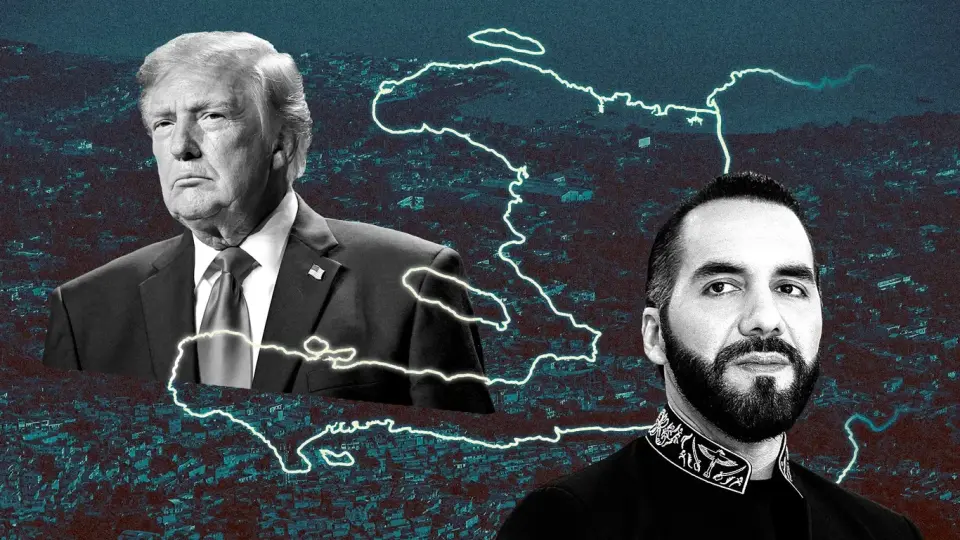
El Salvador is deploying up to 2,000 troops to Haiti to combat gang violence and locate four missing personnel, a move approved by President Trump. This escalation coincides with Haiti postponing its first presidential elections in a decade to 2027 due to ongoing instability.
Key points
- El Salvador announced the deployment of at least 2,000 troops to Haiti, a number sources say could double or triple, to fight gangs and recover four missing aviation technicians.
- President Nayib Bukele called President Trump on Tuesday to secure approval for the operation, with Trump reportedly telling him to 'do what you have to do.'
- Haiti’s electoral council postponed presidential elections until July 2027, marking the first vote in over a decade, due to unmanageable gang violence.
- The deployment follows an October 18 ambush in which four Salvadoran technicians were captured; local sources now doubt their recovery is possible.
- El Salvador is funding 90% of the operation's costs, with Bukele stating the mission is not an invasion but a fight against 'wicked' gangs.
Background
Haiti has lacked a president since the assassination of Jovenel Moise in 2021. The country has faced severe gang violence, resulting in over 5,700 deaths this year. Previous international efforts, including a UN-backed Gang Suppression Force (GSF) and a Kenyan-led mission, have struggled to restore stability. El Salvador’s Bukele previously gained international attention for his hardline crackdown on gangs in his own country.
How outlets are covering it
Axios emphasizes the political alignment between Bukele and the Trump administration, noting that while Bukele sought to act as a U.S. proxy, Secretary of State Marco Rubio preferred to keep the issue off the radar. Axios highlights that the U.S. denied requests for military equipment like drones, potentially leaving Colombia to act as an unofficial supplier. CNN focuses on the operational chaos, noting that the Salvadoran command structure is not yet established and that the troops are not staying at the main GSF base, raising concerns about coordination. The New York Times highlights the broader political consequence, framing the troop surge alongside the election postponement as evidence that Haiti remains ungovernable despite international intervention. While Axios and CNN agree on the scale of the deployment, they differ on the primary driver: Axios sees it as a political test for Bukele and Erik Prince, while CNN views it as a tactical wildcard in a fragmented security landscape.
Why it matters
The deployment represents a significant escalation in a region 700 miles from Florida, potentially stabilizing Haiti or increasing the death toll. It tests the viability of using non-state actors and allied governments as proxies for U.S. security interests in the hemisphere. The failure to hold elections in 2026 underscores the deepening crisis in Haitian governance and the limitations of current international security strategies.
What to watch
El Salvador may increase its troop presence in Haiti if the initial 2,000 are insufficient. The Salvadoran forces may join existing security groups for an extended anti-gang push if the missing technicians are not recovered. Haiti’s presidential elections are now scheduled for July 18, 2027, with a second round on October 4, 2027. The U.S. may continue to avoid direct involvement, relying on El Salvador and private contractors like Erik Prince’s Vectus Global to manage the situation.
- Scoop: Trump blesses El Salvador strongman's troop surge in Haiti Axios
- Analysis: El Salvador’s Nayib Bukele adds a wildcard to Haiti’s fractured security landscape CNN
- Bukele's gang offensive goes abroad as El Salvador rushes troops to Haiti Reuters
- El Salvador sends 2,000 troops to Haiti to rescue four missing soldiers BBC
- Haiti Postpones Elections as Gang Violence Runs Rampant The New York Times
Want the full story? Read the original reporting
Read on Axios