
Spain Train Crash Kills 69, Shifting Election Focus to Rail Safety
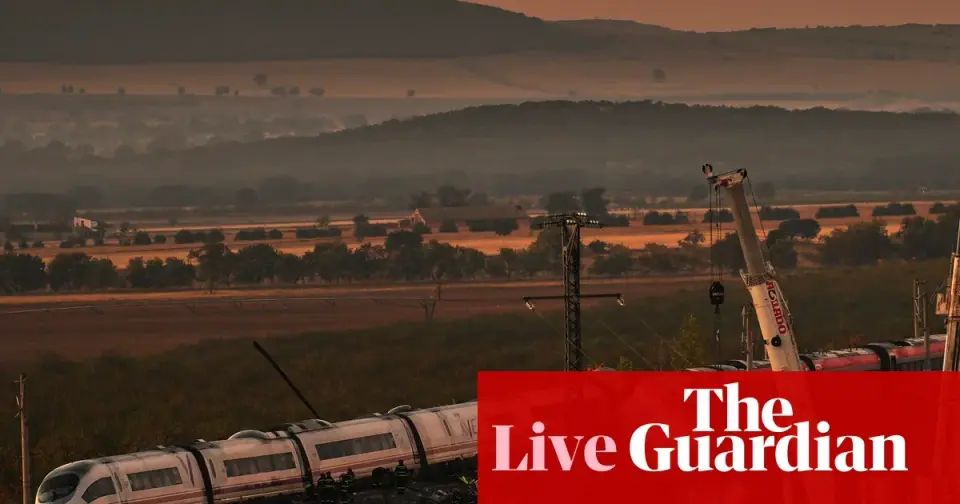
A high-speed train collision near Toledo, Spain, has killed at least 69 people, with 70 others missing. Prime Minister Pedro Sánchez acknowledged that public trust in the rail network is broken, while Transport Minister Óscar Puente rejected calls to resign. The disaster has abruptly shifted the focus of the upcoming November 29 snap election from housing policy to infrastructure safety and government competence.
Key points
- At least 69 people are confirmed dead, with 70 missing and 39 hospitalized; only 13 victims have been identified so far.
- The crash occurred when a moving Renfe train struck a stationary Iryo train near Toledo, reportedly due to a control center error.
- Prime Minister Pedro Sánchez stated that confidence in Spain's high-speed rail is broken, while Transport Minister Óscar Puente maintained confidence in the system and refused to resign.
- The incident has disrupted the campaign for the November 29 election, shifting focus from housing issues to rail safety and government accountability.
- Opposition parties, including the People's Party and Vox, are demanding the resignation of the transport minister and the prime minister.
Background
This is the second major rail disaster in Spain this year, following the January Adamuz crash that killed 46 people. The current incident has intensified scrutiny of the transition from the older LZB control system to the European ERTMS system, which is not fully operational on the Madrid-Seville line until early 2027. The crash occurred just weeks after Sánchez called a snap election to leverage public anger over the housing crisis, a strategy that has now been overshadowed by the rail tragedy.
How outlets are covering it
The Guardian and Al Jazeera both report on the political fallout, but emphasize different aspects. The Guardian focuses on the immediate human toll and the technical explanations provided by Transport Minister Óscar Puente, who blamed a human error by a 48-year-old controller and defended the safety of the system. Al Jazeera highlights the broader electoral implications, noting that the crash has shifted the campaign away from social issues like housing to infrastructure competence. Al Jazeera also details the aggressive rhetoric from far-right Vox leader Santiago Abascal, who called for Sánchez's removal, while the Guardian notes the more measured, though firm, demands from the People's Party leader Alberto Núñez Feijóo. Both sources agree that the incident has significantly damaged the government's standing ahead of the November 29 vote.
Why it matters
The crash has exposed deep-seated concerns about the safety and modernization of Spain's high-speed rail network, which is a key public service. It has also disrupted the political landscape, forcing the government to defend its record on infrastructure rather than its social agenda. The incident raises questions about the adequacy of current safety systems and the pace of technological upgrades, with potential long-term implications for public trust and policy decisions.
What to watch
Investigations into the cause of the crash are ongoing, with a focus on the control center's decision-making and the reliability of the LZB system. The government is evaluating whether to review other rail lines and improve safety mechanisms. The political fallout will likely continue to dominate the election campaign, with opposition parties pressing for accountability and the government attempting to restore public confidence in the rail network.
- Pedro Sánchez says people of 27 nationalities may be among those killed or injured in Spanish train crash – Europe live The Guardian
- Why Does Spain Keep Having Deadly Rail Accidents? WSJ
- Spain’s deadly train crash redraws electoral battle lines Al Jazeera
- Spain’s latest deadly train crash puts human error and systemic failure under scrutiny 10TV
- Spanish train was travelling at 160 kph when it smashed into second one, report finds Reuters
Want the full story? Read the original reporting
Read on The Guardian