
France Extends Curfews as US Republicans Frame Student Riots as Midterm Warning
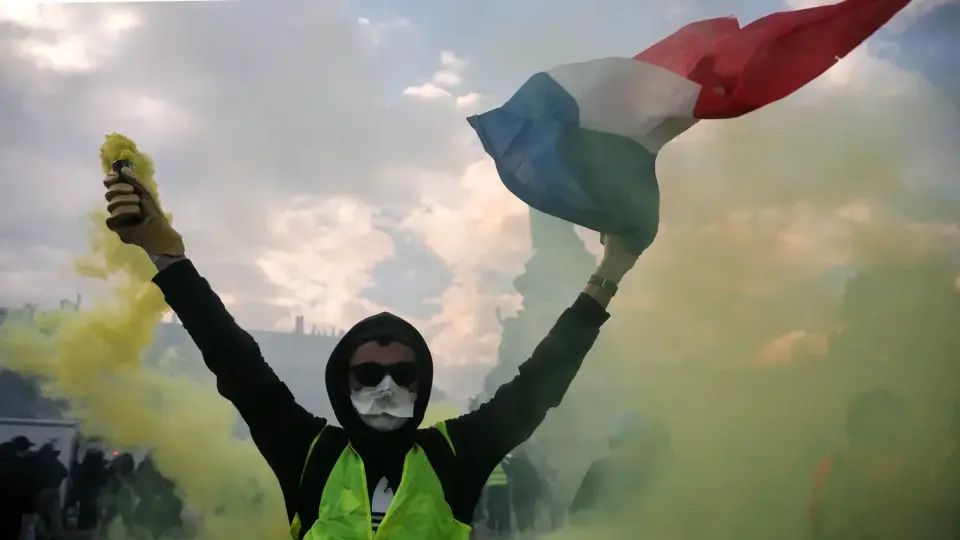
French authorities extended curfews in major cities after a calm night followed days of riots and looting, while US President Donald Trump and allies leveraged the unrest to attack Democrats ahead of midterms. The crisis, which began over education grievances, has escalated into nationwide violence, prompting a massive police deployment and military reinforcement for upcoming demonstrations. While US officials blame immigration, French leaders and analysts cite economic stagnation and poor public services as the primary drivers.
Key points
- Prime Minister Sébastien Lecornu confirmed that localized curfews in Paris, Marseille, and Lille helped restore calm and will be extended through Tuesday night.
- Interior Minister Laurent Nuñez announced the deployment of the Sentinelle military force to reinforce police during 'massive' security operations planned for Saturday protests.
- President Trump claimed France was being 'conquered, looted and burned to the ground by migrants, jihadists and communists,' using the unrest to bolster his anti-immigration messaging.
- Vice President JD Vance shared videos of burning town halls, arguing that 'Western liberals' imported chaos in the name of diversity, framing the events as a warning for the US.
- Marseille reported over 500 damaged premises and 118 injured police officers, with local business leaders describing the weekend violence as 'apocalyptic.'
- President Emmanuel Macron acknowledged the 'legitimate demands' of hundreds of thousands of protesters, distinguishing them from violent rioters, while facing pressure to address cost-of-living issues.
Background
This escalation follows a week of intense civil unrest in France, which began in September as localized student demonstrations over poor school conditions and budget cuts. The movement quickly broadened into a nationwide crisis involving thousands of arrests and clashes with police. Previous coverage noted that while the core grievances were economic and educational, US right-wing figures began mischaracterizing the unrest as a result of mass migration and Islam. The current situation has intensified pressure on the Macron government ahead of an April presidential election, where far-right candidate Marine Le Pen is currently leading in polls.
How outlets are covering it
Axios and The New York Times highlight the political utility of the French unrest for US Republicans, noting that Trump and Vance are harnessing the chaos to frame Democratic policies as a threat to Western civilization. Conversely, The Guardian and BBC emphasize the domestic French response, focusing on the government's 'massive' security deployment and the distinction between peaceful protesters and violent rioters. While US officials blame immigration, French analysts and unions, as noted in background sources, point to deep-seated economic stagnation, political fragmentation, and a lack of state control as the primary drivers. The UN Human Rights chief also condemned the violence, warning against the 'excessive use of force' by authorities against protesters, including children.
Why it matters
The French unrest serves as a flashpoint for the US midterm election narrative, with Republicans using it to validate their anti-immigration and anti-Democratic rhetoric. Simultaneously, the crisis tests the resilience of the French state, forcing a choice between 'violence and the Republic' as the government deploys military forces to maintain order. The divergence in narratives—immigration versus economic grievance—highlights the global polarization in how such social crises are interpreted and politicized.
What to watch
France is preparing for a 'massive' police and military presence for protests expected on Saturday, with curfews extended through Tuesday night. The government is also offering interest-free loans to help businesses affected by the looting. In the US, the Trump administration is likely to continue leveraging the French situation in its midterm campaign, while French authorities face ongoing pressure to address the root causes of the unrest, including cost-of-living spikes and poor public services.
- French riots become Republican midterm boogeyman Axios
- France to Extend Curfews After Calm Night Follows Days of Riots The New York Times
- France announces nightly curfews ‘for as long as necessary’ in Paris and other big cities The Hill
- Marseille braces for more unrest after protests give way to 'apocalyptic' disorder BBC
- Zelenskyy to hold press conference after Ukraine-US talks in Oslo – Europe live The Guardian
Want the full story? Read the original reporting
Read on Axios