
Albania's 'Flamingo Revolution' Escalates into Violent Street War as Rama Defies Demands
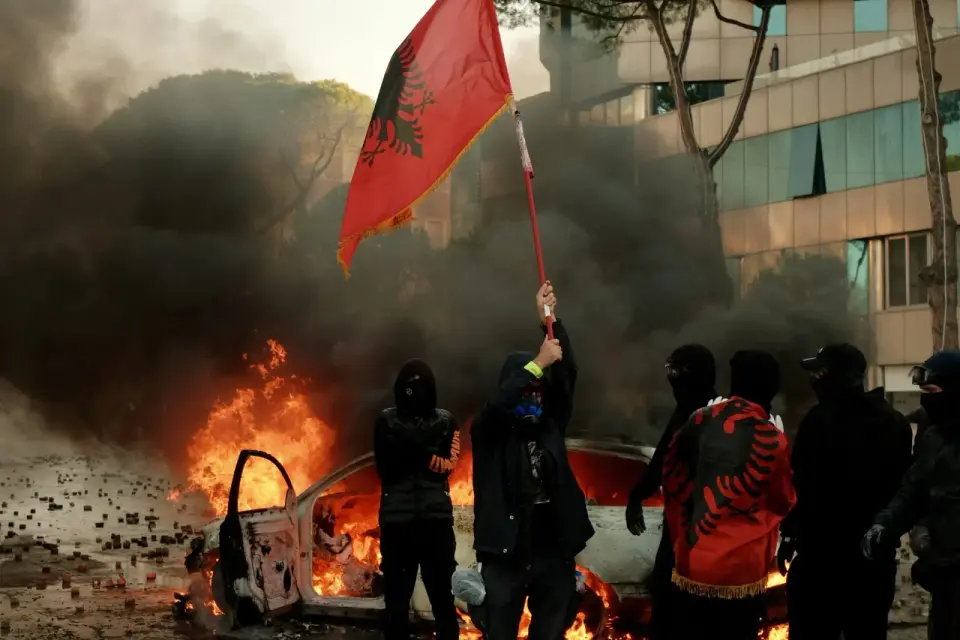
Albania’s capital Tirana is engulfed in its most severe political crisis in years, as student-led protests against Prime Minister Edi Rama have evolved from peaceful demonstrations into violent riots. The unrest, initially sparked by opposition to a Kushner-linked luxury resort project, now demands Rama’s resignation and the installation of a technocratic government. Police have responded with tear gas, water cannons, and rubber bullets, while protesters hurl petrol bombs and rocks at government buildings. Rama refuses to step down, blaming foreign actors and the opposition for inciting violence, while critics accuse him of corruption and authoritarianism.
Key points
- Protests in Tirana have entered their tenth day, marked by daily clashes between students and riot police, with 295 injuries reported, including 186 police officers.
- The movement, originally known as the 'Flamingo Revolution' due to opposition to a Kushner-linked coastal development, has broadened to demand Rama’s resignation and systemic anti-corruption reforms.
- Rama has refused to resign, labeling the unrest a 'hybrid war' and blaming the opposition and foreign actors, while police have escalated tactics to include rubber bullets and pre-emptive arrests.
- The government has suspended parliamentary sessions, and opposition lawmakers have clashed with ruling party members in the assembly, highlighting deep political polarization.
- International observers, including the EU and US, have called for restraint and proportionate policing, while domestic critics warn of a potential 'police state' and institutional collapse.
Background
The current crisis follows months of peaceful 'Flamingo Revolution' protests that began in May 2026, initially focused on the environmental and social impact of a €1.4 billion luxury resort project on the Zvërnec coast, linked to Jared Kushner’s investment firm. Earlier in October, these protests escalated into violent clashes after students joined the movement, citing high tuition fees, poor university conditions, and widespread corruption. The unrest has since spread beyond the initial environmental concerns to a broader rejection of Rama’s 13-year rule, with protesters demanding a technocratic government and new elections.
How outlets are covering it
UnHerd emphasizes the visceral hatred and violent nature of the current protests, describing them as a 'revolution' that has outpaced the government’s ability to control the situation, while noting the lack of clear leadership among protesters. Euronews highlights the parliamentary chaos, with opposition lawmakers physically blocking sessions to demand debate on the protests, and frames the unrest as part of a broader European trend of anti-government demonstrations. BBC focuses on the human cost, citing 295 injuries and highlighting the police’s use of force, while also noting the protesters’ grievances over emigration and economic hardship. Middle East Eye contextualizes the crisis within Rama’s broader strategy of aligning with international powers, particularly Israel and the US, to maintain power, and criticizes both the government and the opposition for failing to address the root causes of the unrest.
Why it matters
The crisis in Albania represents a potential turning point for the country’s democratic trajectory and its EU membership bid. If Rama’s government survives, it may signal a shift toward authoritarianism, while a successful protest movement could lead to a new political order. The unrest also highlights the broader challenges facing European democracies, including rising inequality, corruption, and the influence of foreign powers on domestic politics. The outcome of this crisis will have significant implications for Albania’s future and its relationship with the EU and the US.
What to watch
The situation remains volatile, with no clear path to de-escalation. Rama’s government is likely to continue using force to maintain control, while protesters may escalate their tactics. A key factor could be a death resulting from the riots, which could tip the balance in favor of the protesters. International pressure from the EU and US may also play a role, as could the potential for a political transition through constitutional means. The crisis is expected to continue for some time, with the outcome uncertain.
- The revolution arrives in Albania This is Europe’s autumn of discontent UnHerd
- As Albania's anti-corruption protests grow, the prime minister blames 'antifa' for dissent DW.com
- Albanian parliament descends into chaos as opposition backs protests Euronews
- Seventh day of violent clashes between Albanian protesters and police BBC
- Albania’s revolt: How Rama’s Kushner resort deal became a threat to his leadership Middle East Eye
Want the full story? Read the original reporting
Read on UnHerd