
Albania's 'Flamingo Revolution' turns violent as students demand Rama's resignation
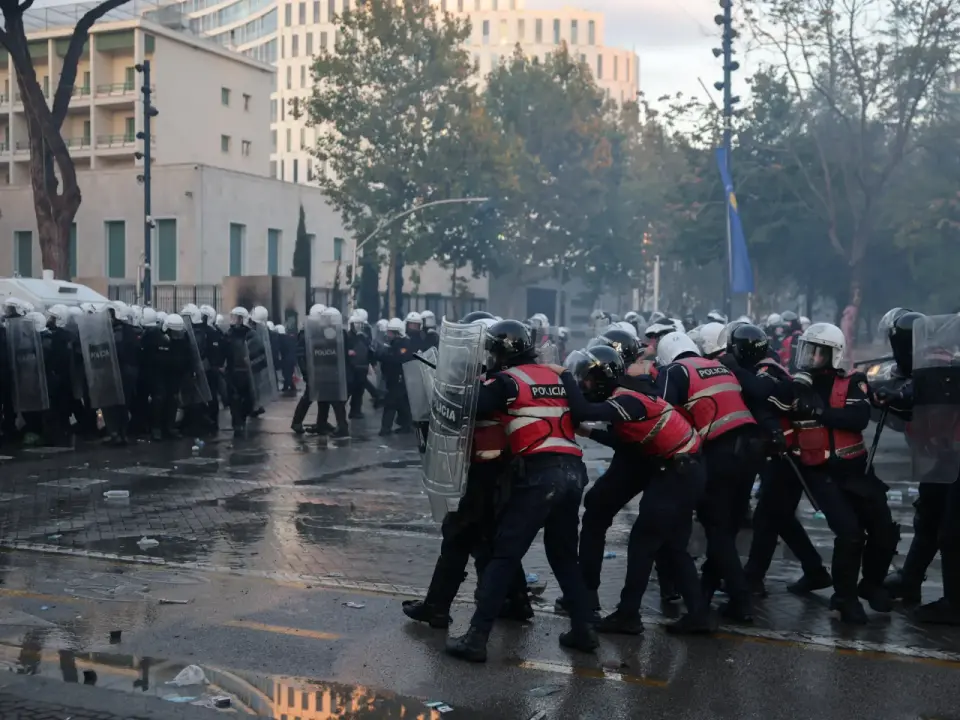
Violent clashes in Tirana entered their fifth day on October 17, 2026, as police deployed rubber bullets for the first time against anti-government protesters. The unrest, driven by students and the broader 'Flamingo Revolution,' demands the resignation of Prime Minister Edi Rama, who has ruled since 2013. While authorities report 167 arrests and 132 injured officers, protesters cite corruption, high education costs, and unemployment as core grievances. Rama refuses to step down, blaming opposition parties and foreign actors for inciting the violence, even as special prosecutors investigate links between his inner circle and organized crime.
Key points
- Police used rubber bullets for the first time during the fifth day of protests in Tirana, confirmed by National Police Chief Skender Hita.
- 167 people were arrested and 132 police officers were injured over five days of unrest, according to Al Jazeera and AP.
- Students joined the 'Flamingo Revolution' on October 13, shifting the movement from peaceful gatherings to violent confrontations.
- Protesters targeted the Education Ministry and Rama's office, throwing petrol bombs and stones while police used tear gas and water cannons.
- Rama, in his fourth term, refused to resign and accused the Democratic Party and unnamed foreign actors of sabotaging Albania's EU progress.
Background
The current escalation follows months of the 'Flamingo Revolution,' which began in May 2026 as a campaign against a luxury tourism development linked to Jared Kushner. Earlier archive coverage from October 14 noted the first violent clashes at the Education Ministry. The movement has since expanded from environmental concerns to a broad rejection of Rama's governance, which has dominated Albanian politics since 2013. The unrest is unprecedented in scale since the fall of communism in 1991.
How outlets are covering it
Al Jazeera and AP emphasize the intensity of the police response, noting the first use of rubber bullets and the high number of arrests. BBC highlights the shift in protest tactics, with students adopting violent methods after 135 days of peaceful demonstrations, and notes the involvement of special prosecutors investigating Rama's associates. Le Monde frames the escalation as a reaction to Rama's 'contempt' and 'indifference,' describing the movement as leaderless but radicalized. Rama, in contrast, blames the opposition and foreign actors, while analysts like Lutfi Dervishi argue he is the sole target of public anger due to his concentration of power.
Why it matters
The unrest threatens Rama's long-standing rule and Albania's EU accession path, which he promised by 2030. The involvement of special prosecutors in investigating his close associates, including secret service chief Vlora Hyseni and businessman Ergys Agasi, adds a legal dimension to the political crisis. The violence also risks destabilizing a country that has been viewed favorably by the EU, potentially delaying reforms and integration efforts.
What to watch
Rama is expected to maintain his refusal to resign, while protesters may continue daily demonstrations. The special prosecution service's investigations into corruption and organized crime links could lead to further arrests or political fallout. The next parliamentary elections are not due until 2029, but the current unrest may force early changes or a caretaker government, as suggested by some analysts.
- Albanian police fire rubber bullets as protests against Rama escalate Al Jazeera
- Albanian police fire rubber bullets as student protests rage Reuters
- Anti-government protesters battle with police in Albania BBC
- Riots in Tirana enter a fifth day as Albania’s anti-government protests escalate AP News
- Albania's 'Flamingo Revolution' radicalizes in response to prime minister's 'contempt' and 'indifference' Le Monde.fr
Want the full story? Read the original reporting
Read on Al Jazeera