
Albania’s Tirana unrest escalates as police deploy water cannons against anti-Rama crowds
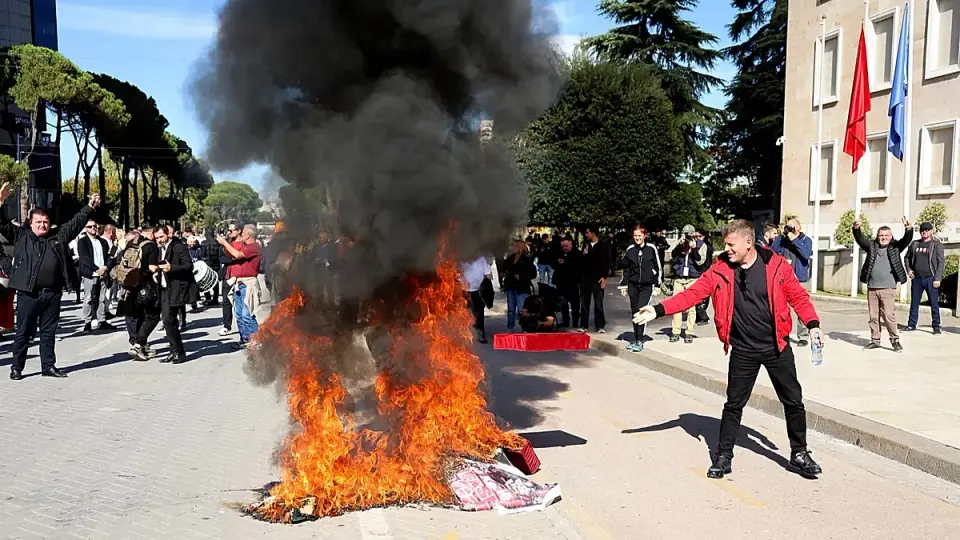
Thousands of demonstrators clashed with police in Tirana on October 24, 2026, marking a significant escalation in ongoing anti-government unrest. Authorities reported over 300 injuries and dozens of arrests after police used tear gas, water cannons, and rubber bullets to disperse crowds that targeted the Ministry of Education and government headquarters. The protests, which began in May over a luxury hotel project linked to the Trump family, have evolved into a broad movement demanding Prime Minister Edi Rama’s resignation, lower tuition fees, and an end to corruption. While Rama pledged a sustained state response to violence, protesters rejected his symbolic gesture of placing cushions outside his office, setting them on fire before marching to the Education Ministry.
Key points
- Police deployed tear gas, water cannons, and rubber bullets to disperse thousands of protesters in Tirana on October 24, 2026.
- Authorities reported more than 300 injuries among both demonstrators and police, alongside dozens of arrests.
- Protesters targeted the Ministry of Education and government buildings, throwing stones and burning bins in the process.
- Demonstrators set fire to pillows placed outside the prime minister’s office, rejecting Rama’s symbolic invitation to dialogue.
- The unrest has broadened from initial opposition to a luxury resort project into demands for Rama’s resignation and systemic anti-corruption measures.
Background
The current clashes are part of a sustained wave of unrest in Albania that began in May 2026, initially sparked by a luxury hotel project linked to the Trump family. Previous coverage from mid-October described the movement as the 'Flamingo Revolution,' characterized by violent student riots, police use of rubber bullets, and hundreds of arrests. Rama has consistently refused to resign, attributing the unrest to foreign actors and opposition parties, while protesters have maintained that their grievances stem from corruption, high living costs, and inadequate education funding.
How outlets are covering it
Euronews and Al Jazeera both confirm the severity of the October 24 clashes, citing over 300 injuries and the use of water cannons and tear gas. However, they differ in emphasis regarding the symbolic confrontation: Euronews highlights the protesters’ act of burning pillows placed by Rama as a rejection of his dialogue offer, while Al Jazeera notes the police’s heightened security measures, including vehicle checks at city entrances. Both outlets agree that the protests have moved beyond specific policy grievances to a broader rejection of the political class, with demonstrators chanting against both Rama and opposition leader Sali Berisha. Rama’s stance remains consistent across reports, blaming 'foreign actors' and promising a prolonged state response to violence, while protesters maintain their demand for his resignation and systemic reforms.
Why it matters
The escalation in Tirana signals a deepening political crisis in Albania, threatening to derail the country’s European Union accession process. The shift from localized student protests to a broad-based movement involving artists, professors, and opposition parties indicates that public discontent has outgrown specific policy disputes. Rama’s refusal to resign and his attribution of blame to external actors may further polarize the nation, potentially leading to prolonged instability in the Balkans.
What to watch
Authorities are expected to maintain heightened security in Tirana as Rama pledges a 'prolonged and persistent' response to violence. Protesters are likely to continue targeting government institutions, particularly the Ministry of Education, as they demand concrete reforms and Rama’s resignation. International observers will monitor whether the unrest impacts Albania’s EU membership bid or leads to further diplomatic tensions, especially given Rama’s accusations of foreign interference.
- Violent protests shake Tirana as police use tear gas and water cannons against demonstrators Euronews.com
- Albanian police fire tear gas as anti-government student protests turn violent Reuters
- Thousands gather at new Albanian antigovernment rally Al Jazeera
- Flamingo Revolution: Albania Protests Escalate over Corruption & Kushner/Trump Luxury Resort Democracy Now!
- Albanian Protests Turn Violent as Calls Grow for PM to Resign Bloomberg.com
Want the full story? Read the original reporting
Read on Euronews.com