
Andersson’s Return to Power: A Blueprint for a Stronger, More Assertive EU
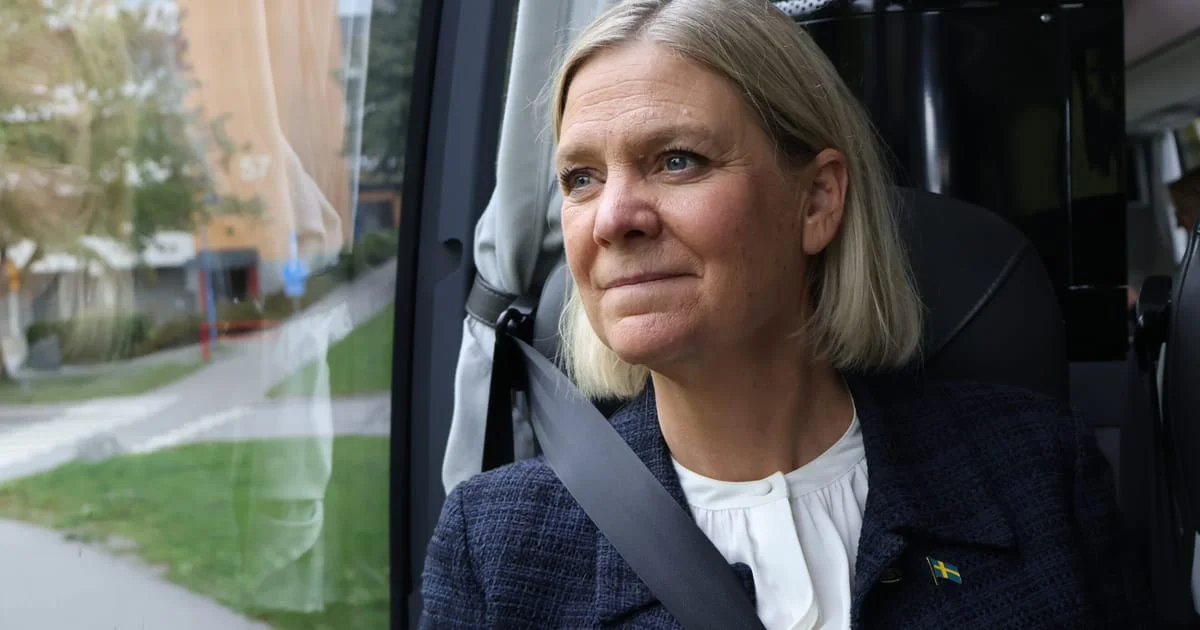
Sweden’s Social Democrat leader Magdalena Andersson is preparing to return as prime minister after her left-wing bloc secured a narrow 176-seat majority in the September 13 election. She is currently in coalition talks, facing a deadline of September 28 to form a government with the Greens, Left Party, and Centre Party. Andersson has outlined a foreign policy agenda focused on strengthening the EU through qualified majority voting on foreign policy, seizing frozen Russian assets to fund Ukraine, and deepening ties with non-EU allies like Canada and the UK. She also aims to restore a 'cordon sanitaire' against the far-right Sweden Democrats, which lost significant support in the recent vote.
Key points
- Andersson won the election but faces a tight coalition challenge, needing support from the Greens, Left Party, and Centre Party, with the Centre Party currently resisting cabinet posts for the Left Party.
- She proposes replacing the EU’s unanimity rule on foreign policy with qualified majority voting to prevent vetoes by individual member states, citing past obstacles from Hungary.
- Andersson supports seizing frozen Russian financial assets in Belgium to fund Ukraine’s defense, urging Belgium to resolve legal concerns rather than block the measure.
- She advocates for closer EU alliances with 'middle powers' like Canada, Japan, and Australia, and expressed strong support for the UK rejoining the EU, criticizing the outgoing government’s handling of British residents in Sweden.
- Andersson reaffirms Sweden’s NATO membership, countering claims that her coalition is unreliable, and promises to review the expulsion of long-term British residents under the previous administration.
Background
Andersson previously served as prime minister from 2021 to 2022 before losing power to the center-right Ulf Kristersson. Her return follows a four-year period in opposition where she watched Kristersson govern with support from the far-right Sweden Democrats. The current election marked a significant decline in support for the Sweden Democrats, a trend analysts have linked to the left bloc’s successful campaign against far-right influence. Andersson’s previous tenure was marked by Sweden’s shift from neutrality to NATO membership in 2024, a decision that now enjoys broad domestic support.
How outlets are covering it
POLITICO emphasizes Andersson’s ambitious foreign policy vision, highlighting her push for EU institutional reform, asset seizure, and global alliances, framing her return as a moment for Sweden to assert itself on the world stage. Al Jazeera focuses on the domestic political mechanics, detailing the razor-thin majority and the specific hurdles in coalition formation, such as the Centre Party’s refusal to support a government that includes cabinet posts for the Left Party. While POLITICO portrays Andersson as a confident architect of a new European order, Al Jazeera underscores the fragility of her mandate and the potential for negotiation delays, noting that if she fails by September 28, Kristersson will attempt to form a government.
Why it matters
Andersson’s potential return signals a shift in Swedish and broader European foreign policy toward greater assertiveness and internal cohesion. Her push to change EU voting rules could resolve long-standing deadlocks on foreign policy, while her stance on Russian assets may set a precedent for using frozen funds to support Ukraine. Domestically, her success in forming a coalition without the far-right Sweden Democrats could reinforce the 'cordon sanitaire' model across Europe, influencing how other nations handle populist parties. Her emphasis on global alliances also reflects a growing trend among 'middle powers' to coordinate independently of the US.
What to watch
Andersson must finalize a coalition agreement by September 28. If she fails, Kristersson will attempt to form a government. Key negotiations will focus on cabinet positions for the Left Party and the Centre Party’s stance on the coalition. Internationally, the EU may revisit the debate on frozen Russian assets, potentially leading to new legal frameworks in Belgium. Domestically, Andersson is expected to review the status of British residents expelled under the previous government.
- ‘Sweden is back’: Magdalena Andersson has big plans for Europe politico.eu
- Social Democracy Won the Century and Lost the Future Jacobin
- Sweden's prime minister steps down after losing election Reuters
- Sweden’s left-wing opposition leader begins efforts to form government Al Jazeera
- Sweden Swings Back Left, Bucking a Trend in Europe The New York Times
Want the full story? Read the original reporting
Read on politico.eu