
Arab Blocs Back Eisenkot to Oust Netanyahu in Israeli Coalition Talks
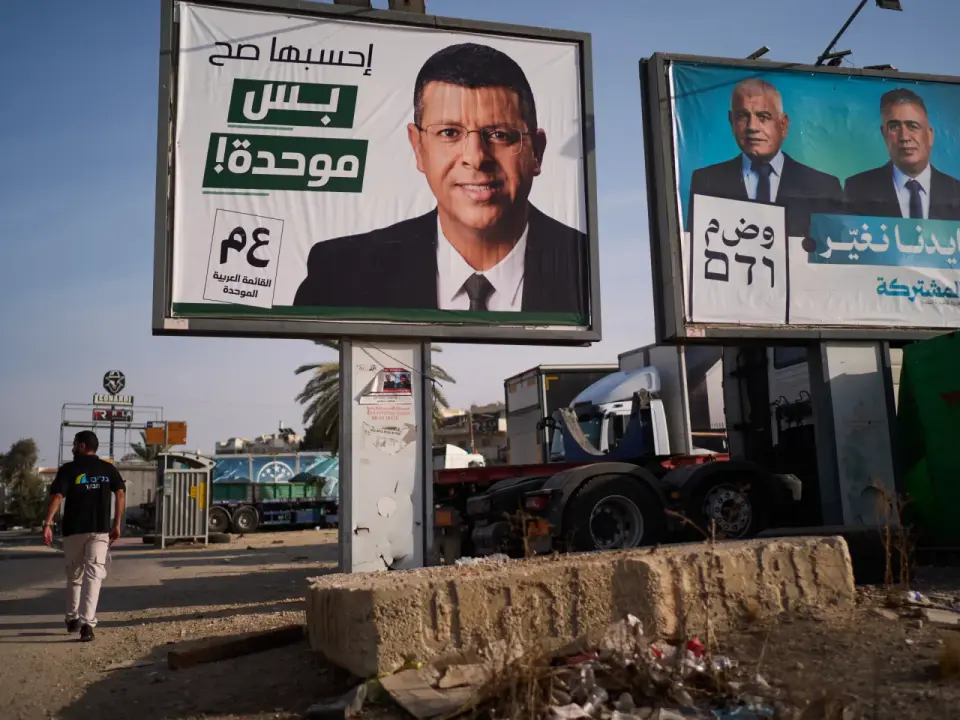
Israeli Arab parties have agreed to support opposition leader Gadi Eisenkot to unseat Prime Minister Benjamin Netanyahu, despite previous reluctance from Jewish opposition groups. With neither bloc holding a majority, the Arab bloc’s 19 seats are crucial for forming a minority government or providing external support.
Key points
- Arab-led Joint List and Raam won a record 19 seats, giving them the power to block Netanyahu or support Eisenkot.
- Eisenkot’s opposition bloc holds 48 seats, while Netanyahu’s right-wing bloc holds 53, leaving both short of the 61-seat majority.
- Joint List leader Yousef Jabareen will support an Eisenkot government from outside, while Raam leader Mansour Abbas is open to joining the coalition.
- Netanyahu claims election fraud without proof, but Israeli election officials and courts have dismissed these allegations.
- President Isaac Herzog will begin consultations on November 2 to decide who gets the first chance to form a government.
Background
Following the October 27, 2026, general election, Israel faced a parliamentary deadlock. Neither the incumbent right-wing bloc nor the opposition secured the 61 seats required to form a majority. Arab voters, comprising 20% of the population, turned out in record numbers, reaching approximately 80%, which significantly shifted the political balance. Previous coalition attempts involving Arab parties, such as the 2021 government, had collapsed within two years, creating skepticism among Jewish voters.
How outlets are covering it
Al Jazeera emphasizes the internal conflict within the opposition, noting that while Arab parties support Eisenkot, right-wing figures like Avigdor Lieberman resist such alliances due to anti-Arab sentiment. The Guardian highlights Jabareen’s stance that the Joint List will not join the government but will support it from outside to end the occupation and stop the war in Gaza. Yahoo News focuses on Jabareen’s call for the opposition to accept 'political reality,' criticizing holdouts who refuse to cooperate with Arab parties. All sources agree that Netanyahu’s fraud claims are unsubstantiated, with Al Jazeera noting that Israeli security agencies have affirmed the integrity of the vote.
Why it matters
The outcome determines whether Israel will see a shift away from Netanyahu’s far-right coalition, which includes ministers accused of inciting violence against Arabs. A successful minority government or external support deal could lead to policy changes regarding the West Bank, Gaza, and domestic discrimination against Arab citizens. Failure to form a government could result in a second election or prolonged instability.
What to watch
President Isaac Herzog will meet with party leaders starting November 2 to determine who is best positioned to form a government. Eisenkot or Netanyahu will have 28 days to form a coalition, extendable by 14 days. Parliamentarians will be sworn in on November 10 regardless of the outcome of these negotiations.
- Arab parties back Eisenkot: What’s the latest in Israel’s coalition talks? Al Jazeera
- Opinion | The ultra-Orthodox are key to breaking Israel's political deadlock Haaretz
- Israel’s Jewish and Arab opposition parties should work together The Economist
- Top Arab-Israeli leader tells AFP opposition must join to oust Netanyahu Yahoo
- Israel has ‘historic’ opportunity to change direction, says leader of Arab coalition The Guardian
Want the full story? Read the original reporting
Read on Al Jazeera