
Baghdad Orders Takeover of Kurdish Border Crossings and Oil Fields Amid Autonomy Dispute
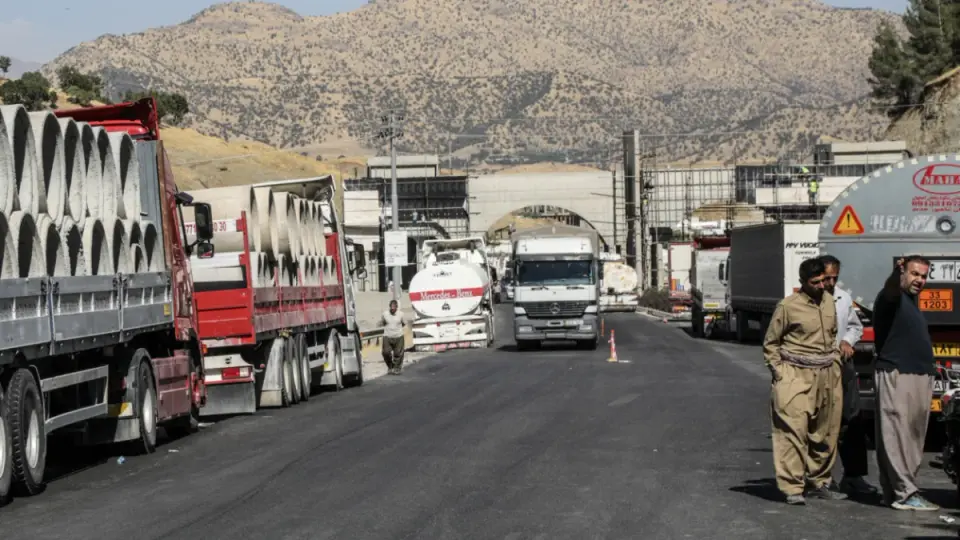
Iraqi Prime Minister Ali al-Zaidi has ordered the federal government to assume control of all border crossings and oil fields in the Kurdistan Region, a move condemned by Kurdish leaders as a violation of constitutional autonomy. The decision follows Baghdad's recent crackdown on Iranian-backed militias and comes amid internal divisions within the Kurdistan Regional Government (KRG). While some analysts argue the move benefits the US by consolidating federal power, others suggest it serves Iranian interests by weakening a potential base for opposition. Kurdish leaders have rejected the orders, calling them 'completely unacceptable' and urging resolution through the constitution, while the UN has urged both sides to use existing constitutional structures.
Key points
- Iraqi Prime Minister Ali al-Zaidi ordered the federal government to take control of all border crossings in the Kurdistan Region and manage oil fields in the provinces of Diyala, Kirkuk, Salaheddine, and Nineveh that are under Kurdish security authority but lie outside the region.
- Zaidi also directed the Kurdistan government not to approve oil exports except through the federal oil ministry, citing findings that the Iranian-backed militia Kataib Hezbollah has earned hundreds of millions of dollars from smuggling oil.
- Kurdistan Region Prime Minister Masrour Barzani called the decisions 'completely unacceptable' and 'surprising,' while KRG President Nechirvan Barzani rejected 'military rhetoric' and emphasized that disputes must be resolved through the Iraqi Constitution.
- The move occurs as the KRG faces internal division, with the Patriotic Union of Kurdistan (PUK) withdrawing from the regional parliament in November and its leader Bafel Talabani describing the region as living 'the reality of two governments and two administrations.'
- Analysts are divided on the beneficiaries: some argue the move benefits the US by consolidating federal power and aligning with US envoy Tom Barrack's views, while others, including Kurdish expert Fabrice Balanche, suggest it benefits Iran by preventing the KRG from serving as a rear base for an uprising in Iranian Kurdistan.
Background
The Kurdistan Region's autonomy was formally recognized in Iraq's 2005 constitution, which guarantees the KRG certain rights, but border crossings and energy resources have been longstanding points of dispute between Baghdad and Erbil. In 2017, after a non-binding independence referendum, Iraqi forces moved against the Peshmerga and reasserted control over disputed territories, significantly eroding KRG autonomy. Kataib Hezbollah, an Iranian-backed militia listed as a terrorist organization by the US, has been a target of Baghdad's recent crackdowns, including a recent operation in Jurf al-Sakhar. The US completed its withdrawal from Iraq in September 2026, with the last troops leaving Erbil, the KRG's capital.
How outlets are covering it
Middle East Eye frames the move as a strategic decision by Baghdad to consolidate power, highlighting the internal division within the KRG and the broader geopolitical context of a potential US-Israeli attack on Iran. It presents a balanced view of whether the move benefits the US or Iran, citing analysts who argue for both positions. The Jerusalem Post emphasizes the threat to Kurdish autonomy, describing Baghdad's actions as a 'brazen attempt to violently dismantle Kurdistan's constitutional autonomy' and noting that Kurdish leaders are seeking to avoid conflict due to Baghdad's military superiority. It highlights the role of US envoy Tom Barrack in empowering Baghdad and the concerns of Kurdish leaders about the erosion of their constitutional rights. Both sources agree on the facts of the orders but differ in their interpretation of the motivations and implications, with Middle East Eye focusing on the geopolitical balance and The Jerusalem Post focusing on the constitutional and autonomy concerns.
Why it matters
The move by Baghdad to take control of Kurdish border crossings and oil fields has significant implications for regional stability, US-Iran relations, and the future of Kurdish autonomy in Iraq. It could weaken the KRG's economic and political power, potentially strengthening Iranian influence in Iraq, or it could consolidate federal power in line with US preferences. The internal division within the KRG and the potential for conflict between Baghdad and Erbil could have broader consequences for the region, including the potential for a new US-Israeli attack on Iran. The move also raises questions about the future of the Iraqi constitution and the balance of power between the federal government and the KRG.
What to watch
Kurdish leaders are expected to continue to reject Baghdad's orders and seek resolution through the Iraqi Constitution, as urged by the UN. The KRG may face further pressure from Baghdad to comply with the orders, potentially leading to a confrontation or a negotiated compromise. The internal division within the KRG, with the PUK and KDP having different positions, could complicate the response. The move could also have implications for US-Iran relations, as the US may use the consolidation of federal power to pressure Iran, while Iran may seek to weaken the KRG to prevent it from serving as a base for opposition. The situation is likely to evolve in the coming weeks, with potential for further developments in the dispute between Baghdad and Erbil.
- Who wins from Baghdad's move to clip Kurdish autonomy - the US or Iran? Middle East Eye
- Iraq's top court says Baghdad can deploy troops to secure borders in Kurdistan region Reuters
- Iraq’s Prime Minister Aims to Wrest More Power From Kurdistan Region The New York Times
- Iraqi government to take control of Kurdish-held oilfields Financial Times
- Iraqi Kurdistan fears for its autonomy as Baghdad moves to consolidate power - analysis The Jerusalem Post
Want the full story? Read the original reporting
Read on Middle East Eye