
Barnham residents vote 257-16 to symbolically secede from UK over asylum base plans
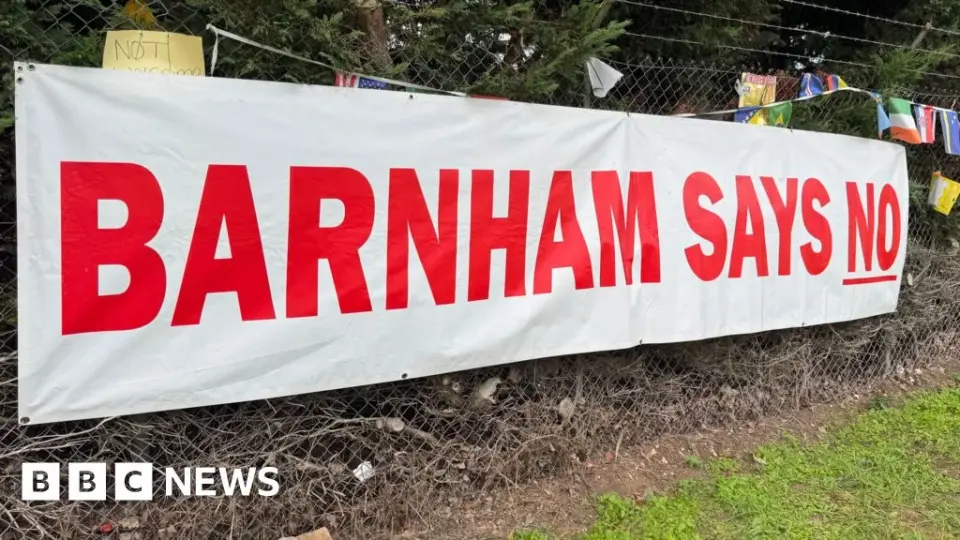
Villagers in Barnham, Suffolk, voted 257 to 16 to symbolically leave the UK in protest against government plans to house 931 asylum seekers at the nearby RAF Barnham base. The referendum, which carries no legal weight, seeks 'crown dependency' status to bypass Home Office jurisdiction. While the Home Office maintains the project is pending and emphasizes security, local leaders and opposition figures criticize the plan for ignoring environmental concerns and community safety, following a similar secession vote in Piddington, Oxfordshire.
Key points
- Barnham residents voted 257 to 16 in a symbolic referendum to leave the UK, with one spoiled ballot, in response to plans to house 931 asylum seekers at RAF Barnham.
- The referendum asks residents to support a petition for 'crown dependency' status, similar to Jersey or Guernsey, to remove the village from Home Office jurisdiction while retaining loyalty to the crown.
- The Home Office initially proposed housing 1,256 asylum seekers at RAF Barnham but reduced the number to 931; the site is a former nuclear weapons store and police training facility.
- Local MP Dr. Peter Prinsley criticized the plan as resembling a 'concentration camp' and highlighted environmental concerns, particularly the presence of stone-curlews, which may hinder planning permission.
- Conservative leader Kemi Badenoch supported the villagers, arguing the government should stop small boat arrivals rather than spreading asylum seekers to remote villages, while the Home Office stated it is 'listening carefully' to concerns.
Background
The vote follows a similar symbolic secession referendum in Piddington, Oxfordshire, in September 2025, where residents voted 285 to 26 to leave the UK over plans to house 1,256 asylum seekers at MoD Bicester. The Home Office identified three Ministry of Defence sites, including RAF Barnham, in June 2025 to move asylum seekers out of hotels, with 20,885 asylum seekers living in hotels as of March 2025. The construction firm Kier was awarded a £3.4m contract to design the camp at RAF Barnham, which is located just over a mile from the village of Barnham, home to approximately 600 residents.
How outlets are covering it
BBC and The Guardian report the vote as a symbolic gesture to express community frustration, with The Guardian noting the proposed 'crown dependency' status and the flag design featuring a stone-curlew. ITVX and The Independent emphasize the lack of legal weight and the Home Office's stance on 'fairer distribution' of asylum accommodation. The Guardian highlights MP Dr. Peter Prinsley's criticism of the plan as a 'concentration camp' and environmental concerns, while BBC notes local residents' fears about safety and the impact on village life. The Independent and ITVX quote Conservative leader Kemi Badenoch supporting the villagers and criticizing the government's approach to small boat arrivals. All sources agree the vote is symbolic and that no final decision has been made on the RAF Barnham project.
Why it matters
The referendum highlights growing local opposition to government asylum accommodation plans and the use of symbolic political actions to pressure central government. It underscores tensions between national immigration policy and community concerns, as well as the potential for environmental and planning challenges to delay such projects. The outcome may influence future decisions on other MoD sites and the broader strategy for asylum accommodation in the UK.
What to watch
The Home Office has not made a final decision on the RAF Barnham project, and the symbolic vote is unlikely to have legal consequences. However, the strong local opposition and environmental concerns may complicate planning permission. The government is expected to continue its strategy of moving asylum seekers from hotels to alternative accommodation, including former military sites, while addressing community concerns. Further developments may include potential legal challenges or delays in the project due to environmental protections for stone-curlews.
- Villagers to vote on 'leaving UK' over plans to house migrants at RAF base BBC
- Village votes to 'leave UK' over migrant plan BBC
- Suffolk village votes to ‘leave the UK’ over plans to house asylum seekers nearby The Guardian
- Poll opens as villagers vote to ‘leave UK’ over RAF base migrants plan | ITV News ITVX
- Poll opens in village independence referendum vote over asylum seeker plan The Independent
Want the full story? Read the original reporting
Read on BBC