
Brnabić Assumes Acting Presidency as Vučić Resigns to Chase PM Role
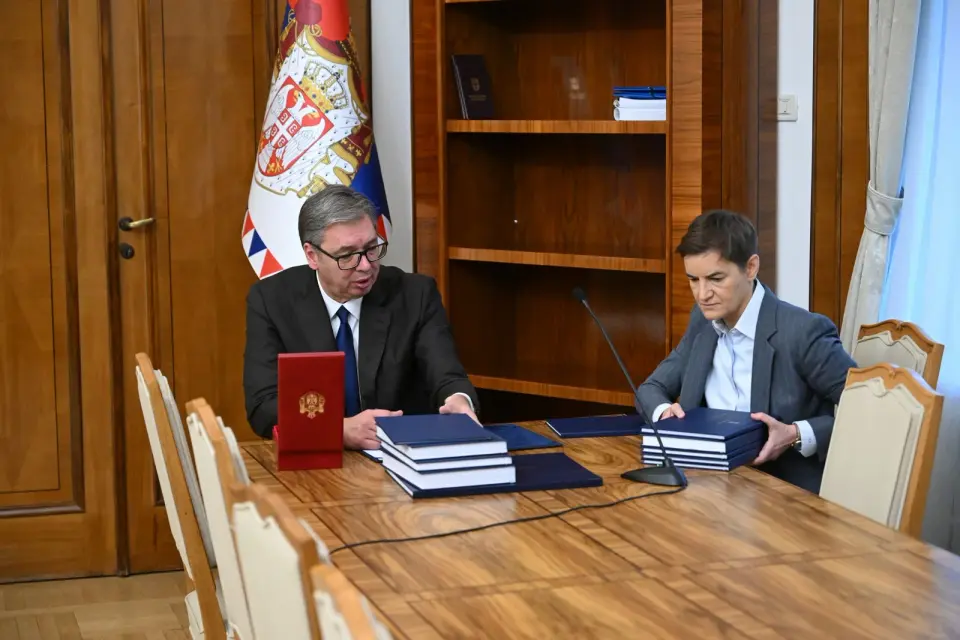
Ana Brnabić has become the acting President of Serbia following the resignation of Aleksandar Vučić, who stepped down after nine years to campaign for the Prime Minister position in the October 25 parliamentary elections. Brnabić, currently the Speaker of Parliament and a close ally of Vučić, will hold the largely ceremonial presidential duties until an early presidential election is held by year's end. This transition marks the first time a person has held all three highest state offices in Serbian history, though Brnabić serves only in an acting capacity. Vučić justified his move by claiming he wished to compete as an ordinary citizen rather than leveraging presidential power, a stance contradicted by an OSCE report on the 2023 elections. In his final act, Vučić issued dozens of pardons, including for opposition activists linked to the STAV group, who have rejected the clemency and demand accountability for the repression of the 2024-2025 protests.
Key points
- Aleksandar Vučić resigned as President of Serbia after serving for more than nine years, announcing his departure in June to avoid using the office for electoral advantage.
- Ana Brnabić, the Speaker of the Serbian Parliament, assumed the role of acting President, becoming the first individual in Serbian history to hold the offices of Prime Minister, Speaker, and President, albeit in an acting capacity.
- Vučić is now running to become Prime Minister in the parliamentary election scheduled for October 25, 2026, which will also trigger an early presidential election by the end of the year.
- In his final presidential act, Vučić granted dozens of pardons, including to opposition activists from the STAV group in Novi Sad, who rejected the clemency and called for accountability regarding the repression of the 2024-2025 protests.
- An OSCE/ODIHR report on the 2023 parliamentary election noted that Vučić used his presidential influence to dominate the campaign despite not being a candidate, contradicting his recent claim that he wanted to compete as an ordinary person.
Background
This transition occurs against a backdrop of significant diplomatic tension. In late August and early September 2026, Serbia faced intense criticism from the European Union and regional neighbors following the decision to grant Ratko Mladić, a Bosnian Serb general convicted of genocide for the Srebrenica massacre, a burial with high military honors. EU officials, including Enlargement Commissioner Marta Kos, canceled visits and warned that such glorification of war criminals jeopardized Serbia's EU accession path. Vučić defended the funeral arrangements, highlighting the ongoing friction between Belgrade's domestic political maneuvers and European expectations regarding post-war accountability and reconciliation.
How outlets are covering it
The primary source, European Western Balkans, provides a detailed account of the political transition, emphasizing Brnabić's unique status as the only person to hold all three highest offices and the controversy surrounding Vučić's final pardons. It highlights the opposition's rejection of the clemency and the OSCE's previous criticism of Vučić's campaign conduct. The secondary source, AP News, confirms the core facts of the resignation and Vučić's intent to run for Prime Minister but offers less detail on the specific controversies regarding the pardons or the OSCE report. The AP report focuses more on the procedural aspect of the resignation and the upcoming elections, while European Western Balkans frames the event within the broader context of political repression and electoral integrity.
Why it matters
The resignation of Vučić and the appointment of Brnabić as acting President signal a major shift in Serbia's political landscape ahead of the October 2026 elections. The move to an early presidential election and the potential change in the Prime Minister could alter the country's domestic and foreign policy direction. The controversy over the pardons and the previous OSCE criticism of Vučić's campaign tactics raise questions about the fairness of the upcoming elections and the rule of law in Serbia. Additionally, this transition occurs amidst ongoing diplomatic strains with the EU over the Mladić burial, suggesting that Serbia's path toward EU accession remains complicated by internal political decisions and historical memory issues.
What to watch
An early presidential election must be held by the end of 2026 to fill the vacancy left by Vučić's resignation. The parliamentary election is scheduled for October 25, 2026, where Vučić will campaign for the Prime Minister position. The outcome of these elections will determine the future direction of Serbia's government and its relationship with the EU. The opposition's demand for accountability regarding the 2024-2025 protests and the rejection of the presidential pardons may continue to fuel political tensions in the lead-up to the elections.
- Ana Brnabić becomes Acting President of Serbia European Western Balkans
- Serbia’s Longtime President Aleksandar Vucic Resigns Post The New York Times
- Serbia's President Vucic resigns ahead of October parliamentary elections Reuters
- Serbian President Aleksandar Vucic announces resignation, but will run for prime minister in snap polls dw.com
- Serbia’s populist President Vucic resigns to run for prime minister at early vote AP News
Want the full story? Read the original reporting
Read on European Western Balkans