
Jonathan’s DNA Reveals Stable Mitochondrial Genes as Key to Extreme Longevity
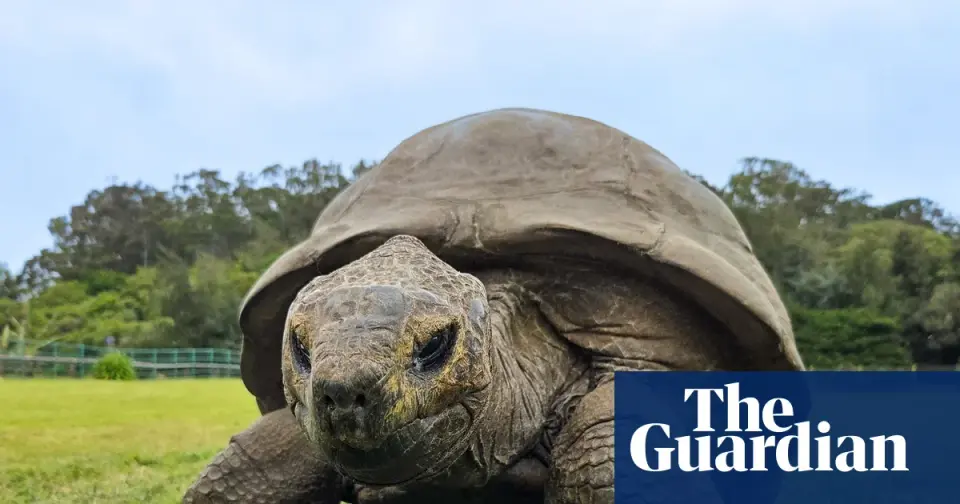
Researchers analyzing the DNA of Jonathan, the 194-year-old Aldabra giant tortoise, found that chemical tags on his genes related to mitochondrial function remain as stable as those in young animals. This stability in energy-producing structures may explain his exceptional lifespan, offering new insights into human aging.
Key points
- Jonathan, the world’s oldest known land animal, is believed to be 194 years old and resides at Plantation House in Saint Helena.
- A study published in Science Advances identified 287 unique gene variants in Jonathan associated with DNA repair, metabolism, and cancer suppression.
- The most significant finding involves methyl groups, or chemical tags, on genes linked to mitochondrial function, which remain orderly like those in younger tortoises.
- Researchers suggest a feedback loop where stable mitochondria produce energy to maintain their own stability, potentially preventing age-related decay.
- The study used cheek cell samples, which required filling gaps with DNA from a younger tortoise, resulting in a genome that is approximately 95% Jonathan’s.
Background
This study builds on recent research into aging mechanisms, such as the 2026 analysis of 117-year-old Maria Branyas, which showed a paradox of aging and protective traits. It also follows studies on GLP-1R activation and vitamin C, which suggest that targeting cellular energy and inflammation can mitigate biological decline. Jonathan’s case provides a unique, long-term data point for these theories.
How outlets are covering it
The Guardian emphasizes the intrigue of mitochondrial stability as a window into longevity, while BBC Wildlife highlights the 287 unique gene variants and the broader implications for human health. Scientific American provides a critical perspective, noting that the DNA sample was a 'Frankenstein sequence' due to contamination and gaps filled with younger tortoise DNA. It also stresses that correlation does not equal causation, with researchers acknowledging that the stable tags might be a byproduct of other factors rather than the direct cause of his longevity. All sources agree that the findings are preliminary and require further validation.
Why it matters
Understanding the epigenetic stability in Jonathan’s mitochondria could lead to new interventions for human aging. If the link between mitochondrial health and longevity is confirmed, it may inform treatments for age-related diseases, potentially extending healthy human lifespan by targeting the root causes of cellular decay rather than just symptoms.
What to watch
Researchers plan to validate the findings by testing whether manipulating mitochondrial stability or replacing mitochondria can extend longevity in model organisms. They also aim to refine their sampling methods to avoid the need for filling genomic gaps with DNA from other individuals, ensuring more accurate future studies.
- Jonathan the giant tortoise, 194, offers up insight into secrets of longevity The Guardian
- Jonathan the Giant Tortoise Is 194 Years Old. He Just Had His Genome Sequenced. The New York Times
- Scientists analysed the DNA of world’s oldest land animal. What they found was staggering BBC Wildlife Magazine
- The oldest known land animal is 194. How did he get so ancient? Scientific American
- A 194-year-old tortoise, world's oldest land animal, may hold clues to longer life Reuters
Want the full story? Read the original reporting
Read on The Guardian