
Bulgaria’s Presidential Vote Ends in Runoff as Record Low Turnout Highlights Voter Apathy
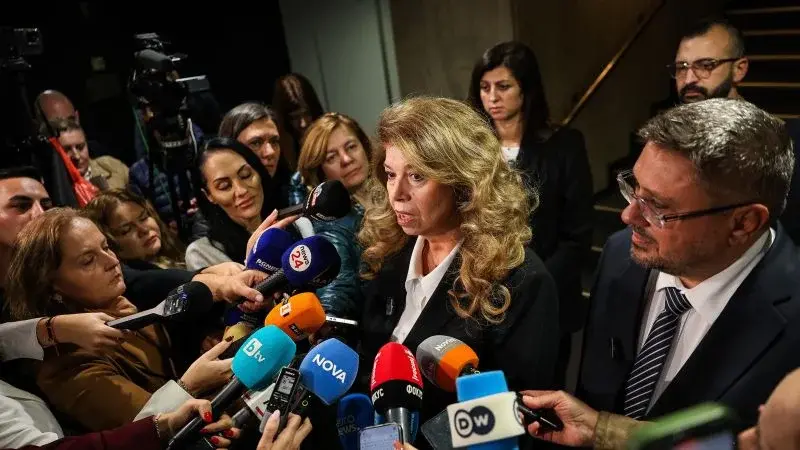
Bulgaria’s presidential election will proceed to a runoff on November 1 after no candidate secured the required majority in the first round. Incumbent Iliana Yotova leads former caretaker Prime Minister Andrey Gyurov in exit polls, but the contest is defined by a record-low turnout of 22.2% and deep polarization over relations with Russia and Ukraine. The vote serves as the first major test for Prime Minister Rumen Radev’s Progressive Bulgaria party, with Yotova advocating for diplomatic engagement with Moscow and Gyurov pushing for stronger Western alignment.
Key points
- No candidate achieved the 50% majority needed to win outright, forcing a second round on November 1.
- Exit polls place incumbent Iliana Yotova between 35% and 36.5% of the vote, while Andrey Gyurov trails with 31% to 33.5%.
- Voter turnout reached a record low of 22.2% by 8 pm, attributed to widespread mistrust of politicians and economic hardship.
- The campaign focused on drone attacks on Black Sea shipping, rising energy prices, and the war in Ukraine.
- Yotova is backed by the ruling Progressive Bulgaria party, while Gyurov is supported by pro-Western opposition groups.
Background
This election follows the April 2026 parliamentary victory of Prime Minister Rumen Radev’s Progressive Bulgaria party. Radev stepped down from the presidency in January 2026 to run for parliament, allowing Vice President Iliana Yotova to assume the role. The current contest is distinct from recent Latin American elections, such as the 2026 Brazilian runoff between Flávio Bolsonaro and Luiz Inácio Lula da Silva, which also featured high polarization and economic anxiety but involved different geopolitical alignments.
How outlets are covering it
CNN emphasizes the record-low turnout as a symptom of general voter apathy and mistrust, highlighting the stark ideological divide between Yotova’s pro-Russian diplomatic stance and Gyurov’s pro-Western security posture. Al Jazeera notes that while Yotova leads, the margin is narrow, and highlights Gyurov’s call for a pre-runoff debate, framing the choice as a decision between two distinct national directions. Euronews points out that Yotova’s first-round result underperformed pre-election polls, which had predicted 41-47% for her, suggesting potential volatility in the runoff. All three sources agree that the Black Sea security situation and economic inflation were central campaign issues, but they differ in emphasis: CNN focuses on the structural apathy, Al Jazeera on the binary choice, and Euronews on the polling discrepancy.
Why it matters
The outcome will determine whether Bulgaria maintains its current trajectory of balancing European integration with improved relations with Russia, or shifts toward a more assertive NATO and EU-aligned security posture. A victory for Yotova would consolidate power within the ruling majority, potentially weakening institutional checks and balances, while a win for Gyurov would signal a stronger commitment to Western defense cooperation and support for Ukraine.
What to watch
The runoff election is scheduled for November 1, 2026. Preliminary results from the first round are expected to be published on Monday. Gyurov has invited Yotova to a debate before the second round, and both candidates will campaign to mobilize the 22% of voters who participated, as well as the 78% who abstained, in an effort to secure the majority needed to win.
- Presidential race in Bulgaria heads to runoff due to record low turnout CNN
- Bulgaria election heads to a run-off amid low voter turnout Al Jazeera
- Bulgaria votes for president in wake of deadly Black Sea drone strikes Reuters
- Yotova narrowly ahead in first round of Bulgarian presidential vote Euronews
- In Bulgaria, record low voter turnout triggers a November 1 presidential run-off DW.com
Want the full story? Read the original reporting
Read on CNN