
Burnham Faces Fiscal Backlash as UK Borrowing Costs Hit 18-Year High
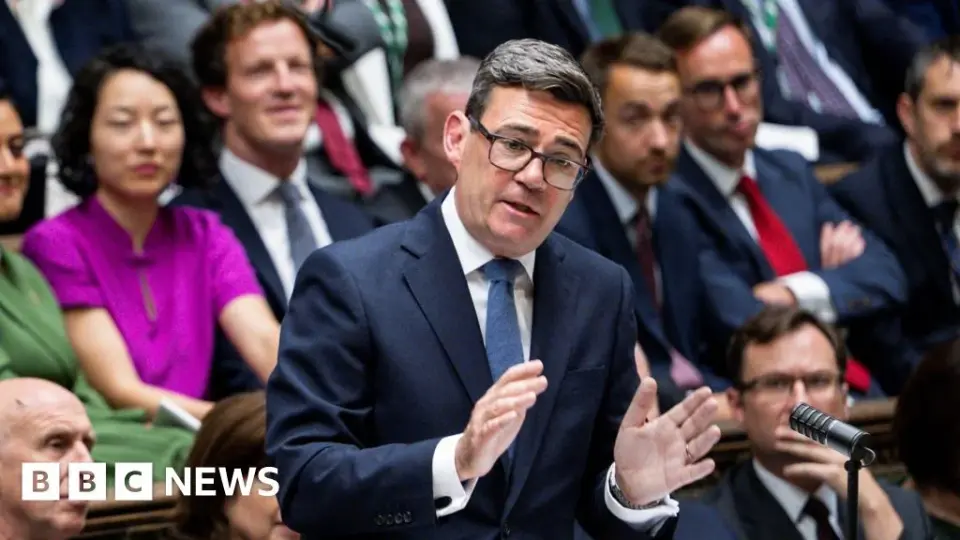
Prime Minister Andy Burnham faced intense scrutiny during his first Prime Minister’s Questions, where Conservative leader Kemi Badenoch criticized his lack of a clear funding plan for new spending pledges. The debate coincided with UK government borrowing costs reaching an 18-year high, with 10-year bond yields at their highest since 2008 and 30-year yields at their highest since 1998. Burnham blamed the previous Conservative government for market turbulence, while Badenoch argued that the rising costs reflect a lack of fiscal discipline. The PM confirmed an early October Budget to reduce speculation but refused to detail specific tax increases or spending cuts, promising instead to stick to fiscal rules while addressing cost-of-living pressures.
Key points
- UK 10-year bond yields reached their highest level since 2008, and 30-year yields hit their peak since 1998, significantly increasing the cost of government borrowing.
- Conservative leader Kemi Badenoch challenged Burnham to explain how he would fund new spending promises, warning that markets view him as a 'spendthrift' prime minister.
- Burnham blamed the previous Conservative government for leaving the UK exposed to global market turbulence, asserting that his administration is grounded in fiscal responsibility.
- The Prime Minister confirmed that Chancellor John Healey and he have agreed on an early date for the October Budget to minimize market speculation.
- Badenoch cited economist Lord Jim O'Neill, who warned that Burnham's recent statements unsettled investors, though O'Neill also noted that the spike partly mirrored US market reactions to the Iran conflict.
Background
This debate follows a period of rising global borrowing costs, with UK gilt yields previously hitting a 28-year high in early September. The current spike in interest rates adds pressure on the UK government as it approaches its Budget, with markets closely watching for credible fiscal plans to reassure investors amid ongoing geopolitical tensions and inflation concerns.
How outlets are covering it
BBC and The Globe and Mail both highlight the tension between Burnham's new spending pledges and the rising cost of borrowing. BBC emphasizes Badenoch's direct challenge regarding tax rises and spending cuts, while The Globe and Mail notes Burnham's broader critique of Thatcher-era policies and Brexit, which Badenoch dismissed as living in the past. The Telegraph source was inaccessible due to a security block, so its perspective could not be synthesized. All available sources agree that the rising bond yields are a central constraint on the new government's fiscal options.
Why it matters
The rising cost of borrowing directly impacts the UK government's ability to fund public services and defense commitments. If yields remain high, the government may face difficult choices between raising taxes, increasing debt, or cutting spending, which could affect public services, defense budgets, and cost-of-living measures. The outcome of the October Budget will be critical in determining whether the government can stabilize markets and maintain its fiscal credibility.
What to watch
The UK government is expected to deliver its Budget in October, where it will likely outline specific measures to address the rising cost of borrowing and fund its new spending pledges. Markets will closely watch for any signals on tax changes, welfare spending, or defense commitments. The government's ability to reassure investors and stabilize bond yields will be a key test of Burnham's first months in office.
- Burnham pressed on economy at first PMQs as UK borrowing costs rise BBC
- Burnham Offers More Style Than Specifics in Parliament Debut bloomberg.com
- Burnham's PMQs debut shows the challenge of delivering new style of politics bbc.co.uk
- Britain lost its way with Thatcher and Brexit, Burnham tells Parliament in first speech The Globe and Mail
- Andy Burnham’s first statement to Parliament contained the seeds of his downfall The Telegraph
Want the full story? Read the original reporting
Read on BBC