
Canada’s 2026 Budget: C$142bn Plan Targets Sovereignty, Housing, and US Trade Risks
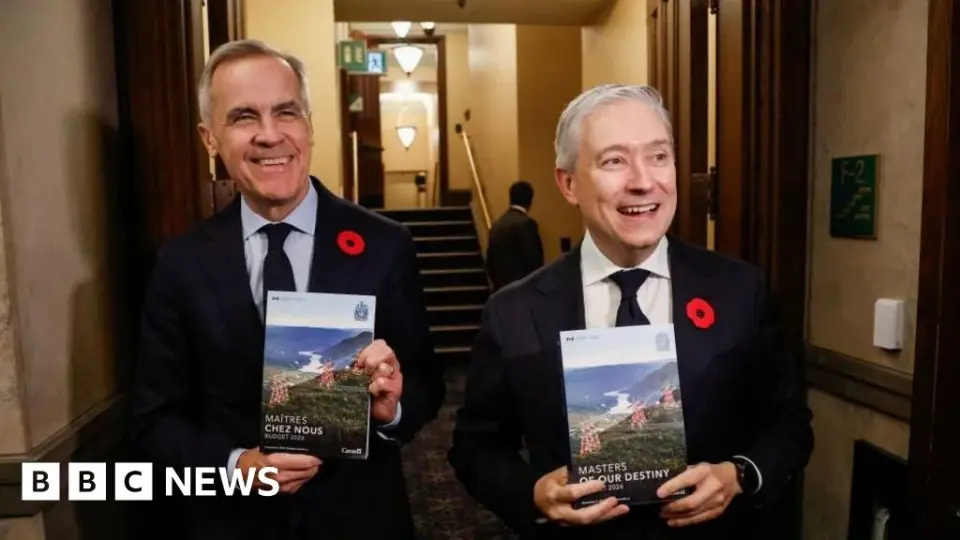
Prime Minister Mark Carney unveiled Canada’s second federal budget, titled 'Masters of Our Destiny,' allocating C$142 billion in new spending over five years. The plan prioritizes reducing reliance on the US, addressing homelessness, and boosting domestic investment. While funded by oil revenue windfalls, the budget maintains a deficit of over C$50 billion and faces criticism over long-term debt sustainability.
Key points
- The budget allocates C$11.2 billion over four years to combat homelessness, aiming to eliminate it within a decade, alongside enhanced grocery and worker benefits for low-income households.
- A 'productivity mega-deduction' costing approximately C$36 billion aims to stimulate business investment, paired with C$6.5 billion for the forestry sector and C$2.7 billion for space technology to reduce US dependency.
- Immigration levels remain flat, with permanent resident targets held at 380,000 annually until 2028, despite warnings that population decline could halve Canada’s size by 2100 without new arrivals.
- Cultural sovereignty is emphasized through C$4 billion for arts, a new national digital library, and C$300 million for the CBC, while defence spending includes C$2.3 billion for drone production and support for Operation Reassurance.
- The federal deficit stands at C$53.4 billion in 2029, with debt servicing costs reaching C$78.4 billion, prompting opposition criticism that the budget lacks a credible path to fiscal balance.
Background
This budget follows a period of intense US-Canada trade tensions, including US import bans on Canadian goods and threats to Canadian sovereignty. Earlier in 2026, Carney campaigned against Alberta’s separation movement, citing US aggression as a reason for unity. The current spending plan reflects a strategic pivot toward diversifying trade partners, including the EU, while addressing domestic economic pain from US tariffs on steel and forestry.
How outlets are covering it
BBC highlights the budget’s focus on affordability and sovereignty, noting that while GDP growth is expected to outpace most G7 nations, inflation and housing costs remain acute. CBC frames the spending as a 'quiet revolution' in growth models, emphasizing the productivity deduction but questioning whether results will materialize before the next election. The Globe and Mail focuses on the cultural dimension, detailing C$4 billion for arts and media to protect Canadian identity amidst US trade disputes. All sources agree on the scale of new spending but differ on its efficacy: BBC notes the deficit remains high, CBC questions the fiscal anchor, and The Globe emphasizes the symbolic value of cultural investment.
Why it matters
The budget signals a fundamental shift in Canadian economic strategy, prioritizing self-reliance and domestic investment over traditional reliance on US trade. It addresses immediate social crises like homelessness and high living costs while attempting to insulate the economy from US policy volatility. However, the continued deficit and rising debt service costs raise questions about long-term fiscal sustainability, particularly as defence and infrastructure spending increases.
What to watch
The government will implement the productivity deduction and begin construction on the Mackenzie Valley Highway. The national digital library is set to launch with 200 titles next year. Immigration targets will remain stable until 2028, while trade diversification efforts will continue, including potential EU associate membership discussions. Opposition parties will likely challenge the budget’s fiscal impact in the House of Commons.
- Canada's federal budget includes billions for sovereignty and tackling homelessness BBC
- Mark Carney's quiet revolution rests on investment and affordability CBC
- ‘Elbows up’ is so 2025. Next up: ‘Masters of our destiny.’ Politico
- Carney Asserts Canada’s Sovereignty and Vows to End Homelessness in Budget The New York Times
- Budget 2026: Cultural sector gets $4-billion boost in bid to defend national sovereignty The Globe and Mail
Want the full story? Read the original reporting
Read on BBC