
UK MPs reject assisted dying bill, ending legislative bid for now
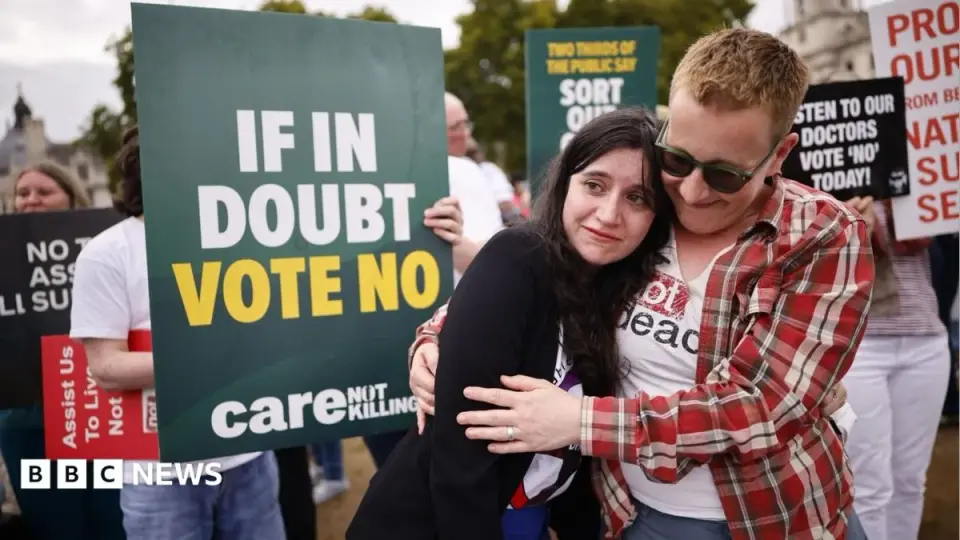
The UK House of Commons voted 286 to 270 against the Terminally Ill Adults (End of Life) Bill on September 11, 2026, ending the current attempt to legalise assisted dying in England and Wales. The bill, introduced by Labour MP Lauren Edwards, failed at second reading after a four-hour debate. While supporters described the result as a 'devastating setback,' opponents argued the legislation was unsafe and unworkable. The defeat follows a similar bill being stalled in the House of Lords earlier this year, and the issue is now expected to be revisited in future parliamentary sessions.
Key points
- The Terminally Ill Adults (End of Life) Bill was defeated by 286 votes to 270 in the House of Commons on September 11, 2026.
- The bill, introduced by Labour MP Lauren Edwards, would have allowed assisted dying for adults with less than six months to live under strict safeguards.
- The vote ended the current legislative attempt, as the bill can no longer progress through Parliament.
- An earlier, nearly identical bill passed the Commons last year but was blocked in the House of Lords in April 2026.
- Prime Minister Andy Burnham remained neutral and did not vote, stating the debate should pause until social care is improved.
Background
This vote follows a previous attempt to legalise assisted dying in England and Wales, where a bill championed by Labour MP Kim Leadbeater passed the Commons in the last parliamentary session but was stalled in the House of Lords in April 2026. The current bill was intended to continue that cause, potentially using the Parliament Acts to bypass the Lords if it had passed both houses in successive sessions. The debate also occurred amid broader discussions about the funding and availability of palliative and social care in the UK, with some MPs arguing that improved care is a prerequisite for legalising assisted dying.
How outlets are covering it
Supporters, including Labour MPs Lauren Edwards and Kim Leadbeater, described the vote as a 'devastating setback' and a 'travesty,' arguing that the law is 'too cruel and too unjust' and that the public generally supports the change. Campaign groups like Dignity in Dying and My Death, My Decision emphasized that the status quo leaves people unable to afford travel to Switzerland without choice. Conversely, opponents, including DUP MP Carla Lockhart and Labour MPs Ashley Dalton, Meg Hillier, and Jess Asato, argued the bill was 'unsafe and unworkable' and that no relevant medical colleges or professional groups attested to its safety. The Washington Post highlighted concerns that assisted suicide could become a leading cause of death, as it has in Canada, while The Guardian noted that the defeat may scupper the idea for a political generation due to reduced motivation among supporters and a more sceptical stance from the new government.
Why it matters
The rejection of the assisted dying bill marks a significant moment in UK health and social policy, leaving the legal status quo unchanged in England and Wales. It highlights the deep divisions within Parliament and the public on end-of-life choices, as well as the ongoing challenges in funding and providing palliative and social care. The outcome may influence future legislative attempts and public discourse on the balance between compassion, safety, and the right to choose in dying.
What to watch
The bill can now go no further, but an MP could introduce another bill on assisted dying next year, potentially identical to the one rejected. Supporters, including Lauren Edwards and Kim Leadbeater, have indicated that the issue will be revisited, with Edwards stating that 'Parliament has dropped the ball today. It will be picked up again.' The government, under Prime Minister Andy Burnham, has stated that the debate should pause until social care is improved, suggesting that any future attempt may be contingent on progress in that area. Campaign groups will continue to lobby for change, and the issue is likely to remain a contentious topic in UK politics.
- MPs debate assisted dying bill for England and Wales ahead of new Commons vote BBC
- MPs vote against legalising assisted dying in England and Wales theguardian.com
- MPs Reject Attempt to Legalise Assisted Dying in England and Wales Bloomberg.com
- Opinion | Britain is back on the assisted-suicide brink washingtonpost.com
- UK lawmakers to make fresh attempt to legalise assisted dying Reuters
Want the full story? Read the original reporting
Read on BBC