
Europe’s Cost-of-Living Crisis Ignites Cross-Border Riots and Fiscal Panic
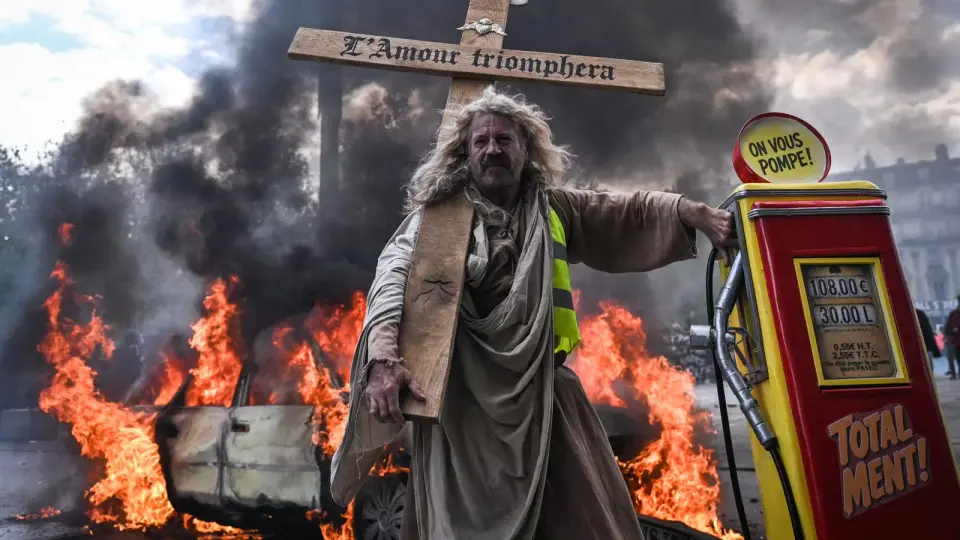
Violent protests swept across France, Italy, Spain, Portugal, Belgium, and Albania on October 17, 2026, driven by soaring energy costs, housing shortages, and deteriorating public services. France saw the largest turnout with over 500,000 demonstrators, resulting in widespread looting and arson. The unrest has triggered fiscal anxiety, with France’s budget deficit projected at 5.4% of GDP, while other nations face similar pressures. Governments are struggling to balance austerity with public demands, leading to a potential sovereign debt crisis in France and renewed political polarization across the continent.
Key points
- France recorded over 500,000 protesters on October 17, with significant violence including the burning of town halls in Limoges and clashes with police.
- Protests spread to Italy, Spain, Portugal, Belgium, and Albania, with triggers ranging from housing costs to poor school conditions and high tuition fees.
- France’s unemployment rate rose to 8.3% in Q2 2026, with youth unemployment reaching 21.6%, while consumer prices rose 3.1% in September, driven by a 21.3% jump in energy costs.
- France’s budget deficit is projected at 5.4% of GDP, prompting Prime Minister Sébastien Lecornu to propose measures like freezing civil service pay and tightening sick leave reimbursements.
- The European Commission condemned the violence in France, while political parties in the European Parliament debated the unrest, framing it as anti-democratic violence by far-left groups.
Background
This unrest follows a pattern of social tension seen in earlier 2026 protests, such as the violent clashes in Brussels and Liège on October 17, 2026, and the emergency security meetings in Italy after Milan protests. The current wave is distinct in its scale and cross-border nature, linking multiple EU nations through shared economic grievances rather than isolated national issues.
How outlets are covering it
CNBC emphasizes the economic drivers, noting that while energy costs are high, the increase is smaller than in 2022, suggesting deeper structural issues like slow growth and high debt are the primary catalysts. Le Monde highlights the political dimension, pointing to upcoming elections in Spain, France, Italy, Poland, and Greece, and the European Commission’s rare public condemnation of the violence. AP News, though largely obscured by technical code in the provided text, aligns with the narrative of widespread social unrest from France to Albania. There is a divergence in framing: CNBC and Le Monde focus on economic and political consequences, while the European Parliament’s debate, cited by Le Monde, frames the violence as a far-left threat to democracy, a perspective not emphasized by the economic analysts.
Why it matters
The unrest exposes the fragility of European fiscal policies and public services. France’s potential sovereign debt crisis, highlighted by RBC’s Mike Bell, could ripple through the eurozone, affecting bond yields and the euro’s value. The inability of governments to address housing and energy costs without triggering social unrest suggests a systemic failure in economic management, potentially leading to further political instability and a shift in voter sentiment ahead of 2027 elections.
What to watch
Italy has called for a general strike on November 20, with similar actions planned for November 11 in Spain and Portugal. France’s 2027 budget negotiations will be critical, with potential measures including raising the retirement age, a move that could exacerbate unrest. The European Commission may face pressure to coordinate a response to energy and housing crises, while political parties will likely use the unrest to gain electoral advantage in upcoming elections.
- What’s making Europe so angry? The frustration behind the protests CNBC
- France Protests Show Europe’s Shift Away From Centrist Politics The New York Times
- From France to Albania, social unrest is setting Europe’s streets ablaze AP News
- As France erupts, Europe's far right gains from fuel-price anger ahead of elections Reuters
- Italy, Spain, Belgium, Portugal: Social unrest spreads across Europe amid soaring energy prices and a housing crisis Le Monde.fr
Want the full story? Read the original reporting
Read on CNBC