
Burnham to Devolve Income Tax and Business Rates to English Mayors
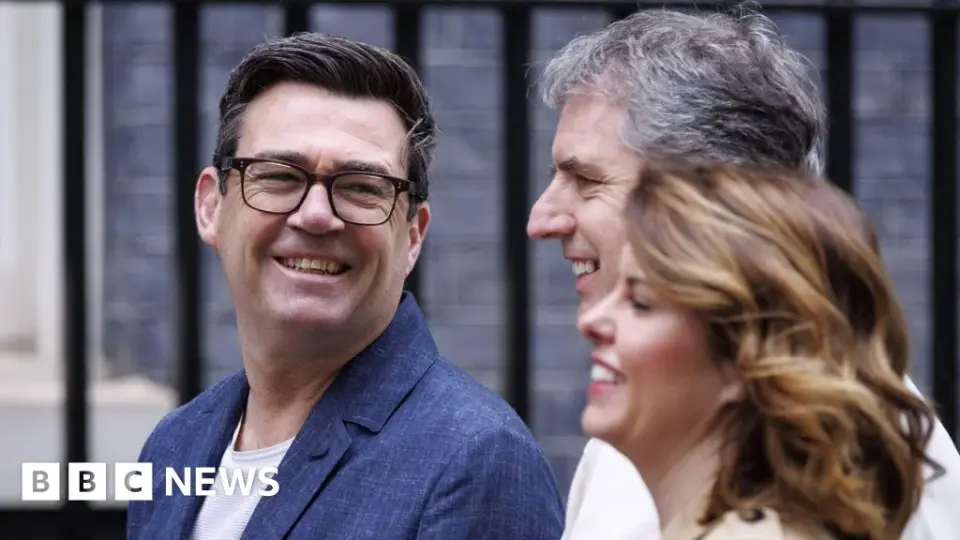
Prime Minister Andy Burnham will grant English regional mayors a share of local income tax and business rates, replacing central government grants. The plan, detailed in Chancellor John Healey’s autumn budget, aims to shift power from Westminster to local leaders, with income tax sharing starting in 2028 and business rates in 2027.
Key points
- Mayors will retain a portion of income tax from 2028 and business rates from 2027, replacing existing grants.
- The UK’s local tax share is 5.8%, the lowest in the G7, compared to 45.7% in the US.
- Mayors can borrow against future tax income to fund major projects like transport and housing.
- A 'local first' principle requires ministers to justify keeping powers in Whitehall.
- Details on the exact tax share and equalization for weaker economies are pending.
Background
Burnham has prioritized devolution since becoming PM in July 2026, previously pledging to 'bring power home' and move parts of the PM’s office to Manchester. Earlier in 2026, he advocated for regional control over services and economic growth, arguing that local leaders are better positioned to boost productivity than central government.
How outlets are covering it
BBC and The Guardian emphasize the shift from central grants to local tax revenue, highlighting mayors’ new ability to borrow against future income for major projects. The i Paper frames the move as a 'gamble' that incentivizes local economic growth by rewarding mayors for expanding their tax bases. Critics, including Conservative Sir Mel Stride, argue the plan lacks detail and could disadvantage weaker economies, while Reform UK’s Zia Yusuf links devolution to local control over migrant housing. Labour mayors like Tracy Brabin welcome the change, while Conservative Ben Houchen suggests using funds for tax rebates, though experts note this is technically difficult.
Why it matters
This reform could reduce regional inequality by allowing areas to retain more of their tax revenue, potentially boosting local economic growth. It also challenges the UK’s centralized fiscal model, which is an outlier among G7 nations, and may influence future debates on local autonomy and public service funding.
What to watch
Chancellor John Healey will announce the exact tax shares and equalization mechanisms in the autumn budget. A policy paper detailing the reforms will be published alongside the budget, and mayors will begin retaining business rates from April 2027 and income tax from April 2028.
- Andy Burnham to give regional mayors share of income tax BBC
- Burnham to free mayors from ‘Treasury death grip’ with new devolved powers The Guardian
- Burnham to Give Mayors Share of Income Tax in UK Devolution Push Bloomberg
- Mayors plan tax rebates for voters with devolution windfall thetimes.com
- Burnham’s income tax revolution is a gamble – but here’s why it works The i Paper
Want the full story? Read the original reporting
Read on BBC