
Diplomatic Frictions and Late Invitations Thwart Hungary’s 1956 Anniversary Summit
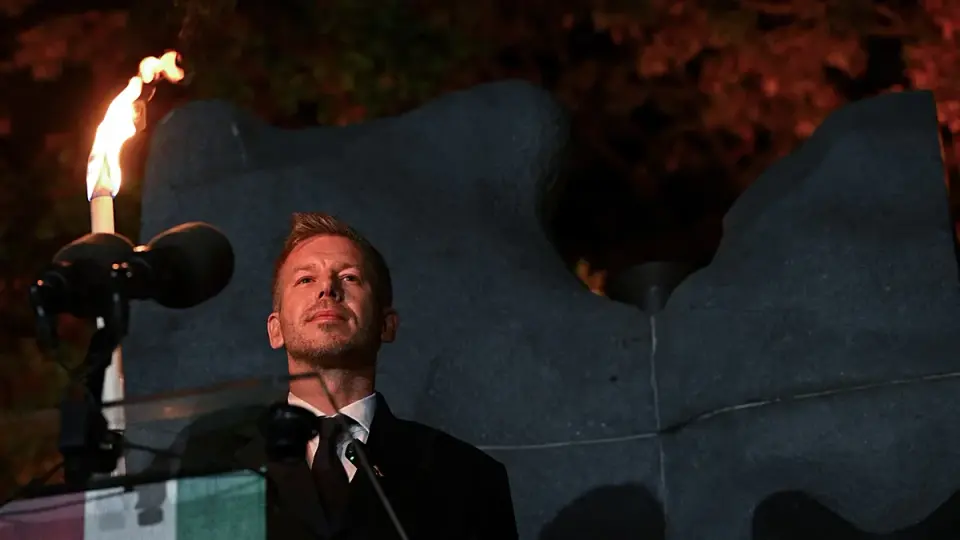
Hungary’s 70th anniversary of the 1956 revolution featured a notably sparse guest list, with only European Commission President Ursula von der Leyen and European Council President António Costa attending as top EU figures. Prime Minister Péter Magyar had hoped for broader international participation, including from the US and major EU leaders, but late invitations and diplomatic tensions led to absences from France, Poland, and Ukraine. The event marked a symbolic reset in EU-Hungary relations following Viktor Orbán’s ouster, though critics noted the modest turnout reflected ongoing diplomatic friction.
Key points
- Only von der Leyen and Costa attended as senior EU representatives, after an EU-Gulf Cooperation Council meeting was postponed, clearing their schedules.
- Invitations to leaders like Macron, Tusk, and Zelenskyy were sent late, often in September, when travel schedules were already full.
- Magyar’s social media comments linking French riots to migration drew criticism and likely contributed to Macron’s absence.
- Zelenskyy’s attendance was complicated by Magyar’s public downplaying of the visit, despite a formal invitation and prior Brussels summit rapprochement.
- Around 40 countries sent delegations, but most EU states were represented by ministers or parliamentary speakers rather than heads of government.
Background
The 1956 revolution was a brief anti-Soviet uprising in Hungary, suppressed by the Red Army, resulting in thousands of deaths and mass emigration. It remains a symbol of resistance against Soviet control. In 2026, the 70th anniversary coincided with Hungary’s political shift under Péter Magyar, who replaced Viktor Orbán after a landslide victory in April 2026. Magyar’s government has moved to restore EU ties, unlock frozen funds, and pursue pro-European policies, marking a departure from Orbán’s Eurosceptic stance. Prior to the event, Hungary and Ukraine had reached a diplomatic reset in October 2026, but attendance by Zelenskyy remained uncertain due to scheduling and diplomatic nuances.
How outlets are covering it
Euronews emphasized the logistical and diplomatic missteps, citing anonymous sources that blamed poor communication between Magyar’s office and the foreign ministry for late invitations. It highlighted Magyar’s controversial social media posts as a factor in Macron’s absence. AP News focused on the symbolic significance of the event for EU-Hungary relations, noting von der Leyen’s praise for Magyar’s reforms and the unlocking of 16.4 billion euros in EU funds. BBC provided historical context through a podcast, focusing on personal testimonies from 1956 rather than the 2026 event. National Post offered a personal narrative of a family fleeing Hungary in 1956, emphasizing the human cost of the revolution and its aftermath. The outlets differed in emphasis: Euronews on diplomatic failure, AP on political reset, and BBC/National Post on historical memory.
Why it matters
The event tested Hungary’s reintegration into European diplomatic circles after Orbán’s era. The modest turnout, despite high expectations, highlighted lingering tensions and logistical challenges in high-level diplomacy. It also underscored the fragility of Hungary’s new pro-European stance, as public statements by Magyar risked alienating key partners. The presence of von der Leyen and Costa signaled EU support for Magyar’s reforms, but the absence of major leaders raised questions about the depth of the reset. The event also intersected with broader EU-Ukraine relations, as Hungary’s stance on Ukraine’s EU accession and peace process remained a point of contention.
What to watch
Hungary is expected to continue its pro-European reforms, including further unlocking of EU funds and potential high-level meetings with Ukraine, possibly in Beregszász or Kyiv. The EU may monitor Hungary’s diplomatic conduct closely, given the recent friction. Future commemorations or summits may face similar logistical challenges if invitations are not sent earlier. The event’s outcome may influence Hungary’s standing in EU decision-making, particularly regarding Ukraine’s accession and broader foreign policy alignment.
- Late invites and spats leave Magyar’s 1956 event short of leaders Euronews.com
- European leaders gather in Budapest for anniversary of Hungarian revolution as Magyar resets EU ties AP News
- Witness History | The Hungarian Revolution BBC
- Magyar Praises Hungary-EU Ties on Day of Anti-Soviet Uprising Bloomberg
- Escaping Hungary: How my mother fled to Canada after the Red Army crushed the revolution 70 years ago National Post
Want the full story? Read the original reporting
Read on Euronews.com