
Eisenkot Agrees to Coalition Pact With Liberman as He Pursues Government Formation
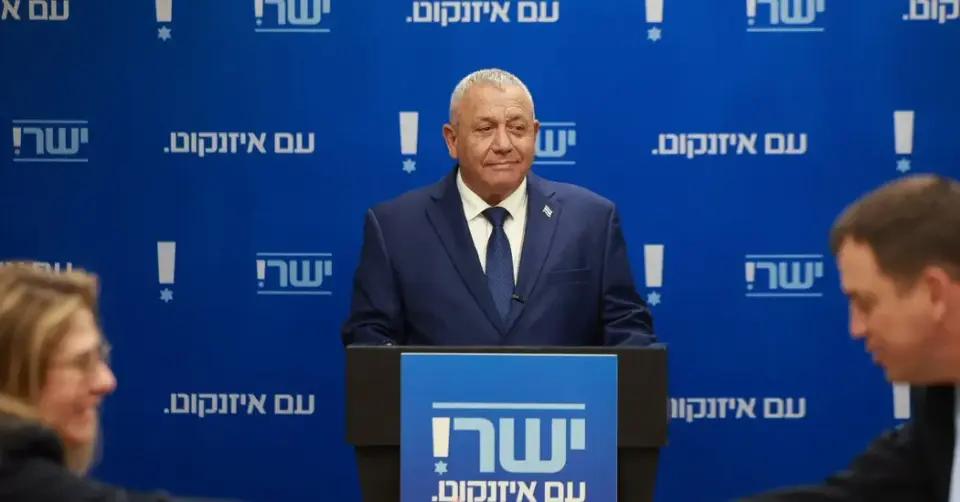
Israeli opposition leader Gadi Eisenkot has agreed to sign a coalition pact with Avigdor Liberman, marking the first formal alliance in his bid to form a new government by December 6. While Liberman’s party joins Eisenkot’s Yashar party, the coalition still lacks the 61 seats required for a majority. Meanwhile, secret talks between Naftali Bennett and Benjamin Netanyahu suggest a potential unity government, complicating Eisenkot’s efforts.
Key points
- Gadi Eisenkot and Avigdor Liberman agreed to sign a coalition pact, bringing their parties together as the first step toward a governing majority.
- Eisenkot’s Yashar party holds 21 seats, and Liberman’s Yisrael Beiteinu holds seven, totaling 28 seats; they need 61 to form a government.
- Liberman stated a new government could be formed by next week, though Eisenkot has until December 6 to succeed.
- Naftali Bennett is holding secret talks with Benjamin Netanyahu, discussing a potential unity government, while official talks with Eisenkot focus on minor issues.
- The left-wing Democrats party suspended talks with Eisenkot, citing a deadlock over a unity government with Netanyahu.
Background
Following the October 27 election, no party secured a majority, and Israel’s parliament was sworn in on November 10 without a new government. President Isaac Herzog tasked Eisenkot with forming a government, while Netanyahu remains caretaker prime minister. Previous opposition efforts were marred by allegations of an 'attempted coup' involving pre-election arrests, which Eisenkot and other leaders have denounced.
How outlets are covering it
The New York Times and Al Jazeera emphasize the progress in Eisenkot’s coalition-building, highlighting the agreement with Liberman as a vital step. Haaretz, however, reports on secret talks between Bennett and Netanyahu, suggesting a parallel track toward a unity government that could undermine Eisenkot’s efforts. Al Jazeera notes that Arab parties, which hold 19 seats, are aligned with Eisenkot in opposing Netanyahu, but Liberman has expressed opposition to a government reliant on Arab party support.
Why it matters
The outcome of these negotiations will determine whether Netanyahu remains in power or is ousted, with significant implications for Israel’s domestic policies and international relations. The potential for a unity government or a new coalition could reshape the country’s political landscape and affect ongoing debates over judicial reforms and regional conflicts.
What to watch
Eisenkot must secure additional coalition partners by December 6 to form a government. If he fails, Netanyahu will have an opportunity to form a government, or another election will be held next year. The outcome of secret talks between Bennett and Netanyahu could also influence the formation of a unity government.
- Opposition Makes Progress Toward Ousting Netanyahu, Party Leader Says The New York Times
- Israel's Eisenkot faces new coalition challenge as left-wing faction suspends talks Reuters
- Bennett Holding Secret Talks With Netanyahu Behind Eisenkot's Back Haaretz
- Israel’s Eisenkot secures first coalition partner in bid to form government Al Jazeera
- Eisenkot bloc said to fight over ministries as PM frets ‘only a miracle’ will save him The Times of Israel
Want the full story? Read the original reporting
Read on The New York Times