
Eisenkot Condemns Netanyahu’s Knesset Speech as ‘Racist’ Incitement Against Arab Citizens
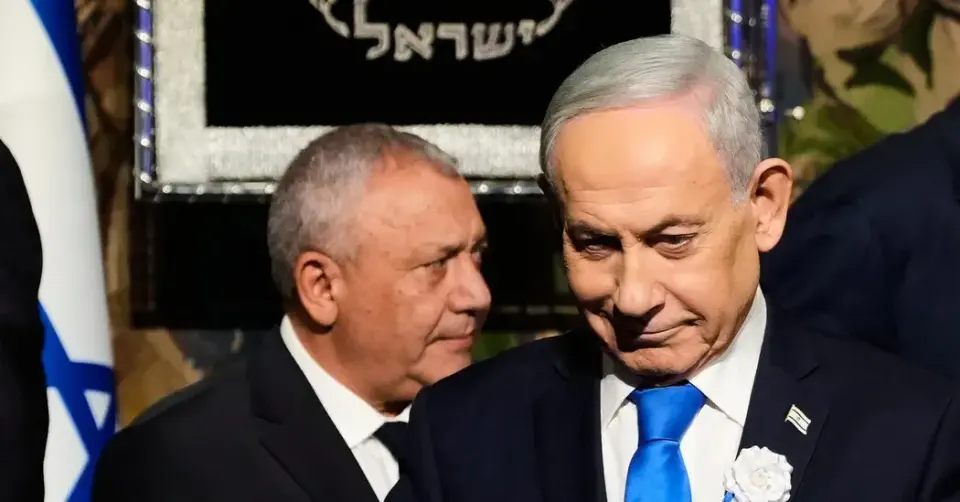
Former military chief Gadi Eisenkot, tasked with forming Israel’s next government, sharply criticized Prime Minister Benjamin Netanyahu on Friday for fueling a 'racist' campaign against Arab citizens. Eisenkot’s statement followed Netanyahu’s divisive speech to the newly sworn-in Knesset, where the prime minister labeled Arab lawmakers as 'terror supporters.' While Eisenkot has the mandate to form a coalition, he faces a difficult path: his bloc holds 48 seats, and while Arab-led parties support him, he has ruled out including them in his government, leaving him short of the 61 seats needed for a majority.
Key points
- Eisenkot accused Netanyahu of driving a 'violent and racist' delegitimization campaign against Arab citizens, who constitute roughly 21% of Israel’s population, for political gain.
- The criticism followed Netanyahu’s speech to the 26th Knesset on Tuesday, where he referred to Arab lawmakers as 'haters of Israel' and 'terror supporters,' a move condemned by diplomats and analysts as incitement.
- Eisenkot stated that while one may disagree with Arab party representatives, it is unacceptable to slander an entire community, calling such attempts an 'anti-state act' that mocks the Declaration of Independence.
- Netanyahu has repeatedly alleged electoral fraud by Arab-majority parties, claims that Israeli electoral authorities have rejected, and has criticized them for not labeling Hamas as a 'terror group,' despite all party leaders condemning the October 7, 2023, attack.
- Eisenkot has six weeks to form a government; if he fails, the mandate may pass to Netanyahu. He has also called for strict supervision of Netanyahu’s interim government to prevent any political exploitation of security issues, particularly regarding potential strikes on Iran.
Background
The 26th Knesset opened on November 11, 2026, following inconclusive elections on October 27. President Isaac Herzog tasked Eisenkot with forming a government after consultations with parties, including Arab-led lists. Eisenkot’s four-party alliance won 48 seats, while Netanyahu’s bloc secured 53, leaving both short of the 61-seat majority. Arab-led parties, which won a record 19 seats, have endorsed Eisenkot, but he has ruled out including them in his coalition, instead seeking support from ultra-Orthodox parties to reach 61 seats. Netanyahu has demanded a unity government and accused Arab parties of seeking Israel’s destruction, leading to a deadlock in coalition talks.
How outlets are covering it
The New York Times, Al Jazeera, The Guardian, and The Times of Israel all report Eisenkot’s strong condemnation of Netanyahu’s speech, describing it as 'racist' and 'violent.' The outlets differ in emphasis: The Guardian highlights the rarity of a prominent Jewish leader defending Arab Israelis, while The Times of Israel focuses on internal party tensions, including comments by Miriam Peretz about her son potentially resigning if Eisenkot partners with Arab parties. Al Jazeera notes Eisenkot’s call for an 'emergency government' and his stance on security, while The New York Times emphasizes the diplomatic and analyst condemnation of Netanyahu’s remarks. All sources agree that Netanyahu’s claims of electoral fraud have been rejected by Israeli authorities.
Why it matters
Eisenkot’s criticism marks a significant moment in Israeli politics, as a prominent Jewish leader publicly denounces Netanyahu’s rhetoric against Arab citizens. The outcome of government formation will determine whether Israel moves toward a coalition that includes or excludes Arab parties, with implications for domestic stability and international relations. Eisenkot’s stance on security and his call for strict supervision of Netanyahu’s interim government also highlight concerns about potential military escalation, particularly regarding Iran, during a politically sensitive period.
What to watch
Eisenkot has six weeks to form a government, with the possibility of a 14-day extension if he fails. He has vowed to 'exhaust all options' and has called for a state commission of inquiry into the October 7, 2023, attack. If he cannot form a government, the mandate may pass to Netanyahu, potentially leading to a new election or a unity government. The outcome will depend on whether Eisenkot can secure support from ultra-Orthodox parties or if internal party tensions, such as those involving the Peretz family, derail his efforts.
- Eisenkot Accuses Netanyahu of Fueling ‘Racist’ Hostility Against Arabs The New York Times
- Eisenkot slams Netanyahu’s ‘racist’ campaign against Palestinian Israelis Al Jazeera
- Eisenkot accuses Netanyahu of ‘racist’ campaign against Israel’s Arab minority The Guardian
- Eisenkot accuses Netanyahu of fueling ‘violent and racist’ campaign against Arabs The Times of Israel
- Gadi Eisenkot defends Yashar MK, slams 'racist campaign against Arabs' The Jerusalem Post
Want the full story? Read the original reporting
Read on The New York Times