
Netanyahu’s Caretaker Status and Mossad’s US Trip Fuel Iran War Debate
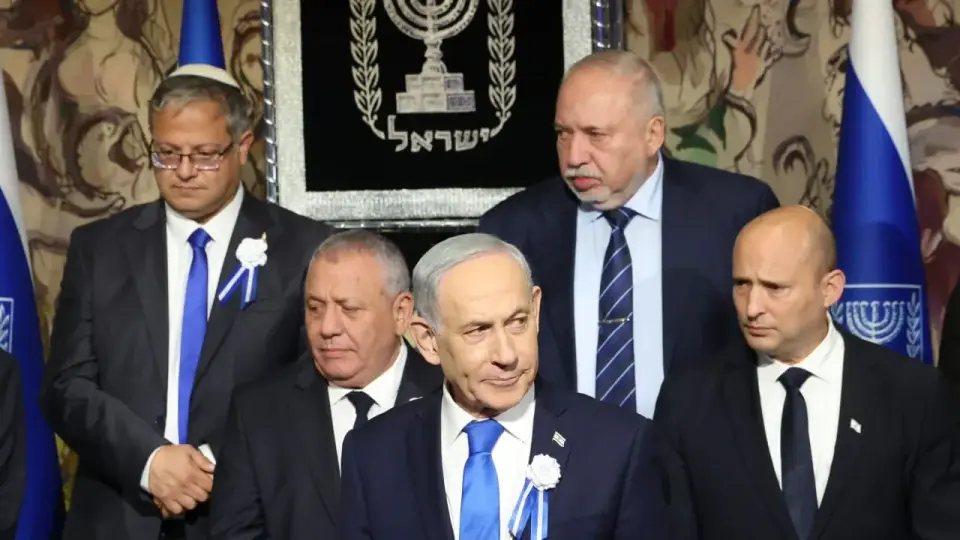
Benjamin Netanyahu retains full executive power as Israel’s caretaker prime minister, including the legal authority to launch military action against Iran, despite losing his parliamentary majority. While President Donald Trump favors economic pressure and diplomacy, Netanyahu is pressing for renewed strikes, with Mossad chief Roman Gofman visiting Washington to lobby US officials. Opposition leader Gadi Eisenkot has demanded restraint, warning that non-urgent military moves could undermine democratic institutions, while Israeli military leadership remains divided on the necessity of immediate action.
Key points
- Netanyahu’s caretaker government retains full executive powers under Basic Law Section 30, though Supreme Court rulings require 'restraint' for non-urgent decisions.
- Mossad chief Roman Gofman is in Washington meeting CIA Director John Ratcliffe and White House envoy Steve Witkoff to push for renewed military action against Iran.
- President Trump opposes immediate strikes, favoring economic sanctions and a naval blockade, citing advice from Gulf allies like Saudi Arabia and Qatar.
- IDF Chief of Staff Eyal Zamir opposes an immediate strike, arguing the threat is not urgent enough to risk destabilizing the government formation process.
- Eisenkot, tasked with forming the next government, has demanded strict oversight of Netanyahu’s security decisions to prevent political maneuvering.
Background
Following the October 2026 elections, Netanyahu’s bloc failed to secure a majority, leading President Isaac Herzog to task Gadi Eisenkot with forming a new government. The 26th Knesset was sworn in on November 10, 2026. This follows a February 2026 US-Israel war with Iran that ended in an April truce, with ongoing tensions in the Strait of Hormuz.
How outlets are covering it
The Jerusalem Post emphasizes the legal ambiguity of caretaker powers and the diplomatic split between Jerusalem and Washington. Axios highlights the covert diplomatic efforts, noting Gofman’s visit to Washington and the concern that Netanyahu may provoke Iran to block Eisenkot’s coalition. The Times of Israel reports on internal Israeli dissent, specifically noting that IDF Chief Eyal Zamir opposes a strike, while intelligence chiefs support it. Al Jazeera focuses on the 'duty of restraint' principle, arguing that while legal, a non-urgent strike could be viewed as a political maneuver to maintain power.
Why it matters
The decision to resume hostilities could trigger a regional war and derail the formation of Israel’s next government. It tests the limits of caretaker authority and the strength of the US-Israel alliance, as Washington’s preference for economic pressure clashes with Netanyahu’s call for regime change in Tehran.
What to watch
The Israeli security cabinet is scheduled to convene on November 15, 2026, for the first time in over a month. Eisenkot must form a coalition within six weeks. The outcome of Gofman’s talks in Washington and the security cabinet’s deliberations will determine if Israel moves toward a new military campaign or maintains the current truce.
- Benjamin Netanyahu can still take Israel to war, but his caretaker gov't has limits The Jerusalem Post
- Scoop: Israeli spy chief in D.C. as Netanyahu presses Trump to resume war Axios
- Mossad chief in US for talks on Iran, Netanyahu didn’t update Eisenkot on visit – report The Times of Israel
- Can Netanyahu launch a strike on Iran before he leaves? Al Jazeera
- ‘Shouting match from hell’: Trump, Netanyahu clash over Iran war Ynetnews
Want the full story? Read the original reporting
Read on The Jerusalem Post