
Eisenkot rejects Netanyahu’s unity bid, insists on sole premiership as coalition talks stall
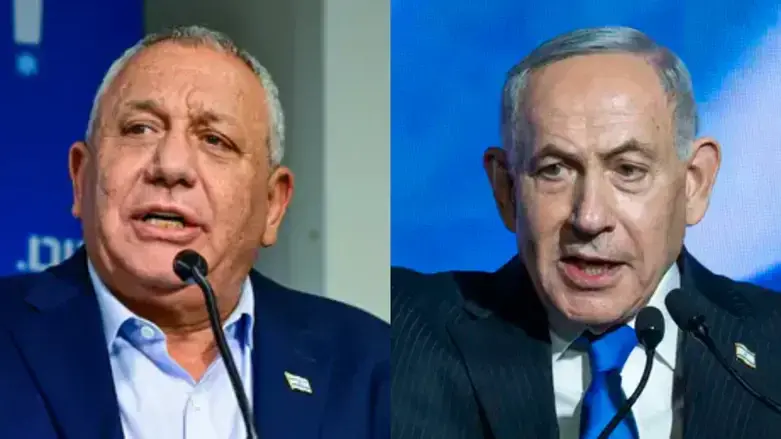
Gadi Eisenkot has offered Benjamin Netanyahu a role in a national unity government but refuses to share the premiership, stating that the leadership position is non-negotiable. While Netanyahu publicly calls for a broad coalition to address security threats, Eisenkot dismisses these appeals as political spin. Negotiations between the two parties have stalled, with no progress reported despite scheduled meetings. Meanwhile, Eisenkot’s bloc is exploring alternative paths, including a coalition with ultra-Orthodox parties or a minority government supported by Arab-led factions, though internal divisions within his own alliance complicate these options.
Key points
- Eisenkot proposes Netanyahu join a government he leads, focusing on diplomatic affairs, but rejects any rotation agreement for the prime ministerial role.
- Netanyahu argues a unity government is essential to counter the Iranian threat, while Eisenkot accuses him of using unity rhetoric to delay coalition formation.
- Talks between Yashar and Likud have yielded no progress, with Likud sources claiming Yashar is not genuinely interested in a unity deal.
- Eisenkot’s bloc is simultaneously negotiating with ultra-Orthodox United Torah Judaism (UTJ), though UTJ denies significant progress, and Shas remains loyal to Netanyahu.
- Internal divisions exist within Eisenkot’s bloc, with Avigdor Lieberman opposing both Likud and Arab-led coalitions, while Naftali Bennett favors a unity deal with Likud.
Background
Following the October 27, 2026 election, Gadi Eisenkot’s four-party bloc won 48 seats, while Netanyahu’s right-wing bloc secured 53. President Isaac Herzog gave Eisenkot until December 6 to form a government, with a possible 14-day extension. Previous attempts to form a coalition have stalled due to disagreements over the premiership, ultra-Orthodox military service exemptions, and the inclusion of Arab-led parties. Eisenkot’s bloc holds 67 seats with Arab support, but internal opposition from leaders like Lieberman complicates this path.
How outlets are covering it
Israel National News emphasizes Eisenkot’s firm stance on retaining the premiership and his willingness to offer Netanyahu a diplomatic role. Al Jazeera highlights the strategic calculations behind the talks, noting that Netanyahu may benefit from blocking Eisenkot’s coalition rather than forming one, and that a security crisis could shift negotiations. The Times of Israel reports that while Likud is open to excluding far-right Otzma Yehudit from a unity deal, it insists on including all its allies, and that Eisenkot’s bloc is divided on whether to pursue a unity government or an ultra-Orthodox coalition. The outlets agree that the premiership remains the central obstacle, but differ on the likelihood of a unity deal versus a minority government.
Why it matters
The outcome of these negotiations will determine whether Israel forms a stable government or faces further political instability. A unity government could address security challenges, but the deadlock over the premiership and internal bloc divisions may lead to a minority government or new elections. The inclusion or exclusion of Arab-led and ultra-Orthodox parties will also impact domestic policy, particularly regarding military conscription and judicial reforms.
What to watch
Eisenkot must decide whether to pursue a unity government with Likud, a coalition with ultra-Orthodox parties, or a minority government supported by Arab-led factions. The Knesset vote on replacing speaker Amir Ohana with Matan Kahana on Tuesday will test the willingness of Likud to cooperate. If talks fail, Eisenkot may seek an extension from President Herzog or prepare for new elections.
- Eisenkot to offer Netanyahu unity government without rotation agreement Israel National News
- Can Netanyahu and Eisenkot form a ‘unity’ government in Israel? Al Jazeera
- Saudi Arabia Intercepts Two Ballistic Missiles Launched By Yemen's Houthis | LIVE BLOG i24NEWS
- No progress reported in Yashar-Likud unity talks; Netanyahu said open to excluding Ben Gvir The Times of Israel
- Opinion | The cost of Eisenkot sidelining Arab parties: A final break with American Jewry Haaretz
Want the full story? Read the original reporting
Read on Israel National News