
Eisenkot Targets Government Formation by Next Week Amid Coalition Fractures
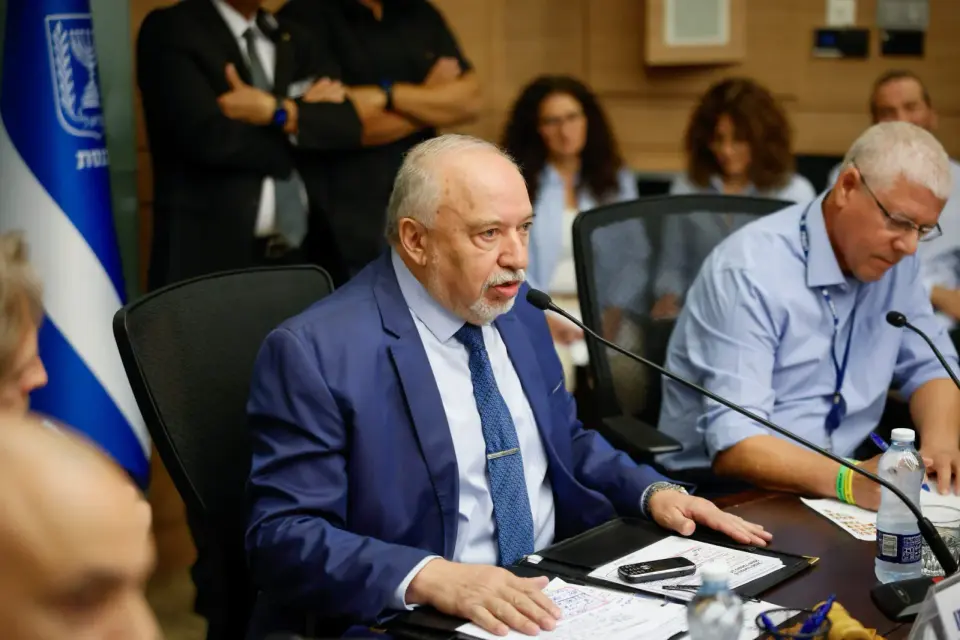
Gadi Eisenkot is pushing to form a new Israeli government by next Wednesday, aiming to secure a 61-seat majority through alliances with ultra-Orthodox parties. While a preliminary pact with Avigdor Liberman’s Yisrael Beytenu has been signed, the process is stalled by the Democrats party’s suspension of talks and unresolved disputes over ministerial portfolios. Eisenkot’s bloc currently holds only 55 seats, requiring additional partners to reach the 61-seat threshold needed for a majority.
Key points
- Avigdor Liberman stated that Eisenkot can form a government with a 'clear Jewish majority' by the end of next week, signaling potential acquiescence to including the Arab Ra’am party if necessary.
- The Democrats party, led by Yair Golan, suspended coalition negotiations on Tuesday, citing a 'stalemate' and disagreements over senior ministerial portfolios, specifically demanding the defense, foreign affairs, or finance ministries.
- Eisenkot’s four-party bloc (Yashar, Yisrael Beytenu, Democrats, and B’Yachad) holds only 55 seats; adding United Torah Judaism (UTJ) brings the total to 55, while including both UTJ and Ra’am would reach 63 seats, exceeding the 61-seat majority requirement.
- Liberman criticized Eisenkot for negotiating with Prime Minister Benjamin Netanyahu’s Likud, arguing it grants legitimacy to Netanyahu, while Eisenkot remains optimistic about forming a government despite these internal conflicts.
- United Torah Judaism is seeking approval from its spiritual leaders to formally open coalition negotiations, with contacts between the parties currently described as unofficial.
Background
Eisenkot, former IDF chief of staff, was given the first chance to form a government after the October 2026 elections, where no bloc secured a majority. His mandate expires on December 6. Previous attempts to form a coalition have been complicated by Liberman’s initial veto on Arab-backed coalitions and Netanyahu’s push for a unity government. The current negotiations focus on balancing ultra-Orthodox conscription compromises with the need for a stable majority.
How outlets are covering it
The Times of Israel emphasizes Liberman’s push for a 'Jewish majority' and his criticism of Likud talks, while Ynetnews highlights the pressure on Shas and the potential breach of campaign promises if Arab parties abstain. JNS notes the broader context of Likud’s conditions for a unity government, including demands for an end to personal attacks against Netanyahu. All sources agree on the 55-seat baseline of Eisenkot’s bloc and the need for additional partners, but differ on the likelihood of success, with Eisenkot appearing optimistic and the Democrats expressing deep skepticism.
Why it matters
The outcome of these negotiations will determine whether Israel forms a new government under Eisenkot or faces a political crisis. A successful coalition could shift policy directions, particularly regarding judicial overhaul and ultra-Orthodox conscription, while a failure could lead to a minority government or renewed negotiations with Netanyahu.
What to watch
Eisenkot aims to sign coalition agreements with the Democrats and B’Yachad in the coming days, following the preliminary pact with Yisrael Beytenu. A fourth round of talks between Likud and Yashar is scheduled for Wednesday, though significant gaps remain. The bloc is also pressing Shas to join, with potential consequences if they refuse. The deadline for forming a government is December 6, with Eisenkot hoping to swear in a new government by next Wednesday.
- Liberman: Eisenkot can form coalition with ‘clear Jewish majority’ by end of next week The Times of Israel
- Yashar, UTJ make progress toward gov't as unity talks with Likud continue The Jerusalem Post
- Lieberman says government with 'clear Jewish majority' possible by next week Haaretz
- Eisenkot’s Yashar in coalition talks with Haredi parties JNS
- Eisenkot bloc prepares to swear in government next week, with pressure mounting on Shas Ynetnews
Want the full story? Read the original reporting
Read on The Times of Israel