
Eisenkot’s 67-seat majority faces Liberman’s veto and Netanyahu’s unity gambit
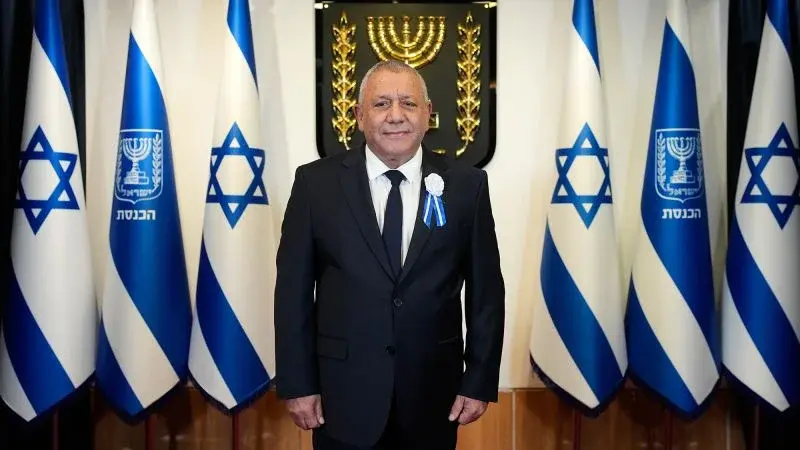
Gadi Eisenkot has 28 days to form a government with 67 seats, but Avigdor Liberman’s refusal to join an Arab-backed coalition threatens the plan. Netanyahu, now caretaker PM, is pushing for a unity government to stay in power. The opposition is already using its majority to repeal judicial overhaul laws and launch an October 7 inquiry.
Key points
- Eisenkot holds 67 of 120 Knesset seats but lacks a stable coalition due to ideological divides.
- Avigdor Liberman blocks the minority government plan, demanding a 61-seat coalition with ultra-Orthodox parties instead.
- Netanyahu is campaigning for a unity government to retain power, despite having only 46 seats.
- The opposition bloc has submitted bills to repeal judicial overhaul laws and establish an October 7 state inquiry.
- United Torah Judaism’s potential support for Eisenkot could provide a safety net beyond Arab parties.
Background
Following the October 27, 2026 election, Israel faced a deadlock with no clear majority. Netanyahu’s bloc lost support from ultra-Orthodox parties, while the opposition gained 48 seats. Arab parties, holding 19 seats, became pivotal kingmakers. Prior to the election, polls showed Eisenkot leading by 8-10 points, focusing on accountability for the October 7 security failure. The US also announced the end of $4 billion in military aid to Israel, shifting the geopolitical landscape.
How outlets are covering it
CNN emphasizes the structural difficulty of Eisenkot’s minority government plan, highlighting the ideological diversity of his 67-seat bloc and the risk of Liberman’s alternative coalition. Al Jazeera focuses on Netanyahu’s aggressive 'unity government' campaign as a tactic to undermine the opposition, noting his weakened position and the potential for civil war rhetoric. The Times of Israel details the immediate legislative actions by the opposition, such as repealing judicial overhaul laws and launching an October 7 inquiry, framing the Knesset’s first day as a decisive moment for accountability. NPR highlights the broader societal tension, noting that working with Arab parties is a red line for many Israeli parties, complicating Eisenkot’s coalition-building efforts.
Why it matters
The outcome of these negotiations will determine whether Israel moves toward a government focused on accountability and judicial reform or remains under Netanyahu’s leadership, which faces corruption trials and criticism over the October 7 security failure. The potential for a minority government or a unity government could reshape Israel’s political landscape, affecting policies on ultra-Orthodox conscription, judicial independence, and relations with Arab parties.
What to watch
Eisenkot has 28 days to form a government, with a possible 14-day extension. If he fails, the mandate passes to Netanyahu, who may attempt to lure opposition members to his bloc. If no government is formed, Israel could face new elections. The opposition is expected to continue advancing legislation to repeal judicial overhaul laws and establish an October 7 inquiry, while Netanyahu may press for a unity government or a security emergency to justify his continued leadership.
- Netanyahu’s grip on power is weakening. What will it take to end the disarray in Israel? CNN
- Israel's parliament sworn in as Eisenkot tries to forge a government Reuters
- Gaza struck by deadly storm; Israel debates rare coalition with Palestinian citizens NPR
- Netanyahu fights to stay relevant as Israel’s opposition closes in Al Jazeera
- On 1st day of Knesset, Eisenkot bloc submits bills to form Oct. 7 state inquiry, nix judicial overhaul The Times of Israel
Want the full story? Read the original reporting
Read on CNN