
Eisenkot’s Coalition Bid Hinges on Bennett’s Reluctance and Liberman’s Pivot
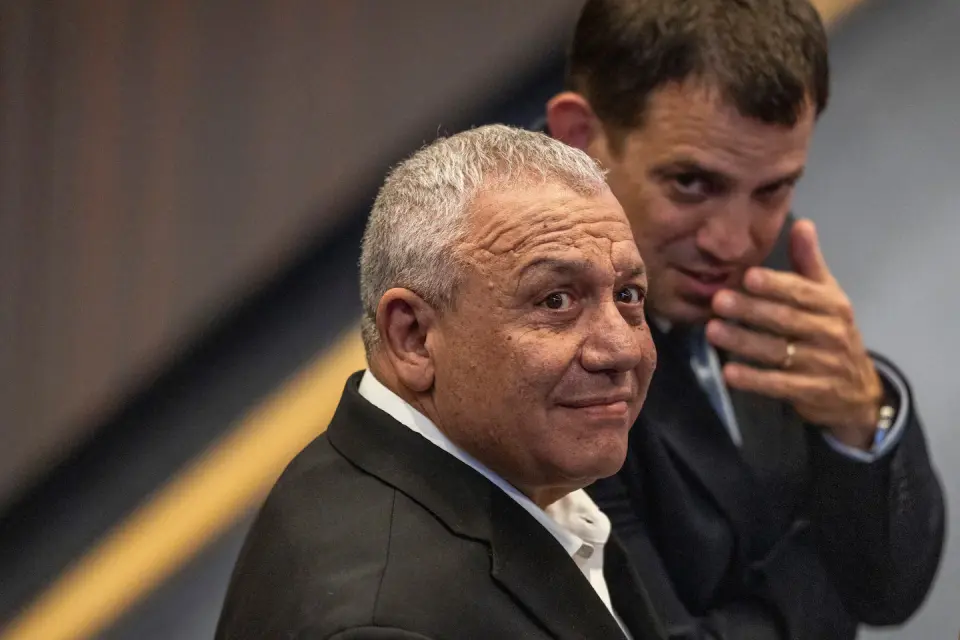
Former Israeli military chief Gadi Eisenkot is attempting to form a minority government to replace Benjamin Netanyahu, but faces significant internal divisions. While Eisenkot has secured deals with the left-wing Democrats and right-wing Israel Beiteinu, the inclusion of ultra-Orthodox and Arab parties remains contentious. Avigdor Lieberman has pivoted to support a coalition relying on these groups, while Naftali Bennett opposes it, preferring a unity government with Netanyahu’s Likud. Eisenkot must resolve these conflicts before the December 6 deadline.
Key points
- Eisenkot’s Yashar party signed a coalition agreement with the left-wing Democrats on November 26, granting them four ministerial portfolios, including an expanded national security ministry.
- Avigdor Lieberman’s Israel Beiteinu signed a deal with Eisenkot on November 24, marking a sharp reversal from his previous opposition to ultra-Orthodox and Arab parties.
- Lieberman is pushing for a minority government backed by ultra-Orthodox United Torah Judaism and Arab-majority Ra’am, despite his historical stance against them.
- Naftali Bennett, leader of the Beyachad party, opposes the minority government, calling it 'crappy' and advocating for a unity government with Netanyahu’s Likud.
- Eisenkot has until December 6 to form a government, with a possible 14-day extension. His bloc currently holds 36 seats, far short of the 61 needed for a majority.
- Ra’am’s Mansour Abbas is set to declare Hamas a terrorist group on November 28, potentially clearing a key obstacle for his party’s inclusion in the coalition.
Background
The October 2026 Israeli election resulted in a split Knesset, with Eisenkot’s bloc winning 48 seats and Netanyahu’s bloc winning 53. Eisenkot was tasked with forming a government. Recent developments include a court recommendation to drop Netanyahu’s most serious corruption charges, which may influence political dynamics. Eisenkot’s coalition talks have been complicated by disputes over cabinet portfolios and the inclusion of ultra-Orthodox and Arab parties.
How outlets are covering it
The Washington Post highlights the 'odd-couple' nature of Eisenkot’s coalition, emphasizing the unusual alliances between ultra-Orthodox, Islamist, and secular leftist parties. Haaretz focuses on Bennett as the main obstacle, arguing that his insistence on a unity government with Netanyahu could derail the formation of a 'government of rescue.' The Times of Israel emphasizes Lieberman’s pivotal role, describing him as the architect of the minority government due to his rapid pivot on ultra-Orthodox and Arab party inclusion. France 24 provides a factual overview of the coalition deals and the remaining challenges, noting the Democrats’ push for Arab party inclusion and Lieberman’s advocacy for ultra-Orthodox alliances. The outlets differ in their emphasis: The Washington Post and France 24 focus on the broad coalition dynamics, Haaretz on Bennett’s obstruction, and The Times of Israel on Lieberman’s strategic maneuvering.
Why it matters
The formation of a new government in Israel is critical for addressing ongoing conflicts, including the war in Gaza and the diplomatic fallout from October 7. A stable government could influence international relations, particularly with the EU and the US, and impact domestic policies on security, democracy, and minority rights. The coalition’s composition will determine Israel’s approach to the ultra-Orthodox military draft, Arab minority rights, and relations with Hamas and other regional actors.
What to watch
Eisenkot must persuade Bennett to join the minority government or find an alternative path before the December 6 deadline. Ra’am’s Mansour Abbas is set to declare Hamas a terrorist group on November 28, which could facilitate Ra’am’s inclusion in the coalition. If Eisenkot fails to form a government, he may request a 14-day extension from President Isaac Herzog. Netanyahu is expected to attempt to derail the process by pushing for a unity government or engineering a crisis if a minority government is formed.
- How Israel’s odd-couple politics could be close to toppling Netanyahu The Washington Post
- Analysis • Bennett is the main obstacle to an Eisenkot-led government Haaretz
- In spectacular flip-flop, Liberman has become the architect of a minority government The Times of Israel
- Israel's Eisenkot faces new coalition challenge as left-wing faction suspends talks Reuters
- Israel's Eisenkot agrees to coalition deal with left-wing Democrats France 24
Want the full story? Read the original reporting
Read on The Washington Post