
EU capitals stall on Canada 'associate membership' label ahead of Montreal summit
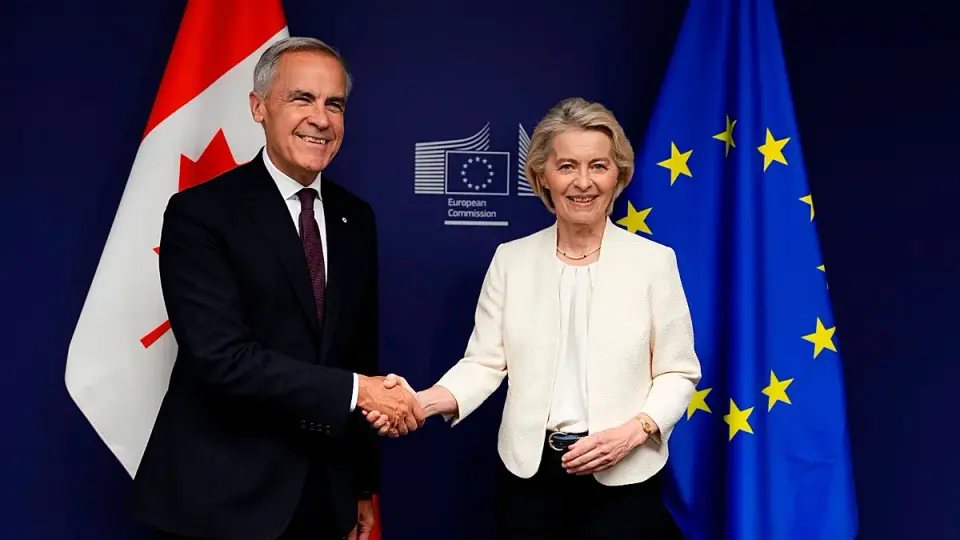
European Union member states are blocking the inclusion of the term 'associate membership' in the joint declaration for the upcoming EU-Canada summit in Montreal. While the European Commission pushed the label to define a new tier of partnership, capitals like Germany, Italy, and France objected, citing legal uncertainty and lack of prior consultation. The summit, set to open on Thursday, will focus on substantive cooperation in defense, critical minerals, and technology, with the full scope of the partnership to be defined at a 2027 summit.
Key points
- A revised draft of the joint declaration for the EU-Canada summit was blocked by Germany, Italy, France, and Greece via the silent procedure due to objections over the 'associate membership' terminology.
- European Commission President Ursula von der Leyen proposed the status in September without prior consultation with member states, causing diplomatic friction.
- The EU-Canada summit in Montreal is scheduled for Thursday and Friday, with a new draft expected to be circulated after ambassador-level talks on Wednesday.
- Canada and the EU are advancing concrete cooperation in defense, critical raw materials, energy, and technology, including access to the EU's €150 billion Security Action for Europe scheme.
- Prime Minister Mark Carney has downplayed the specific label, focusing instead on the substance of the partnership and Canada's growing independence from the United States.
Background
In September 2026, von der Leyen proposed 'associate membership' for Canada during a State of the Union speech, a status not defined in EU treaties. This followed earlier discussions where Canada and the EU sought to deepen ties in response to U.S. trade policies and security concerns. Previous coverage noted that while the label was contested, both sides agreed on the strategic importance of closer cooperation in areas like AI, defense, and critical minerals.
How outlets are covering it
Euronews highlights the diplomatic friction, noting that von der Leyen's lack of prior consultation with member states mirrors her 2023 migration deal with Tunisia, leading to objections from Berlin, Rome, and Athens. POLITICO emphasizes the strategic defense dimension, describing Canada as an 'easy partner' for Europe due to its NATO membership and Arctic security role, while noting limits in how far Ottawa will pivot from the U.S. due to NORAD ties. CBC focuses on the practical outcomes, with EU officials describing the partnership as 'closer to membership' than any previous arrangement, and Carney stressing that the 'nomenclature' is less important than the concrete benefits for Canadians, such as access to EU research and education programs.
Why it matters
The dispute over the 'associate membership' label tests the EU's ability to create new frameworks for non-member states without internal consensus. It also signals a significant shift in transatlantic relations, as Canada and the EU seek to formalize a closer partnership in defense and trade, potentially setting a precedent for other countries seeking closer ties with the bloc while navigating U.S. pressure.
What to watch
A new draft of the joint declaration is expected to be circulated by the European Council after Wednesday's ambassador-level talks. The summit in Montreal will proceed on Thursday and Friday, with the full scope of the partnership to be defined at a 2027 summit. Negotiations on the EU's seven-year budget and defense programs will also determine the depth of Canada's integration into EU security schemes.
- Von der Leyen’s Canada ‘associate membership’ spurs battle of words with EU capitals Euronews.com
- It’s hard breaking up with Washington: Why Canada’s European defense turn has limits POLITICO.eu
- Canada's new relationship with EU will be 'closer to membership' than ever, senior officials say CBC
- Cart, meet horse Politico
- Carney moves to remake Canada alliances as US ties strained Yahoo
Want the full story? Read the original reporting
Read on Euronews.com