
EU leaders clash over budget taxes and Ukraine loan at Brussels summit
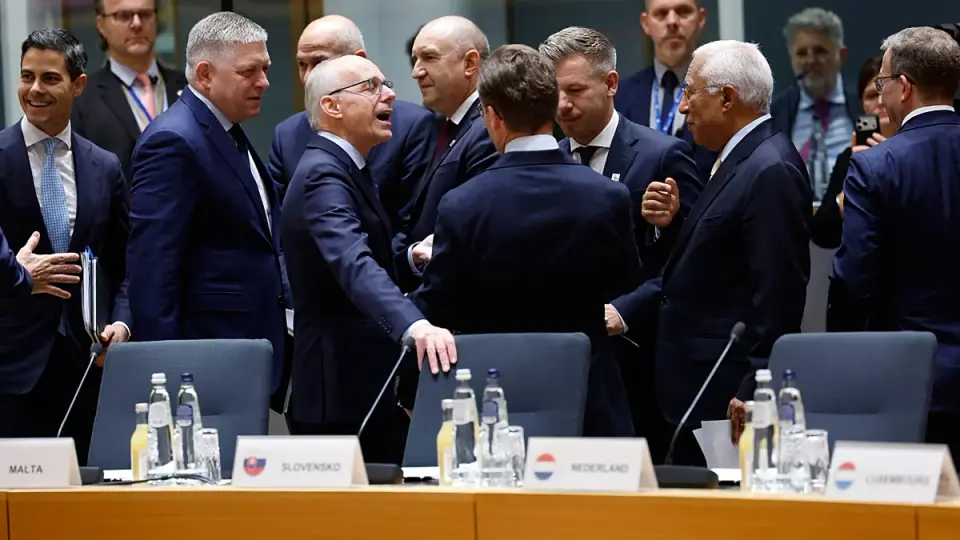
EU leaders are meeting in Brussels to negotiate the 2028-2034 budget and a new €45bn loan for Ukraine. Deep divisions persist over the size of the budget, the financing of Ukraine's military support, and the distribution of new EU-wide taxes. German Chancellor Friedrich Merz rejects the current proposal as too large, while French President Emmanuel Macron threatens to walk away if no deal is reached by December. The talks are complicated by upcoming elections in France, Italy, Poland, and Spain, which could alter political dynamics in 2027.
Key points
- European Council President António Costa is chairing a two-day summit in Brussels aimed at bridging differences over the EU's long-term budget and a new €45bn loan for Ukraine.
- German Chancellor Friedrich Merz rejected the current budget proposal, stating the overall volume is too high and demanding that all 27 member states contribute to Ukraine's support without opt-outs.
- French President Emmanuel Macron warned that negotiations cannot continue beyond December, citing his impending departure from office and the 2027 presidential election.
- Bulgaria, the Czech Republic, Hungary, and Slovakia oppose using EU funds for military aid to Ukraine, while France and Italy defend cohesion funds for agriculture and infrastructure.
- Costa's proposal includes new EU-wide taxes, such as a digital services levy and a carbon border adjustment mechanism, to generate revenue for the budget.
Background
The EU's current own resources system (2021-2027) is primarily funded by customs duties, a simplified VAT-based contribution, and Gross National Income (GNI)-based national contributions. A plastics own resource was already introduced for the 2021-2027 budget, preceding the broader package of new taxes now being discussed for 2028-2034. The 2028-2034 budget is expected to amount to between 1% and 1.2% of the bloc's gross national income.
How outlets are covering it
The Guardian highlights the deep divisions within the bloc, noting that Merz rejects the current proposal while Macron threatens to stop negotiating after December. POLITICO emphasizes Macron's ultimatum and the pressure on Costa, while also noting the criticism of Costa's proposal to cut €44bn from the budget. AP News provides a broader view of the budget divide, noting that around a third of countries are net contributors, with Germany, Austria, the Netherlands, and Sweden opposing further increases. Euronews focuses on the distribution of new EU-wide taxes, noting that Germany would pay the highest share, followed by Italy and France.
Why it matters
The outcome of these negotiations will determine the EU's financial capacity to address challenges such as supporting Ukraine, maintaining cohesion funds, and remaining competitive in the face of high energy prices and trade tensions. The timing is critical due to upcoming elections in several member states, which could alter political dynamics and make it harder to reach a deal in 2027.
What to watch
EU leaders are expected to continue negotiations on Friday, with Costa planning to present his conclusions at the end of the two-day summit. An agreement is more likely to be sealed when leaders meet again in December. If no deal is reached by the end of the year, the prospects of securing an agreement in the first half of 2027 are considered dim, especially given the upcoming elections in France, Italy, Poland, and Spain.
- Who pays the new EU taxes? A breakdown of who will foot the bill Euronews.com
- EU leaders to wrestle with seven-year budget, Ukraine financing as they seek December deal Reuters
- EU leaders brace for tough talks on budget and Ukraine – Europe live The Guardian
- Macron threatens to stop negotiating EU budget after December POLITICO.eu
- EU leaders seek to bridge their differences and agree on a budget deal and a new loan for Ukraine AP News
Want the full story? Read the original reporting
Read on Euronews.com