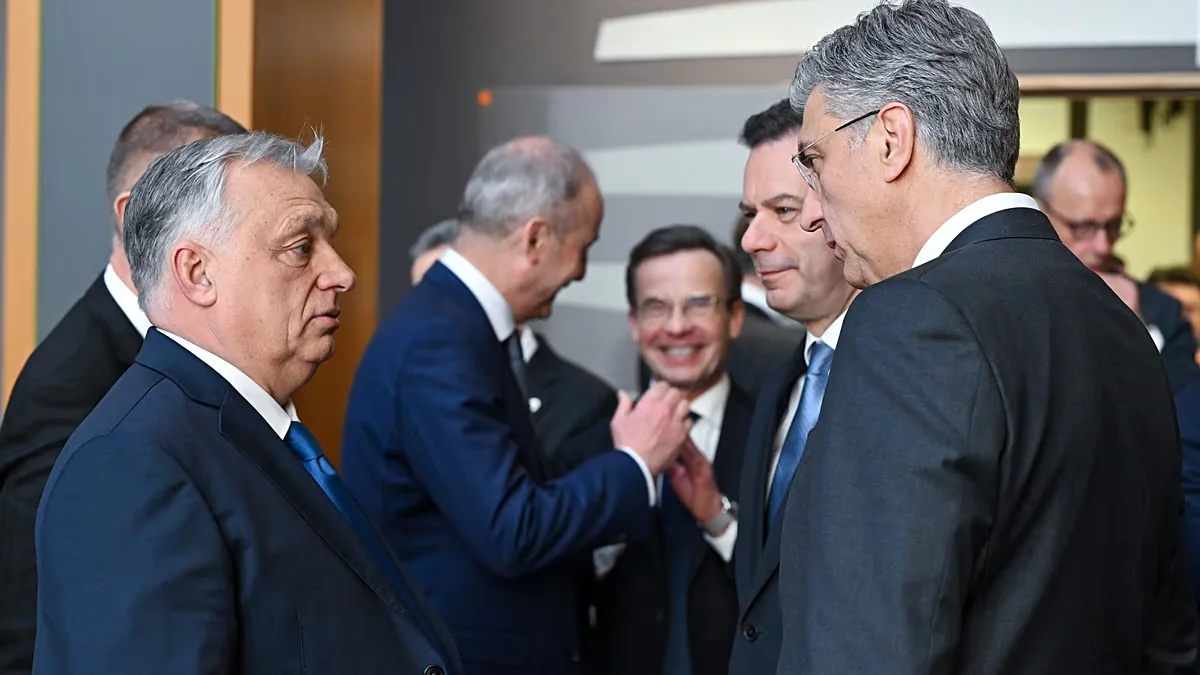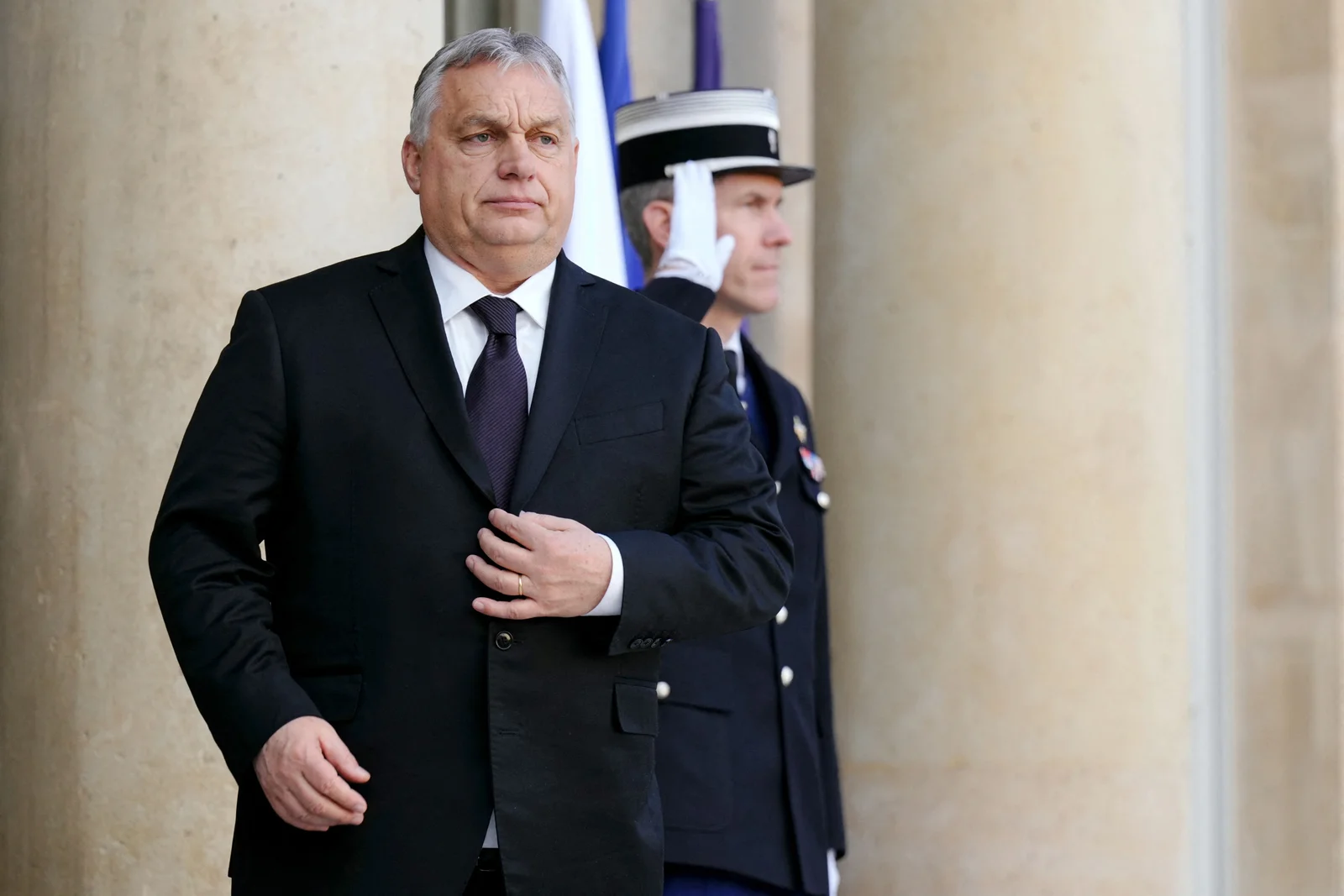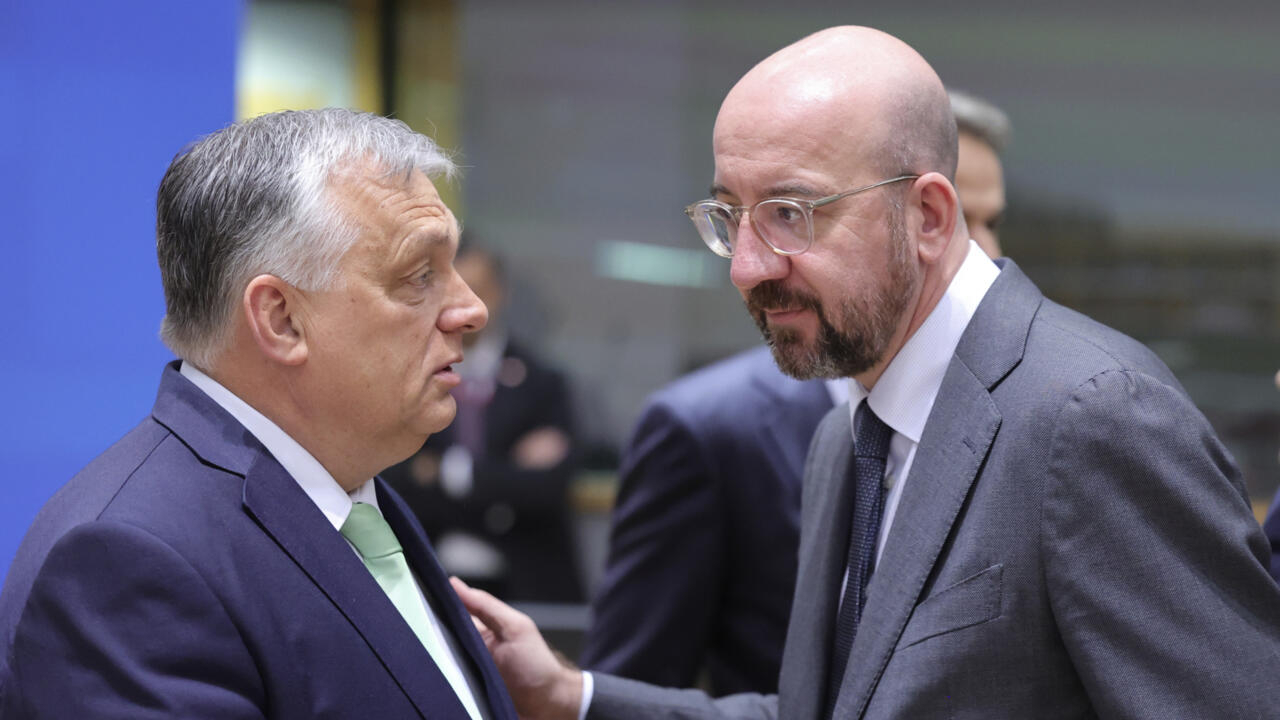
EU leaders condemn Viktor Orbán after he vetoes the EU's €90 billion loan to Ukraine over the Druzhba oil disruption, leaving a funding deadlock with Hungary's election looming and no immediate alternative plan in sight.
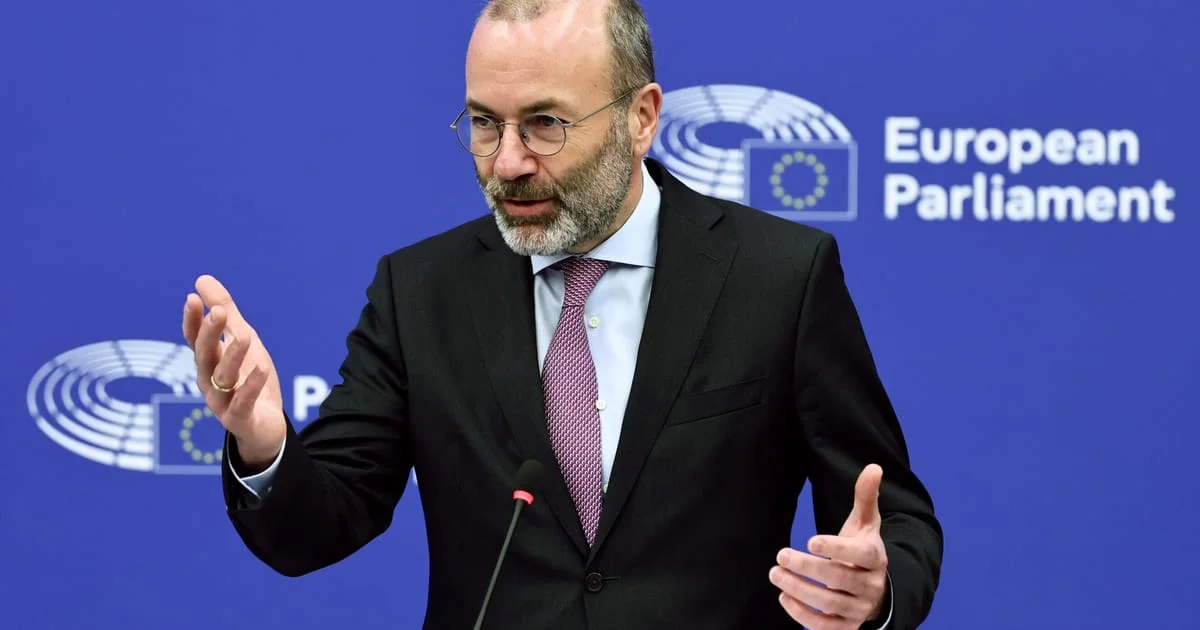
European People’s Party leader Manfred Weber called for merging the EU’s Commission president and European Council president roles into one post to give the bloc a single voice on the world stage, a move he says could be implemented after the 2029 elections without treaty changes. He also floated shifting foreign and security policy to qualified majority voting, or pursuing a sovereignty-style treaty if full integration isn’t feasible.
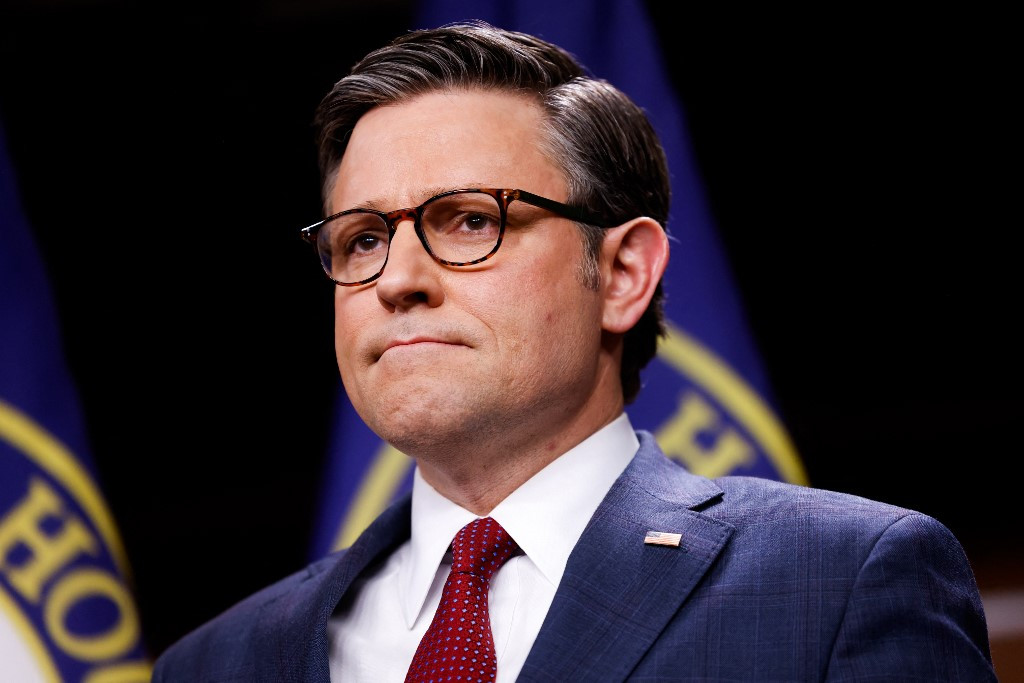
US House Speaker Mike Johnson plans to introduce a new Ukraine aid bill in the House, which must then pass in the Senate, angering hardline Republicans. President Zelensky calls for more air defense systems at the European Council summit, citing ongoing Russian attacks. A captured Russian soldier is sentenced to 12 years for war crimes in Bucha, while Russian forces continue advances in Avdiivka and Donetsk city. Satellite TV channels in Ukraine experience transmission problems due to Russian interference.
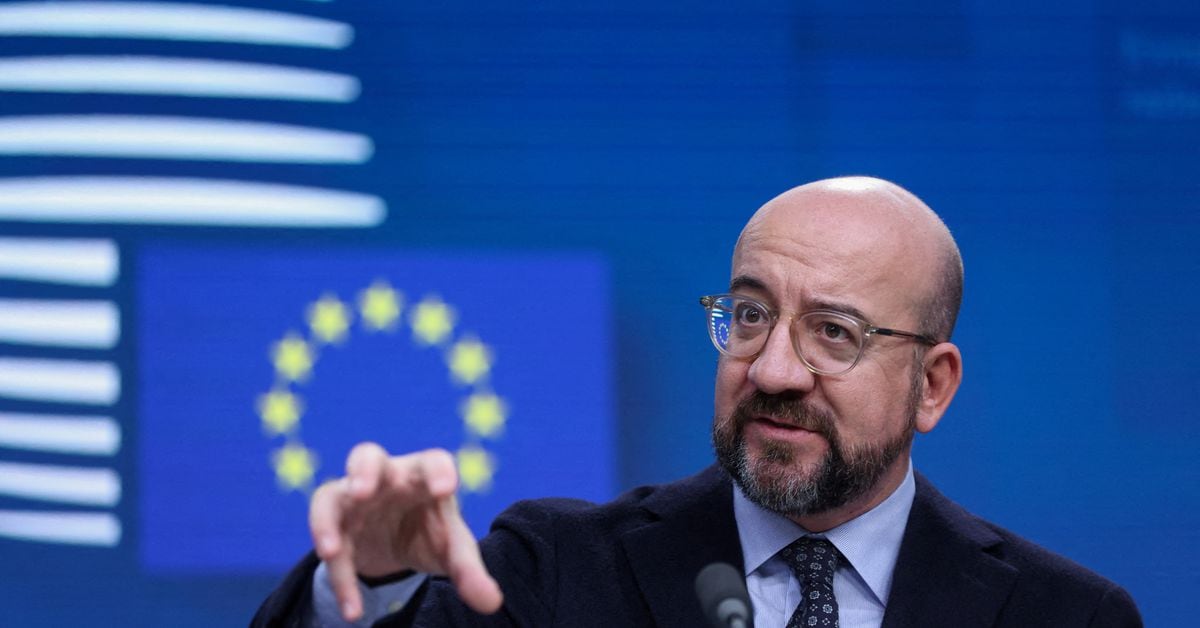
European Council President Charles Michel is advocating for a shift to a war economy in Europe, proposing targets for increased weapons purchases from European defense producers, using profits from Russian frozen assets to finance weapons for Ukraine, and facilitating financial access for the European defense industry. However, this approach raises concerns about the potential dependence on conflicts to sustain the defense industry and the broader implications for the EU's economic integration and stimulus. Additionally, solidarity with Ukraine is facing challenges, as evidenced by tensions over Ukrainian grain imports and declining political support for Ukraine aid in Western countries.
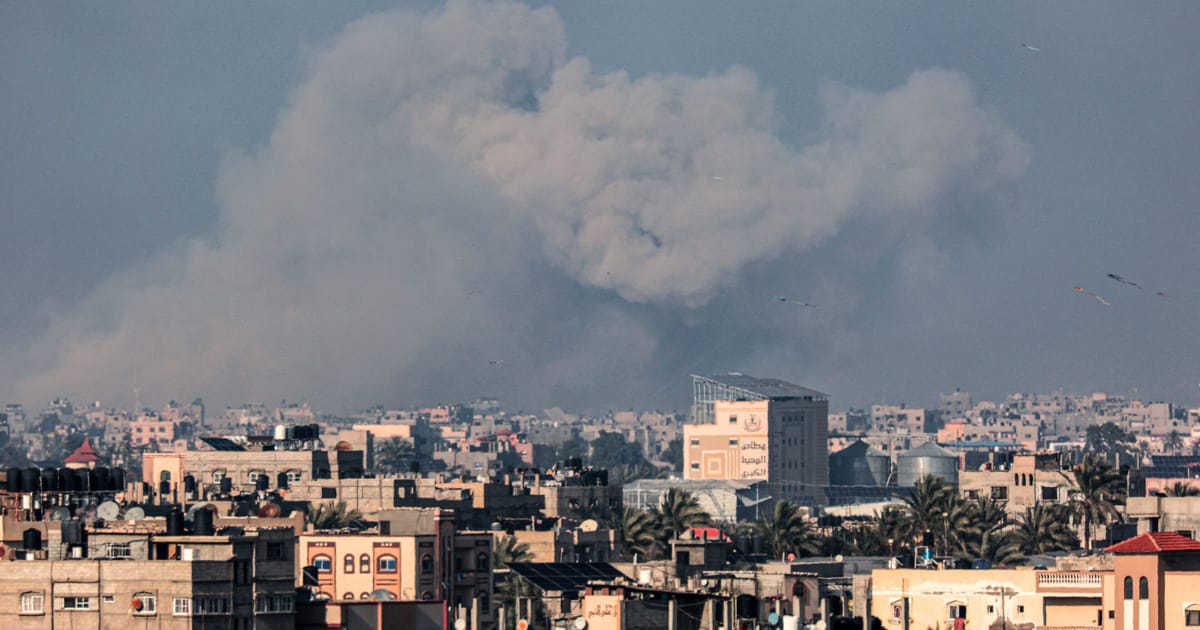
Truce talks in Paris regarding Gaza are reportedly making significant progress, former Belgian PM Sophie Wilmès enters the EU election bid, replacing European Council President Charles Michel on the Mouvement Réformateur list, French President Macron reassures farmers about reinforcing controls and transparency on fair bargaining on food prices, a 28-country guide shows how climate policies are dividing Europe, and EU countries are requesting 10 extra years to meet air pollution targets, sparking a disagreement with Parliament.
European Union leaders are racing to prevent Hungarian Prime Minister Viktor Orbán from taking over the leadership of the European Council, as his close ties to Russia and persistent opposition to supporting Ukraine have raised concerns. The current European Council President, Charles Michel, has announced his intention to run for election to the European Parliament in June, prompting a scramble to find his replacement. Orbán's control over the Council could hinder efforts to support Ukraine and contain Russia, as he continues to push for peace talks and Ukrainian concessions while blocking EU funding for Ukraine. Regardless of his motives, Orbán's influence over the Council would be detrimental for Kyiv, and his potential presidency could paralyze the EU's agenda for six months.
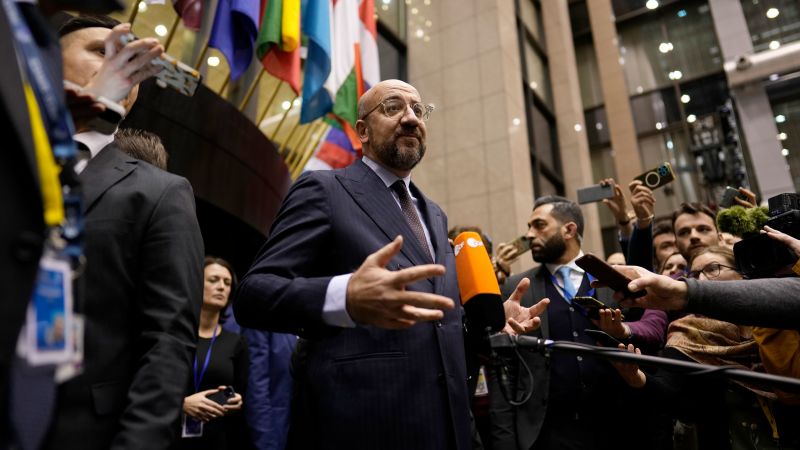
European Council president Charles Michel has announced his early resignation, triggering a race to find his successor before the European Parliament elections in June. His decision has sparked criticism and speculation over other top EU positions that must be filled by November. If a replacement is not found by the EU summit in June, Hungary's prime minister Viktor Orban could temporarily take the role, raising concerns due to his close ties to Russia. Michel defended his decision, stating that he is ready to take a "personal risk" and that normal procedures could be changed to avoid Orban taking the position.
European Council President Charles Michel downplays criticism of his plan to resign early to run for a seat in the European Parliament, stating that there is ample time to choose his successor and that the EU has options to avoid Viktor Orban. His decision comes at a critical moment for EU diplomacy as the bloc grapples with maintaining momentum and support for Ukraine, handling issues in the Middle East, and managing disputes with China.
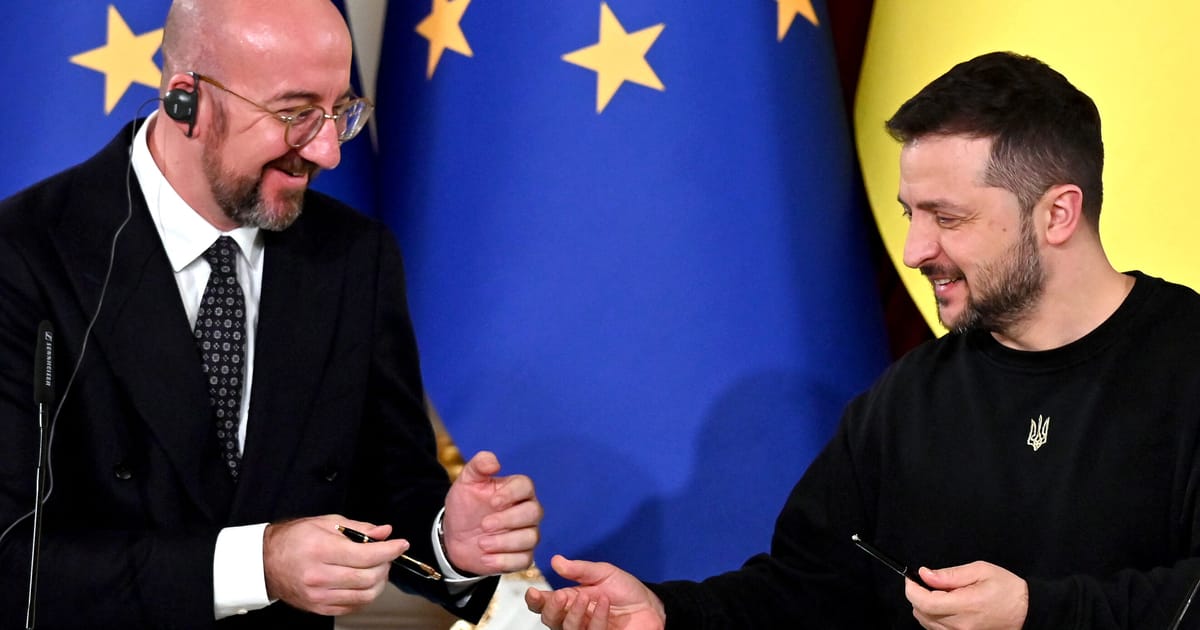
The European Council has announced that it will open membership talks with Ukraine and Moldova, granting candidate status to Georgia. Ukrainian President Volodymyr Zelensky hailed the decision as a victory, while European leaders celebrated the move as a signal of hope. However, Ukraine still needs to meet the Copenhagen Criteria before moving forward with negotiations, and it could take up to a decade for Ukraine to join the EU. Hungarian Prime Minister Viktor Orban remains a significant barrier to Ukraine's accession talks, claiming that Ukraine has not met the necessary conditions.
European leaders have approved the opening of accession negotiations for Ukraine, bypassing the opposition of Hungarian Prime Minister Viktor Orbán. The decision comes at a critical time for Ukraine as its counteroffensive against Russia's invasion has stalled and aid from the US is stuck in Congress. While the talks are expected to continue for years, Ukrainian President Volodymyr Zelenskyy hailed it as a victory for Ukraine. Orbán criticized the agreement reached without him, but EU officials maintain that the decision was legally valid. EU leaders also approved the opening of accession negotiations for Moldova.
A survey conducted ahead of the European Council summit reveals that more Europeans support Ukraine joining the European Union than oppose it, with Denmark and Poland showing the highest levels of support. The survey also found that newer EU members were more open to enlargement than older members. However, Hungary's Prime Minister Viktor Orban is expected to push back against opening negotiations with Kyiv. The European Council is set to discuss accession talks for Ukraine and Moldova, with the European Commission recommending last month that formal discussions begin.
European Council President Charles Michel believes that the EU should continue supporting Ukraine with weapons, citing Ukraine's successes in the Black Sea and on the left bank of the Dnipro River. He emphasized the need to speed up and increase production to support Ukraine, both through military training and the supply of weapons, as the EU plays a significant role in spreading common standards and norms globally.
António Costa's resignation as prime minister of Portugal has dashed the hopes of Europe's socialists for him to secure a powerful role in Brussels after the 2024 European election. Costa was the socialists' pick to succeed Charles Michel as European Council president, but his resignation due to a corruption probe has thrown his future into uncertainty. Spain's Pedro Sánchez is a potential alternative, but his minority government and challenges from right-wing opposition may make a high-profile post in Brussels appealing. Other former socialist prime ministers, such as Sanna Marin and Mette Frederiksen, face criticism and potential obstacles in securing top EU jobs. Mario Draghi, the former president of the European Central Bank, is considered a long shot due to his technocratic background and lack of party affiliation.
European Council President Charles Michel has called for the European Union to be ready for enlargement by 2030, stating that "enlargement is no longer a dream." While eight countries hold candidate status, the accession process has stalled for many in the Western Balkans. Michel emphasized that enlargement should be a merit-based process, requiring adherence to rule of law, economic standards, and foreign policy alignment with Brussels. He also suggested that the EU's long-term budget and institutional framework should consider enlargement goals. However, the challenge lies in convincing Europeans of the enlargement project and ensuring their support.
Spanish Prime Minister Pedro Sánchez's visit to Ukraine marks a "new reality" amid the Russian invasion, according to Ukrainian President Volodymyr Zelensky. CIA Director William J. Burns stated that Russia's actions in Ukraine have exposed its military weaknesses and damaged its economy. Concerns have risen about a potential nuclear disaster at the Zaporizhzhia nuclear power plant due to fighting and a breach of the nearby Kakhovka dam, jeopardizing the water supply needed to cool the reactors. People living near the plant are taking precautions, such as gathering rainwater and preparing for a radioactive fallout.