
EU Leaders Face Deadlock on Budget and Ukraine Aid as Meloni Warns Deal Is 'Light Years Away'
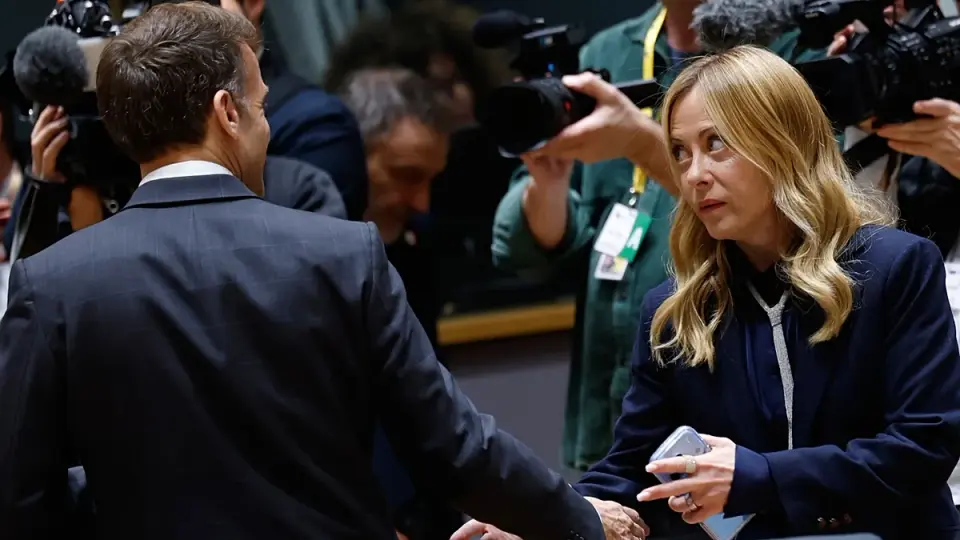
EU leaders are currently engaged in turbulent negotiations in Brussels over the bloc's next seven-year budget and continued financial support for Ukraine. Italian Prime Minister Giorgia Meloni stated that a deal is 'light years away,' rejecting the current compromise as unfair to Italy. While German Chancellor Friedrich Merz insists that all 27 member states must contribute to Ukraine's funding, three countries remain opposed to the new loan. The summit also addressed the succession of ECB President Christine Lagarde, with Spanish candidate Pablo Hernández de Cos favored, and Meloni warned that the conflict must not spread to the Mediterranean following recent strikes in Libya.
Key points
- Italian PM Giorgia Meloni declared the EU budget negotiations are 'light years away' from a solution, refusing to sign a deal that she deems unfair to Italy, particularly regarding new taxes and cuts to agricultural and cohesion funds.
- German Chancellor Friedrich Merz linked the approval of the EU budget to full participation in the new €45 billion loan for Ukraine, warning that the previous compromise allowing opt-outs cannot be repeated.
- Bulgarian PM Rumen Radev reversed his stance, agreeing to join the €45 billion Ukraine loan but only for the €20 billion budget support portion, excluding the €25 billion military aid component.
- Slovakia, Hungary, and the Czech Republic remain opposed to the new Ukraine loan, while Dutch PM Rob Jetten and Danish PM Mette Frederiksen argued that no member state should be allowed to opt out of collective support.
- EU leaders discussed the succession of ECB President Christine Lagarde, who is stepping down in February; Spanish candidate Pablo Hernández de Cos is favored over Dutch candidate Klaas Knot, though no final decision has been announced.
- Meloni warned that the war in Ukraine must not spread to the Mediterranean, citing recent strikes by Kyiv on Russian vessels in Libya, while reaffirming Italy's support for Ukraine's defense efforts.
Background
The current summit follows a period of heightened geopolitical tension, including a US war on Iran that impacted energy costs and a global AI race that raised borrowing costs, as noted by outgoing ECB President Christine Lagarde. Lagarde announced her early departure in October 2026 to allow for an orderly transition before the French presidential election in 2027. The EU's previous €90 billion support loan for Ukraine saw opt-outs from Slovakia, Czechia, and Hungary, setting a precedent that current leaders are seeking to avoid. Additionally, Spain's Prime Minister Pedro Sánchez is absent from the summit due to upcoming snap elections, with French President Emmanuel Macron representing Madrid.
How outlets are covering it
Euronews and The Guardian both highlight the deep divisions between the 'frugals' (led by the Netherlands, Germany, and Sweden) and the 'Friends of Cohesion' (led by Italy and Romania), with Meloni's 'light years away' remark serving as a focal point for the deadlock. ANSA emphasizes Meloni's warning regarding the Mediterranean, linking the broader conflict to regional security concerns in North Africa. The Guardian notes the political pressure from French far-right leader Marine Le Pen, who criticized the rush to finalize the budget before the 2027 French elections, while Euronews focuses on the technical details of the budget proposal and the ECB succession race. All sources agree that the link between the EU budget and Ukraine funding is the primary source of contention, with Merz insisting on collective responsibility and Meloni demanding a rebalancing of the financial burden.
Why it matters
The outcome of these negotiations will determine the EU's financial capacity to support Ukraine through the winter and beyond, as well as the bloc's ability to maintain cohesion in the face of rising geopolitical threats. A failure to reach a deal could lead to fragmented support for Ukraine and weaken the EU's strategic autonomy. Additionally, the decision on the ECB president will influence monetary policy in the eurozone during a period of economic stagnation and high borrowing costs. The summit also sets the stage for potential shifts in EU policy due to upcoming elections in several member states, including Spain, France, and Poland.
What to watch
EU leaders are expected to continue their negotiations in closed-door sessions, with European Council President António Costa aiming to bring them closer to a final agreement by the end of December. Ambassadors will meet to prepare a decision on the ECB president, which will then be sent back to the leaders for final approval. Negotiations with the European Parliament will follow. The summit may continue into Friday, depending on progress. The EU is also expected to finalize its latest sanctions package against Russia in December, and the UK and EU are set to publish the legal texts for their post-Brexit 'reset' deal, including the food and drink agreement, which is currently held up by a disagreement over tuition fees.
- Live - EU summit: Budget deal 'light years away', Meloni says as talks begin Euronews.com
- EU leaders ‘light-years away’ on agreeing budget at summit, warns Giorgia Meloni – Europe live The Guardian
- Italy's Meloni talks tough on EU budget, warns Ukraine on Mediterranean strike Reuters
- EU far from deal on bloc's budget, Italy PM Meloni says TradingView
- ++ Ukraine war must not spread to the Mediterranean says Meloni ++ ANSA
Want the full story? Read the original reporting
Read on Euronews.com