
EU Summit Ends in Stalemate: Budget Talks Stall, Ukraine Funding Remains Unresolved
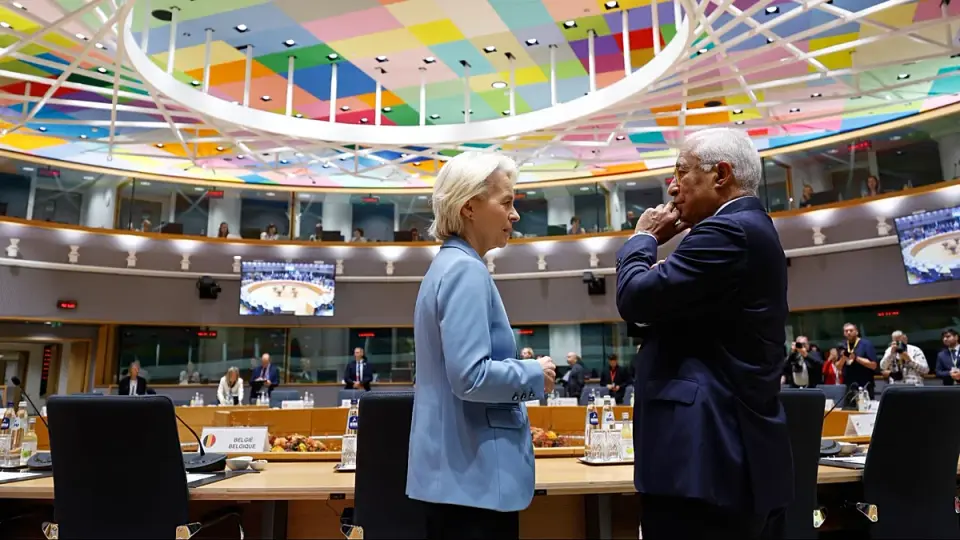
The two-day EU summit in Brussels concluded without resolving critical disputes over the 2028-2034 budget or Ukraine’s financing needs. Leaders failed to reach a consensus on the multiannual financial framework, with the European Council president taking charge of further negotiations. While there was broad support for new trade defense tools against China, significant divisions persisted over energy policies and climate rules. Ukrainian President Volodymyr Zelenskyy secured pledges of continued support but left without a concrete funding plan, as European leaders debated the use of frozen Russian assets.
Key points
- Budget impasse: Leaders rejected the December deadline for the 2028-2034 budget, with European Council President António Costa to propose a new compromise before a special summit on November 26.
- Ukraine funding: Zelenskyy requested an additional €70 billion for defense, but no decision was reached on funding sources, including the contested use of frozen Russian assets.
- China trade: Leaders unanimously supported new trade defense instruments to address the €360 billion trade deficit with Beijing, following a recent deal on hybrid car quotas.
- Energy and climate: Italy and the Visegrad group pushed to delay the Emissions Trading System (ETS2) until 2030, but the proposal failed to gain unanimity.
- Migration: The Commission pledged to introduce an emergency framework by year-end to address sudden mass movements, such as the recent influx in Ceuta.
Background
The summit followed a period of heightened tensions between the US and Ukraine, including a controversial diesel deal between Washington and Moscow. Previous EU attempts to unlock €3.7 billion in aid for Ukraine were delayed due to legislative hurdles in Kyiv. The budget negotiations have been complicated by upcoming elections in France, Italy, and Poland, which may shift political priorities. The archive notes that Costa had previously scheduled a special meeting for November 26 to bridge the gap between net contributors and spending nations, a timeline now under pressure as leaders prioritize quality over speed.
How outlets are covering it
Euronews emphasized the failure to reach a budget deal by December, highlighting the entrenched red lines of member states and the potential for a new compromise text. The Guardian focused on the humanitarian aspect, noting Pope Leo’s call to Putin for aid in occupied Oleshky, while also covering the summit’s lack of progress on Ukraine funding. Politico highlighted the 'marathon' nature of the talks, noting that while there was unity on China, significant differences remained on the budget and energy. Merz, the German Chancellor, stressed the need for a deal by year-end but acknowledged 'significant differences' in spending priorities. Macron criticized the Irish budget proposal as a 'straitjacket,' while Spain’s Sánchez argued that a smaller budget signals weakness to global competitors. The outlets agreed that the summit produced little tangible movement on the most urgent challenges, despite broad consensus on supporting Ukraine in principle.
Why it matters
The failure to reach a budget deal by December risks disrupting funding for farmers and researchers in January 2028, as well as undermining EU credibility in global trade negotiations. The unresolved question of Ukraine’s financing, particularly the use of frozen Russian assets, could leave Kyiv vulnerable as the war continues. The new trade defense tools against China may reshape EU industrial policy, but the lack of a unified approach on energy and climate could exacerbate internal divisions. The summit’s inability to resolve these issues may have long-term implications for EU cohesion and its ability to respond to future crises.
What to watch
European Council President António Costa will propose a new compromise text on the budget before a special summit on November 26. Leaders will meet again in Dublin and Brussels in November to continue negotiations on Ukraine funding and the budget. The Commission is expected to present new trade defense instruments and an emergency migration framework by the end of the year. Zelenskyy will continue to seek additional funding from European partners, while the EU will monitor the implementation of the China trade deal and the impact of energy policies on member states.
- EU summit: Costa takes over budget talks as leaders stick to red lines Euronews.com
- Von der Leyen and Costa brief the media after two-day EU summit – Europe live The Guardian
- EU leaders wrap second day of talks, leaving open questions on Ukraine and budget — live updates POLITICO.eu
- EU leaders kick off summit with wrangles over high energy prices and spending Reuters
- EU summit to focus on China, Ukraine and bloc budget DW.com
Want the full story? Read the original reporting
Read on Euronews.com