
Von der Leyen Proposes European Security Council to Counter Russian Threats and U.S. Uncertainty
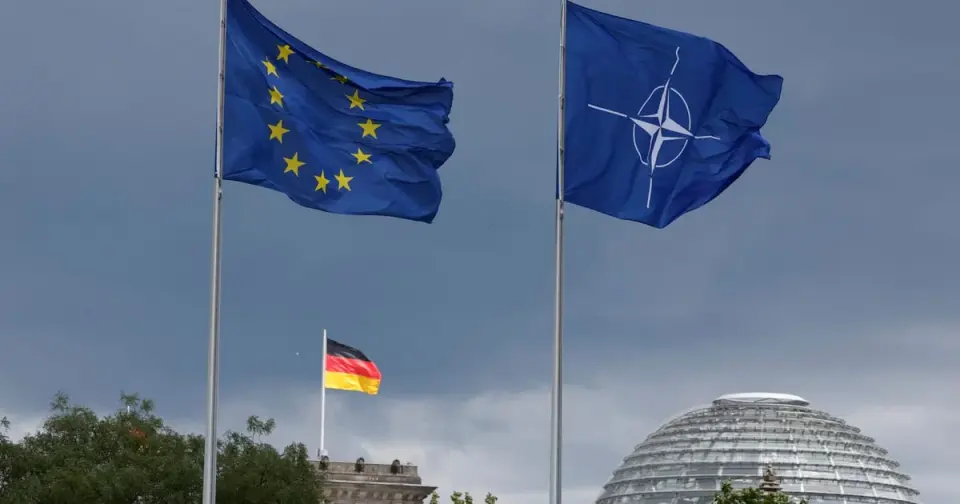
European Commission President Ursula von der Leyen has proposed the creation of a European Security Council to address escalating security threats from Russia and shifting transatlantic dynamics. In her State of the Union address, she outlined a new forum for EU and like-minded leaders, including Ukraine, the UK, and Canada, to coordinate responses to hybrid attacks and strengthen defense capabilities. The proposal aims to reduce Europe's reliance on U.S. technology and address gaps in strategic military capabilities, such as air-to-air refueling and missile defense. Von der Leyen also suggested an EU emergency security protocol modeled on NATO’s Article 4 consultation procedure to handle threats below the threshold of armed aggression. The initiative reflects growing concerns over Russian aggression and uncertainties in U.S.-European relations, particularly amid tensions involving Greenland and Canadian sovereignty.
Key points
- Von der Leyen proposed a European Security Council to coordinate security policies among EU and partner nations.
- The proposal includes a new emergency protocol for responding to hybrid attacks, similar to NATO’s Article 4 consultations.
- A new European Instrument for strategic enablers aims to build capabilities like air-to-air refueling and missile defense.
- The initiative is framed as a response to escalating Russian threats and fraying transatlantic relations.
- Von der Leyen also proposed Canada’s associate membership in the EU, signaling deeper cooperation with Ottawa.
Background
The idea of a European Security Council has been discussed since the 1980s but gained momentum after the 2003 Iraq war and in 2017 when former EU leaders Jean-Claude Juncker and Emmanuel Macron revived the concept. Recent tensions, including U.S. President Donald Trump’s threats regarding Greenland and Canadian sovereignty, have heightened concerns about transatlantic reliability. In September 2026, von der Leyen reversed her initial plan to skip Carney’s address in Strasbourg, signaling a shift toward closer EU-Canada ties. The EU had previously pledged 200 million euros to support Greenland, with plans to double funding by 2028, amid Trump’s pressure on Denmark and other European partners.
How outlets are covering it
Politico emphasizes the urgency of the European Security Council proposal, highlighting von der Leyen’s focus on countering Russian hybrid attacks and reducing reliance on U.S. defense technology. The outlet notes skepticism from EU capitals about ceding defense powers to new institutions and potential clashes with NATO. The Guardian, while covering the same speech, focuses more broadly on von der Leyen’s call for unity and her proposal for Canada’s associate membership, framing it as a response to an 'openly hostile world.' AP News provides a neutral summary of the speech but does not delve deeply into the security council proposal. The outlets differ in emphasis: Politico focuses on the security implications, while The Guardian highlights the broader geopolitical and trade dimensions, including Canada’s potential role.
Why it matters
The proposal signals a shift in European security policy, aiming to reduce dependence on the U.S. and address growing threats from Russia. It reflects a broader trend of Europe seeking greater autonomy in defense and security matters, particularly amid uncertainties in transatlantic relations. The initiative could reshape EU-NATO dynamics and influence future defense cooperation with partners like Canada and the UK.
What to watch
The next steps will involve negotiations among EU member states and partner nations to define the structure and scope of the European Security Council. The proposal for Canada’s associate membership will likely face scrutiny over its practical implications, particularly regarding trade and single market access. Von der Leyen’s emergency security protocol and strategic enablers initiative will require further development and alignment with NATO to avoid duplication of efforts. The outcome of these discussions will depend on the willingness of EU capitals to cede some defense powers and the ability to balance cooperation with NATO.
- Von der Leyen pitches European Security Council in response to Trump and Putin politico.eu
- Former Kosovo president Thaçi sentenced to 25 years in prison by international court in The Hague – Europe live The Guardian
- 12 takeaways from von der Leyen’s State of the Union politico.eu
- EU's von der Leyen backs partnership with Canada in 'openly hostile world' Reuters
- A state of the EU speech with Mark Carney in the room and AI on the agenda AP News
Want the full story? Read the original reporting
Read on politico.eu