
European Far Right Abandons Trump as U.S. Popularity Craters
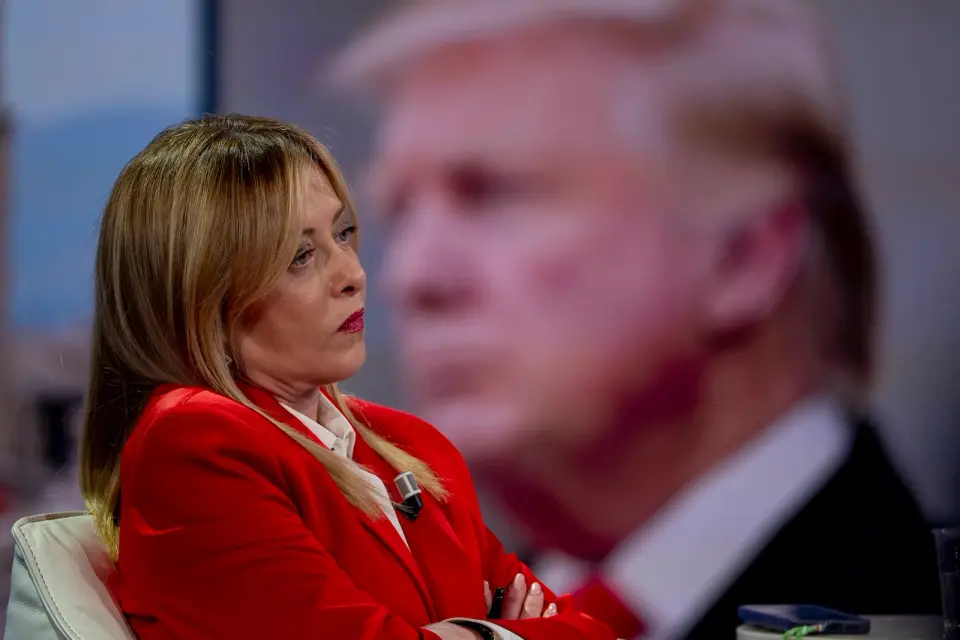
European far-right parties are distancing themselves from Donald Trump, viewing his erratic foreign policy and declining popularity as a political liability rather than an asset. Despite earlier attempts by the U.S. administration to cultivate these groups, leaders like Giorgia Meloni and Marine Le Pen have moved away from Trump, while even the AfD has criticized his actions. This shift highlights a fundamental mismatch between American neo-imperialism and European nationalist interests, suggesting that the global far-right movement is not a unified bloc under U.S. leadership but rather a fragmented network with diverging priorities. The article argues that Trump’s inability to understand European sovereignty and cultural nuances has alienated potential allies, leaving him isolated as his approval ratings plummet across the continent.
Key points
- European far-right parties, including Reform UK, National Rally, AfD, and Brothers of Italy, are distancing themselves from Donald Trump, viewing him as a political liability.
- The U.S. National Security Strategy’s focus on 'civilizational erasure' and support for far-right parties was seen as arrogant and out of touch with European sensibilities.
- Viktor Orbán’s defeat in Hungary, linked to JD Vance’s visit, and Mark Carney’s victory in Canada served as early warnings that Trump’s influence was waning in Europe.
- Trump’s threats to annex Greenland, his war with Iran, and trade wars with the EU violated core European principles of national sovereignty, alienating even the most pro-American far-right groups.
- Giorgia Meloni, once a 'Trump whisperer,' now views him as a 'toxic asset,' while Marine Le Pen avoids mentioning him to focus on her 2027 presidential campaign.
- The AfD has criticized Trump’s Iran war as a 'catastrophe,' and Björn Höcke has demanded the withdrawal of U.S. troops from Germany, reflecting a broader rejection of American dominance.
Background
This development follows a period of intense U.S. engagement with European far-right parties, including the 2025 National Security Strategy’s explicit support for groups like the AfD. Recent archive articles highlight the AfD’s electoral gains in Germany, which have strained relations with other European far-right parties due to its pro-Russian stance. Additionally, the ongoing tensions between the U.S. and Iran, including Trump’s rejection of a deal to reopen the Strait of Hormuz, have further exacerbated European concerns about U.S. foreign policy. The UK’s recent confirmation of Russian interference in the Brexit vote also underscores the broader European anxiety about external influences on domestic politics, a concern that Trump’s erratic behavior has only intensified.
Why it matters
The distancing of European far-right parties from Trump signals a significant shift in global political dynamics, challenging the notion of a unified 'nationalist international.' This fragmentation may limit Trump’s ability to influence international affairs and could lead to a more complex and unpredictable geopolitical landscape. For the U.S., this loss of influence in Europe could have long-term implications for alliances and global stability, particularly as Europe’s far-right parties gain power and prioritize national sovereignty over transatlantic cooperation. The article suggests that while the global crisis of liberal democracy persists, Trump’s role as a central figure in this movement is diminishing, leaving a power vacuum that may be filled by other actors with different agendas.
What to watch
European far-right parties are likely to continue distancing themselves from Trump, focusing on domestic issues and national sovereignty rather than aligning with U.S. foreign policy. This could lead to a more fragmented and unpredictable European political landscape, with parties like the AfD, National Rally, and Brothers of Italy pursuing independent agendas. The U.S. may need to reassess its approach to Europe, seeking new ways to engage with these parties without relying on Trump’s personal brand. Additionally, the ongoing tensions between the U.S. and Iran, as well as the trade war with the EU, may further strain transatlantic relations, potentially leading to a more multipolar world order where Europe asserts greater independence from American influence.
Want the full story? Read the original reporting
Read on Salon.com