
Von der Leyen Pitches EU-Canada 'Associate Membership' and New Security Council Amid Hybrid Threats
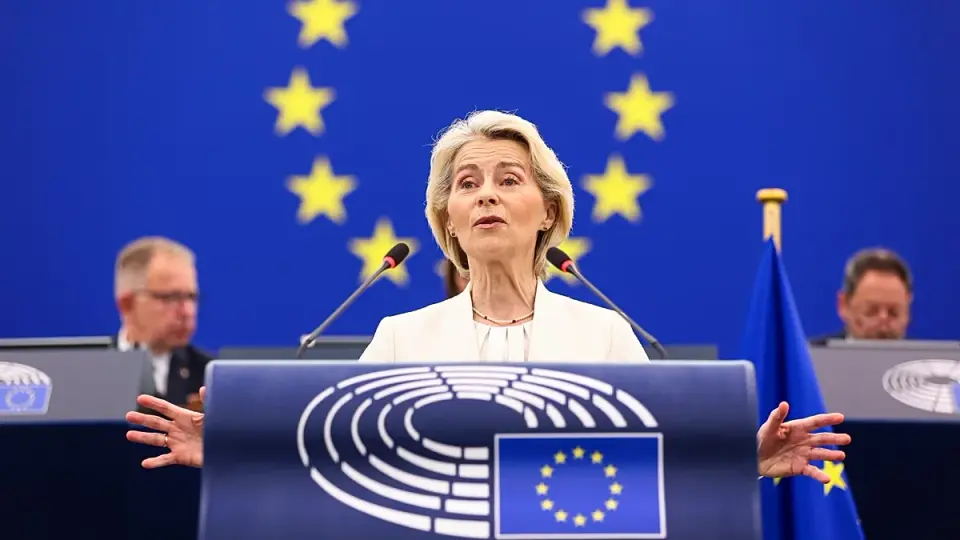
European Commission President Ursula von der Leyen delivered her annual State of the Union address in Strasbourg, proposing a new 'associate membership' status for Canada, a European Security Council, and an emergency protocol for hybrid attacks. She also announced initiatives on climate resilience, digital safety, and migration management, framing Europe's response to global instability as a path toward greater sovereignty.
Key points
- Von der Leyen offered Canada a new 'associate membership' status to deepen cooperation in defense, technology, and energy, with Prime Minister Mark Carney attending as guest of honor.
- She proposed a 'European Security Council' including non-EU partners like the UK, Ukraine, and Norway to address strategic security challenges.
- An emergency security protocol modeled on NATO's Article 4 was introduced to coordinate responses to hybrid attacks such as cyberattacks and sabotage.
- Climate action was prioritized with a new Heatwave Plan, Climate Insurance Alliance, and framework to address 660,000 hectares burned and 12 million tonnes of crops lost in 2026.
- The EU Kids Act was announced to ban social media for under-13s, alongside AI safety measures and a migration emergency framework following the Ceuta crisis.
Background
This address follows recent EU efforts to strengthen transatlantic ties amid US tensions, including pledges to support Greenland and a push to mobilize private savings for infrastructure. It also comes after the EU abandoned a proposed defense advisory panel due to member-state pushback, highlighting ongoing challenges in EU defense coordination.
How outlets are covering it
Euronews emphasized the symbolic nature of the Canada 'associate membership' and its potential to reshape EU-Canada relations, while noting the lack of detail on its implementation. AP News focused on the security implications, highlighting the new hybrid attack protocol and its parallels to NATO's Article 4. Politico.eu stressed the geopolitical context, linking the European Security Council proposal to fraying transatlantic relations and Russian threats, while noting historical skepticism from EU capitals. Breaking Defense analyzed the legal and structural uncertainties of the new security mechanisms, questioning how decision-making would work and whether the European Security Council would duplicate NATO's role.
Why it matters
These proposals signal a shift toward greater European autonomy in security, climate, and digital policy, potentially reducing reliance on the US and addressing internal vulnerabilities. The Canada 'associate membership' could set a precedent for non-EU partnerships, while the security and climate initiatives aim to enhance resilience against hybrid threats and environmental crises.
What to watch
The European Commission will present a climate resilience framework next month, and the EU Kids Act and AI safety measures will be drafted. The European Security Council and hybrid attack protocol will require further negotiation among member states and partners, with potential clashes over duplication with NATO. Canada's response to the 'associate membership' offer will be closely watched, as will member-state reactions to the migration emergency framework.
- State of the Union: Five takeaways from Ursula von der Leyen's speech Euronews.com
- EU chief von der Leyen calls for EU security mechanism to respond to drone incidents and sabotage AP News
- EU's von der Leyen backs partnership with Canada in 'openly hostile world' Reuters
- Von der Leyen pitches European Security Council in response to Trump and Putin politico.eu
- EU chief calls for new hybrid response protocol, increased defense ties to non-members Breaking Defense
Want the full story? Read the original reporting
Read on Euronews.com