
Georgia PM Blames EU for Accession Deadlock, Refuses to Repeal Controversial Laws
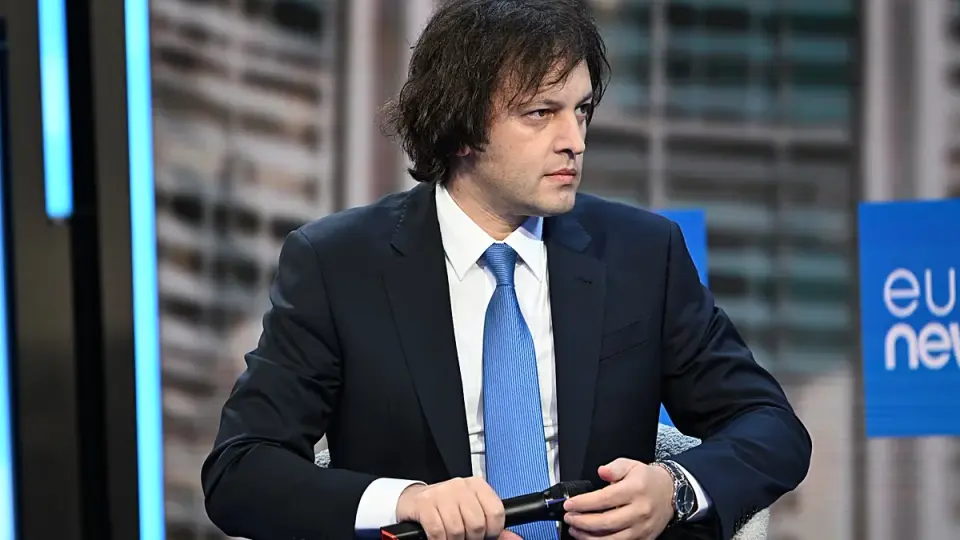
Georgian Prime Minister Irakli Kobakhidze told Euronews that Tbilisi remains committed to joining the EU but offered no concrete steps to resolve the current impasse. He accused Brussels of political blackmail and refused to repeal laws on foreign influence and NGO registration, which the Venice Commission has criticized. While claiming Georgia has met over 90% of its Association Agreement obligations, Kobakhidze blamed the European Commission for halting the accession process, despite nearly 80% of Georgians supporting EU membership.
Key points
- Kobakhidze stated at the Euronews Enlargement Summit that Georgia is 'optimistic' the EU will change its attitude, but offered no specific reforms to address Brussels' concerns.
- The PM refused to repeal the foreign influence transparency law and the NGO registry, arguing these measures protect sovereignty and are in line with international standards.
- He accused the European Commission of double standards and political bias, claiming its decision to withhold candidate status in 2022 was a 'great mistake' that fueled opposition protests.
- Kobakhidze claimed Georgia ranks first in Europe for economic growth and has fulfilled over 90% of its Association Agreement obligations, despite the EU Council's 2025 resolution urging Tbilisi to end hostile rhetoric.
- The government previously announced in November 2024 that it would not seek to open accession negotiations before the end of 2028, a move the PM defended as a necessary step for Georgia to prepare.
Background
Georgia applied for EU membership in 2022 alongside Ukraine and Moldova. Although it received candidate status in December 2023, relations deteriorated rapidly due to concerns over democratic backsliding, media freedom, and judicial independence. The European Council concluded that the government's actions had effectively halted the accession process. A 2025 EU Council resolution urged Georgian authorities to end hostile rhetoric against EU institutions. The current standoff follows the government's unilateral decision in late 2024 to delay accession negotiations until 2028, despite a Commission report indicating serious democratic backsliding.
How outlets are covering it
Euronews highlights Kobakhidze's refusal to offer a concrete path out of the deadlock and his accusation that the EU is engaging in political blackmail. SOVA notes the PM's insistence that the EU must change its approach, comparing it to the Soviet era, while a journalist challenged his logic by noting that 27 member states will not adapt to Georgia. Apa.az emphasizes Kobakhidze's call for open, public discussions and his claim that Georgia is making economic progress despite the tensions. Interpressnews, citing opposition figure Lasha Tughushi, predicts the upcoming European Commission report will be even more critical than the previous year's, describing 'Georgian Dream' as uniquely skeptical of enlargement on the European continent. The outlets differ in focus: Euronews and SOVA center on the diplomatic impasse and Kobakhidze's rhetoric, Apa.az focuses on the call for dialogue and economic metrics, while Interpressnews highlights the domestic political opposition's view of the government's stance.
Why it matters
The deadlock between Georgia and the EU signals a potential shift in the region's geopolitical alignment. If the EU cannot resolve the impasse, it may weaken its influence in the South Caucasus and embolden Russian interests. The controversy over the foreign influence law and NGO registry sets a precedent for how the EU will handle democratic backsliding in candidate countries, potentially affecting future enlargement policies. For Georgia, the inability to progress toward EU membership despite strong public support could lead to further domestic instability and a decline in democratic standards, as indicated by the opposition's warnings.
What to watch
The European Commission is expected to publish a new assessment report on Georgia soon, which opposition figures predict will be highly critical. The report may include findings on the ongoing process to ban opposition parties at the Constitutional Court, which was not covered in the previous assessment. The outcome of this report will likely determine whether the EU maintains its current stance or seeks to re-engage with Tbilisi. Kobakhidze has called for open, public debates on each issue, but it remains unclear if the EU will accept this format or continue to demand specific legal reforms. The next major milestone will be the end of 2028, when the government's self-imposed deadline for reopening accession negotiations arrives.
- Georgia PM offers no way out of EU deadlock - and blames Brussels Euronews.com
- Kobakhidze: We Want to Join the European Union with Dignity Once It Changes SOVA
- Georgian PM calls on EU to hold open discussions Apa.az
- Lasha Tughushi: The European Commission’s report will be the sharpest, because another step backward has been taken in the country – “Georgian Dream” is the most skeptical on the European continent; with such a sharp attitude toward enlargement and E ინტერპრესნიუსი
- Georgian PM Irakli Kobakhidze to attend Euronews EU Enlargement Summit in Brussels Georgia Today
Want the full story? Read the original reporting
Read on Euronews.com