
Guinea-Bissau voters endorse constitutional overhaul that centralizes power in the presidency
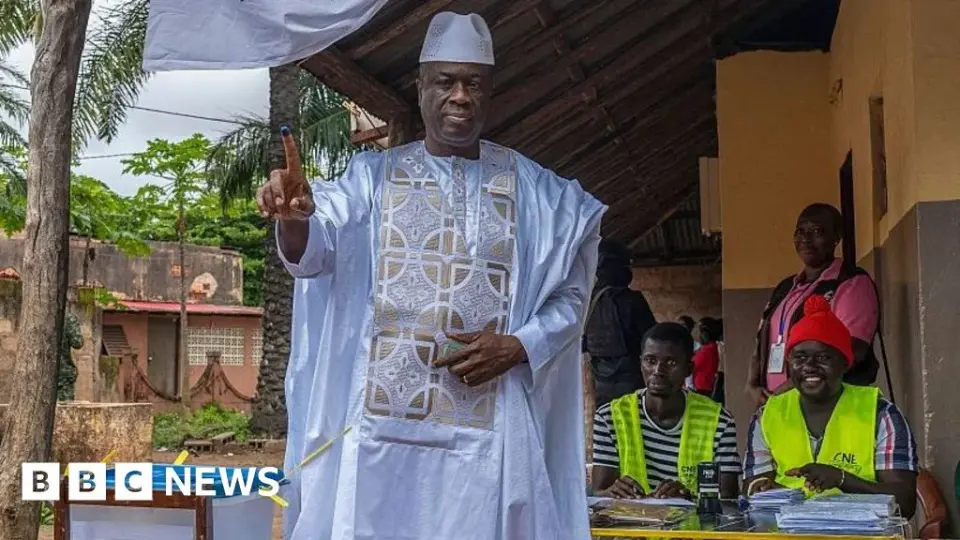
Guinea-Bissau voters approved a new constitution that significantly expands presidential authority and shrinks parliament, a move backed by the military junta but boycotted by the main opposition party ahead of December elections.
Key points
- Provisional results show 70% of voters supported the new constitution, with turnout reported at nearly 60%.
- The new framework allows the president to appoint and dismiss the prime minister and cabinet, create or abolish ministries, and dissolve parliament during political crises.
- Parliament is reduced from 102 to 65 seats, and electoral constituencies are cut from 29 to 12.
- Presidential candidates must now have lived continuously in Guinea-Bissau for five years prior to an election.
- The five-year presidential term and two-term limit remain unchanged.
- General elections are scheduled for December 2026 to restore civilian rule.
Background
Guinea-Bissau, one of the world’s poorest nations, has faced nine coups since gaining independence from Portugal in 1974. The current military government, led by Gen Horta N’Tam, seized power in November 2025 following a disputed presidential election between Umaro Sissoco Embaló and Fernando Dias. The junta cited a plot involving a drug baron as justification for the takeover, adding the country to a list of West African nations experiencing recent military interventions. The UN has previously labeled the nation a 'narco-state' due to its uninhabited islands, which facilitate drug trafficking.
How outlets are covering it
BBC and The Washington Post (via AP) agree that the referendum resulted in a significant expansion of presidential powers and a reduction in legislative size. However, they highlight different aspects of the controversy. BBC emphasizes the opposition’s boycott, led by the African Party for the Independence of Guinea and Cape Verde (PAIGC), which argued the process lacked safeguards and threatened democracy. PAIGC leader Domingos Simões Pereira accused the junta of undermining political freedoms. Regional analyst Paul Ejime, cited by BBC, described the referendum as a formality that turned the president into an 'emperor' and called for Ecowas intervention, noting that the junta’s legitimacy was compromised by the 'strange coup.' The Washington Post/AP report focuses on the factual outcome, noting that opposition parties called for a boycott because the changes would make the president more powerful, but does not detail the specific accusations of drug baron involvement or the Ecowas response as prominently as BBC.
Why it matters
The constitutional changes fundamentally alter Guinea-Bissau’s semi-presidential system, shifting power from the legislature to the executive. This move could entrench military influence in civilian governance and set a precedent for other West African nations facing political instability. The December elections will test whether the junta honors its pledge to return power to civilians or if the expanded presidential powers will be used to consolidate control, potentially undermining democratic transitions in the region.
What to watch
General elections are scheduled for December 2026. The international community, particularly Ecowas, will monitor whether the junta adheres to its promise of restoring civilian rule. The new constitutional provisions, including residency requirements for candidates and reduced parliamentary seats, will shape the political landscape for the next election cycle. Observers will watch for any further military interference or opposition challenges to the new framework.
- Guinea-Bissau referendum approves new constitution that expands president's powers BBC
- Guinea-Bissau approves new constitution that expands presidential powers Reuters
- Guinea-Bissau votes to reshape presidency DW.com
- Guinea-Bissau votes in a referendum to grant expanded presidential powers ahead of election WCBD News 2
- Guinea-Bissau voters back a sweeping power shift, boosting the president and shrinking parliament The Washington Post
Want the full story? Read the original reporting
Read on BBC