
Herzog Consultations Conclude as Eisenkot Emerges as Prime Ministerial Favorite Amidst Ra'am Dispute
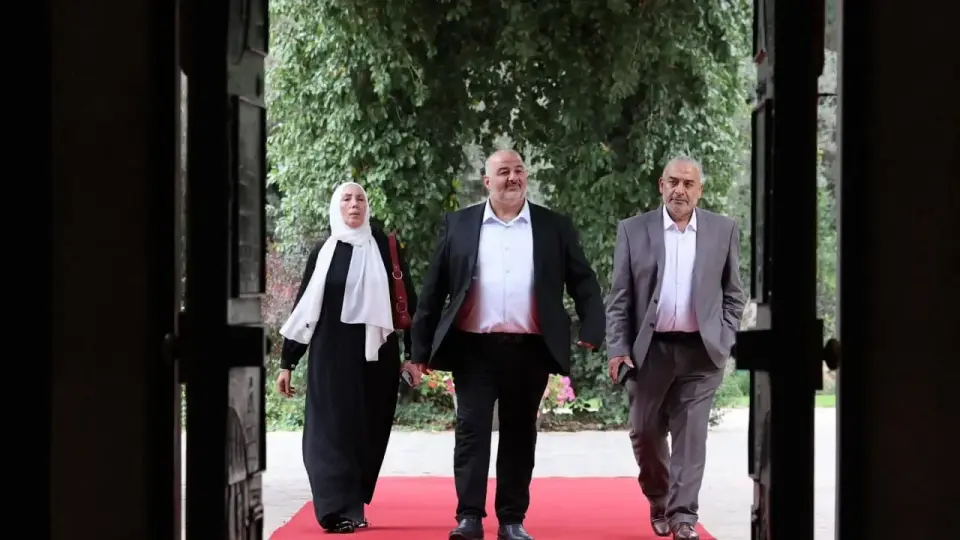
Israeli President Isaac Herzog concluded the final round of consultations to select a prime ministerial candidate on November 5, 2026. Gadi Eisenkot, leader of the Yashar party, is the frontrunner to receive the mandate, having secured recommendations from Ra'am, The Democrats, and Yisrael Beytenu. Conversely, Likud and Otzma Yehudit backed Benjamin Netanyahu, while United Torah Judaism refused to recommend any candidate. The process was marked by sharp ideological clashes, particularly regarding the status of Hamas and the integrity of the recent elections.
Key points
- Gadi Eisenkot is the leading candidate to form the next government, having received recommendations from Ra'am, The Democrats, and Yisrael Beytenu.
- Benjamin Netanyahu received support from Likud and Otzma Yehudit, while United Torah Judaism declined to recommend any candidate, prioritizing protections for Torah students.
- Ra’am chairman Mansour Abbas refused to explicitly label Hamas a terrorist organization, citing safety concerns for his family and the need to maintain a diplomatic bridge, despite Herzog’s direct questioning.
- Otzma Yehudit representatives alleged that approximately NIS 100 million was illegally transferred to voters, claiming the election results were stolen, a stance Herzog did not endorse.
- The Democrats party accused Netanyahu of delegitimizing their members, while Ra’am criticized Netanyahu’s failure to secure a hostage deal since October 7, 2023.
Background
These consultations follow the October 2026 Israeli elections, which resulted in a fragmented Knesset requiring broad coalition-building. Previous coverage of the 2026 US midterms is unrelated to this Israeli political development, as the archive entries focus on American domestic politics and do not provide background on the Israeli election or the current coalition negotiations.
How outlets are covering it
The Jerusalem Post and Israel National News both report on the consultations but emphasize different aspects. The Jerusalem Post provides a comprehensive overview of all party recommendations, highlighting the split between pro-Eisenkot and pro-Netanyahu blocs, and details the specific arguments made by each delegation. Israel National News focuses narrowly on the contentious exchange between Herzog and Mansour Abbas regarding the classification of Hamas, framing it as a test of loyalty and safety. Both sources agree on the factual outcomes of the recommendations but differ in their emphasis on the ideological tensions versus the procedural mechanics of the coalition formation.
Why it matters
The outcome of these consultations will determine the composition of Israel’s next government, influencing policies on security, the Gaza peace plan, and relations with Arab citizens. The refusal of United Torah Judaism to recommend a candidate and the disputes over election integrity and Hamas’s status highlight deep divisions that may complicate coalition-building and legislative stability in the 26th Knesset.
What to watch
President Herzog is expected to grant the mandate to Gadi Eisenkot following the conclusion of all consultations. Eisenkot will then have 30 days to form a coalition government. The next critical step will be the swearing-in of new MKs, including those from The Democrats party, on November 10, 2026, which will finalize the Knesset’s composition and potentially impact coalition math.
- Presidential consultations enter final stretch in selection of prime minister The Jerusalem Post
- Abbas, in talks with Herzog, stops short of explicitly calling Hamas a terror group, citing fears for family's safety The Times of Israel
- Herzog asks Abbas: Is Hamas a terrorist organization? Israel National News
Want the full story? Read the original reporting
Read on The Jerusalem Post