
Historian Andrew Roberts Debunks Tucker Carlson's WWII Revisionism in Rees-Mogg Interview
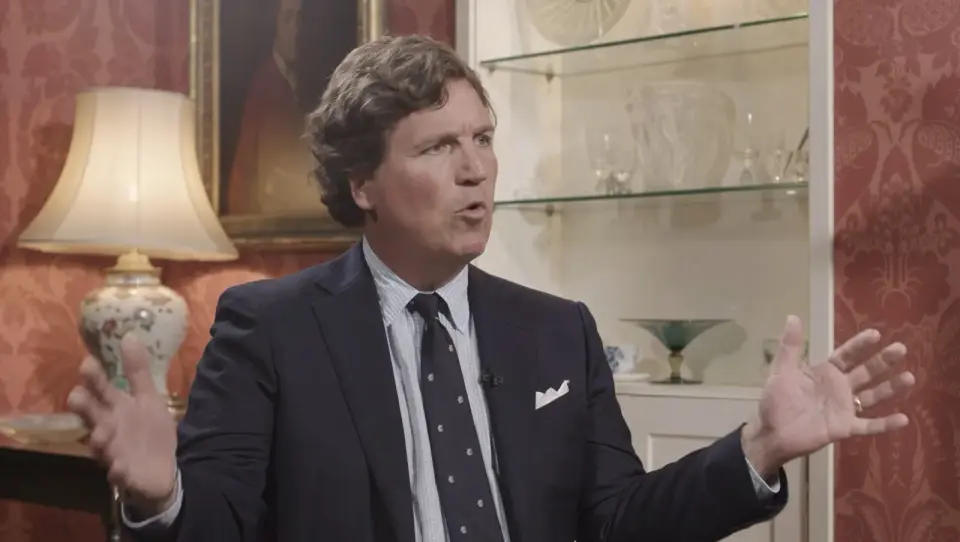
US commentator Tucker Carlson faced sharp criticism after arguing in a podcast interview with former UK minister Jacob Rees-Mogg that Britain was wrong to fight World War II and that Germany had legitimate claims to Polish territory. Carlson claimed the Treaty of Versailles unfairly stripped Germany of land, a view Rees-Mogg rejected as historically inaccurate. The exchange drew backlash from US conservatives, including Ambassador Mike Huckabee, who called Carlson's remarks indefensible. Historian Andrew Roberts has since published a detailed rebuttal, arguing Carlson's positions constitute 'Hitler apologism' and misrepresent key facts about the 1939 invasion of Poland and the broader war.
Key points
- Carlson argued that Germany's 1939 invasion of Poland was justified because the Treaty of Versailles had removed German provinces like Posen and Western Prussia, claiming the UK had no role in that treaty.
- Rees-Mogg countered that the UK was a senior signatory of the Versailles Treaty and had guaranteed Poland's integrity in March 1939, leading to the declaration of war after the invasion.
- Carlson stated that Britain 'destroyed its empire' fighting the war and suggested that if Britain had lost, it would be 'nice to have at least a European language spoken' in the country.
- Rees-Mogg accused Carlson of 'verging on defending Hitler,' to which Carlson replied he was 'not a secret Nazi' but someone who 'tries to think clearly about cause and effect.'
- US Ambassador to Israel Mike Huckabee condemned the interview on X, stating Carlson 'needs help' for suggesting the UK should have allowed Nazi takeover.
Background
This incident follows a series of recent controversies involving Carlson, including his 2024 interview with Vladimir Putin and his September 2026 call for invoking the 25th Amendment against President Trump over Iran rhetoric. In early October 2026, Vice President JD Vance faced pressure to distance himself from Carlson after a Jewish GOP donor event, where his nuanced response to Carlson's views left some activists unsatisfied. The current debate highlights ongoing tensions within the US right-wing movement regarding historical narratives and foreign policy alignment with Russia.
How outlets are covering it
The Guardian and TVP World focused on the immediate viral reaction to the interview, highlighting Carlson's 'Who cares?' response to the prospect of Britain speaking German and the subsequent backlash from figures like Mike Huckabee. UnHerd, through historian Andrew Roberts, provided a detailed historical analysis, arguing that Carlson's claims about the Treaty of Versailles and the invasion of Poland are factually incorrect and part of a broader 'ultra-MAGA' movement attempting to relativize Nazi aggression. Roberts emphasized that Hitler's goals extended far beyond overturning Versailles, citing invasions of Czechoslovakia, Norway, and the Netherlands as evidence. The Telegraph source was inaccessible due to a security block, so its perspective could not be evaluated.
Why it matters
The debate underscores the growing influence of historical revisionism in mainstream political discourse, particularly within US conservative circles. Carlson's arguments, if accepted, could legitimize aggressive territorial expansion and undermine the moral framework of the post-WWII order. The backlash from figures like Rees-Mogg and Huckabee suggests that even within the right-wing, there are limits to such rhetoric, but the persistence of these views poses a risk to international stability and historical memory.
What to watch
Expect continued debate over Carlson's historical claims, particularly as he remains a prominent figure in US media and politics. The lack of a clear public distancing by Vice President JD Vance may lead to further scrutiny of his relationship with Carlson. Historians and political commentators may continue to challenge Carlson's narrative, potentially influencing public opinion on WWII and current conflicts like the war in Ukraine.
- A history lesson for Tucker Carlson His Hitler apologism is dangerous UnHerd
- Jacob Rees-Mogg accuses Tucker Carlson of ‘verging on defending Hitler’ The Guardian
- The true, decent British Right must be like Jacob Rees-Mogg, not Tucker Carlson The Telegraph
- Carlson argues UK wrong to fight WWII over invasion of Poland TVP World
- ‘Who cares?’: Tucker Carlson questions why Britain fought Hitler Ynetnews
Want the full story? Read the original reporting
Read on UnHerd