
Icelanders Vote on EU Accession Amid Arctic Security Shifts
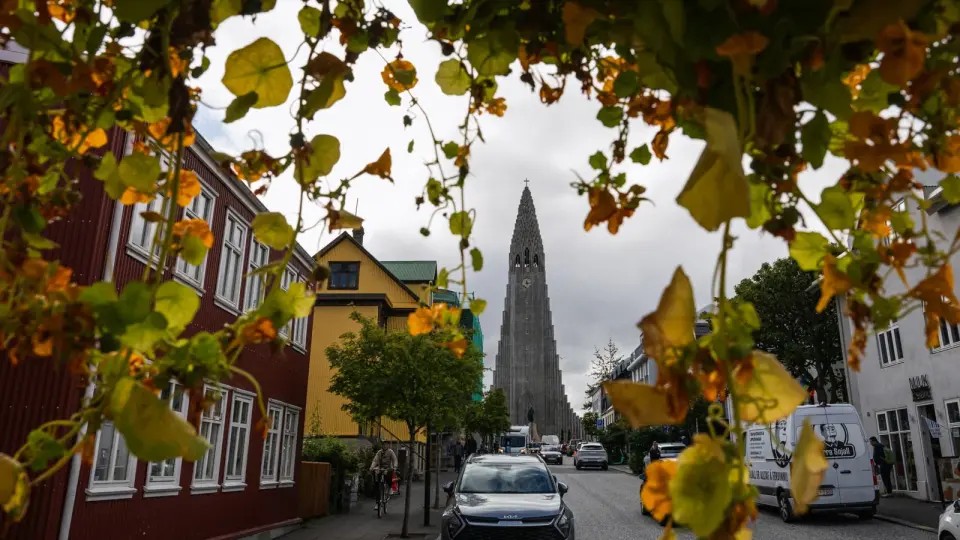
Icelanders are voting in a closely contested referendum to decide whether to resume negotiations for European Union membership. The vote, held on August 29, 2026, is driven by domestic economic concerns, particularly high interest rates and the desire for currency stability through the euro. However, the debate has been intensified by geopolitical shifts, including U.S. President Donald Trump’s persistent claims regarding Greenland and shifting Arctic security dynamics. While polls show a near-even split, with one survey favoring the 'Yes' side by a slim margin, the outcome remains uncertain. A 'Yes' vote would restart accession talks, potentially leading to a second referendum, while a 'No' vote would pause the process. Key issues include sovereignty over fishing rights, which account for nearly 40% of exports, and Iceland’s reliance on NATO and U.S. defense agreements despite having no military of its own.
Key points
- The referendum asks Icelanders if they should resume EU accession negotiations, a process suspended in 2013.
- Polls indicate a razor-thin margin, with one recent survey showing 51.3% in favor of 'Yes' versus 48.7% against.
- Economic factors, such as high inflation and interest rates, are primary drivers for supporting EU membership and adopting the euro.
- Opponents fear losing control over fishing waters, a critical sector representing nearly 40% of exports.
- Geopolitical tensions, including U.S. interest in Greenland and Arctic security, have accelerated the debate but are not the central focus of public discourse.
- Iceland is a NATO member without its own military, relying on a 1951 defense pact with the U.S. and recent EU defense partnerships.
Background
Iceland previously applied to join the EU in 2009 following the global financial crisis but suspended talks in 2013 due to euroskeptic political shifts. The current government, led by Prime Minister Kristrún Frostadóttir, pledged to hold a referendum by 2027. Iceland is already part of the European Economic Area and the Schengen Area, granting it access to the single market and passport-free travel, but full membership would require adopting the euro and ceding some sovereignty. The archive notes no direct prior coverage of this specific referendum, but broader context includes U.S. geopolitical maneuvers in the Arctic, such as the Trump administration’s interest in Greenland and Venezuelan oil fields, which highlight shifting global power dynamics affecting small nations.
How outlets are covering it
CNBC emphasizes the geopolitical dimension, noting that Trump’s Greenland ambitions and Arctic security concerns have influenced the debate, though experts stress domestic issues like the economy and fisheries are primary drivers. The BBC highlights the economic arguments, with supporters citing the euro’s stability against Iceland’s high interest rates, while opponents focus on sovereignty and fishing rights. The BBC also notes that geopolitics has been largely absent from public discourse, despite its influence on the timing. The Financial Times and The Telegraph were inaccessible due to paywalls and security blocks, so their perspectives could not be synthesized. Overall, there is consensus on the close vote and the importance of fishing, but disagreement on whether geopolitical or economic factors are the main drivers.
Why it matters
The outcome will determine Iceland’s future relationship with the EU and its role in Arctic security. A 'Yes' vote could strengthen EU influence in the North Atlantic and provide a success story for enlargement, while a 'No' vote may signal resistance to deeper integration. The vote also reflects broader tensions between small nations and great powers, particularly regarding sovereignty, economic stability, and defense alliances in a changing geopolitical landscape.
What to watch
If the 'Yes' side wins, Iceland will resume accession negotiations with the EU, potentially leading to a second referendum to approve any final deal. If 'No' wins, talks will be shelved for the time being. The result will also influence discussions in neighboring Norway, where support for EU membership is growing. Iceland’s government has indicated that negotiations could take 'months, not years' if resumed, as 11 of 35 areas were already finalized in previous talks.
- Trump’s Greenland fixation puts security at the heart of Iceland’s knife-edge EU vote CNBC
- Narrow majority of Icelanders back EU membership talks, poll shows ahead of referendum Reuters
- Donald Trump jolts Iceland’s EU debate back to life Financial Times
- Trump is single-handedly destroying global conservatism The Telegraph
- Iceland holds knife-edge referendum on EU - and it could be decided on fish BBC
Want the full story? Read the original reporting
Read on CNBC