
Icelanders vote on restarting EU talks amid Arctic security fears and fishing disputes
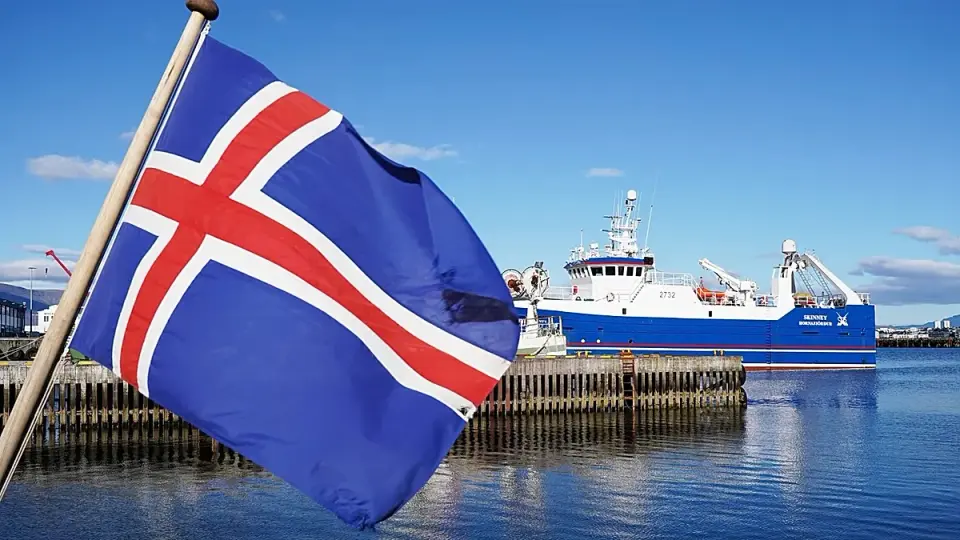
Icelanders voted on August 29, 2026, on whether to resume negotiations to join the European Union. The referendum, which asks only if talks should restart rather than if the country should join, is expected to be extremely close. Polls show a narrow lead for 'yes' (51.3% to 48.7% according to Maskína; 51.5% to 48.5% according to Gallup). The decision is driven by economic concerns, including high living costs and currency volatility, as well as security anxieties regarding Russia and US President Donald Trump’s threats toward Greenland. Opponents fear losing sovereignty over fisheries, which account for 6.5% of GDP. If 'yes' wins, a second referendum on actual membership would follow, potentially after 18 months of negotiations.
Key points
- The referendum question is 'Should Iceland resume accession negotiations with the European Union?', with a simple 'yes' or 'no' vote.
- Polling agency Maskína reported 51.3% support for restarting talks, while Gallup reported 51.5% support, indicating a razor-thin margin.
- A 'yes' vote does not guarantee EU membership; it would trigger negotiations, followed by a second referendum and ratification by the 27 EU member states.
- Proponents argue EU membership would stabilize the volatile Icelandic krona, reduce inflation, and provide security against Russian and Chinese influence in the Arctic.
- Opponents, including the Independence Party and fisheries groups, argue that current European Economic Area (EEA) membership is sufficient and that full EU membership would cede control over fishing quotas and national sovereignty.
- European Commission enlargement commissioner Marta Kos indicated Iceland could formalize negotiations by 2027, noting Brussels may be willing to accommodate Iceland’s specific needs regarding fisheries.
Background
Iceland first applied to join the EU in 2009 following the 2008 financial crisis, with formal negotiations beginning in 2010. The process was halted in 2013 by a Eurosceptic government, with 27 chapters opened and 11 provisionally closed, but the fisheries chapter remained unresolved. The current push for a referendum began in 2024 when the centre-left government of Prime Minister Frostadóttir took power, promising a vote by 2027. The EU confirmed in 2024 that Iceland’s original application remained valid. Recent geopolitical shifts, including Russia’s invasion of Ukraine and US President Trump’s rhetoric regarding Greenland, have reinvigorated the debate, with Icelanders increasingly viewing the country as strategically relevant in the Arctic.
How outlets are covering it
Euronews emphasizes the geopolitical dimension, highlighting how US President Trump’s threats toward Greenland and Russian interest in the Arctic have made Iceland’s security situation intertwined with the EU. It notes that while security is a factor, domestic issues like the cost of living and fishing are likely to determine the close result. CNN focuses on the economic arguments, noting that Iceland already has a high GDP per capita and robust welfare, but faces currency volatility and high living costs. It highlights the 'no' camp’s argument that self-control over resources has secured prosperity. The Washington Post frames the vote primarily through the lens of US pressure, stating that Trump’s territorial claims in the Arctic have rattled Iceland and rekindled interest in the EU as a security alternative. All sources agree on the narrow polling margin and the centrality of the fisheries issue, but Euronews and The Washington Post give more weight to the external security threats, while CNN and Euronews emphasize domestic economic and sovereignty concerns. The Washington Post also notes that the referendum is not binding on future governments, a point highlighted in our archive but not explicitly detailed in the primary source text provided.
Why it matters
The outcome will determine whether Iceland, a key Arctic nation, moves closer to full EU integration or remains in its current European Economic Area status. A 'yes' vote could signal a shift in EU enlargement strategy, demonstrating the bloc's ability to attract wealthy, stable nations despite post-Brexit skepticism. It also has implications for Arctic security, as Iceland seeks to bolster its defense and infrastructure against Russian and Chinese influence, potentially reducing reliance on the US. The result will also test the EU's flexibility on sensitive issues like fisheries, which could set precedents for future negotiations with other candidate countries.
What to watch
Results from the August 29 referendum are expected to roll through in the hours following the close of polling stations at 10pm local time. If 'yes' wins, the Icelandic government will likely begin accession negotiations with the EU, which could take 18 months or more. A second national referendum on actual membership would then be required, along with ratification by the 27 EU member states. If 'no' wins, the idea of EU membership will likely be shelved for the foreseeable future, with Iceland continuing to rely on its EEA membership and existing NATO partnerships for security and economic access.
- Iceland’s EU referendum: What to know before the vote Euronews.com
- A tiny nordic nation weighs moving closer to Europe under the shadow of Trump CNN
- Iceland Weighs Security Versus Sovereignty in Vote Over EU Membership Talks WSJ
- Trump’s grab for Greenland rattles Iceland, which considers joining E.U. The Washington Post
- Poll finds Icelandic voters swing to narrowly opposing EU membership Reuters
Want the full story? Read the original reporting
Read on Euronews.com