Tag

Fisheries

All articles tagged with #fisheries

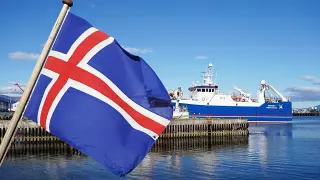
Iceland Votes on EU Talks: Fisheries, Sovereignty and Brussels Ties
politics21 hours ago

Iceland Votes on EU Talks: Fisheries, Sovereignty and Brussels Ties

Icelanders vote on whether to resume EU accession negotiations; a Yes would trigger tense talks with Brussels, with fisheries and the Common Fisheries Policy likely to be the main sticking points, and could lead to membership after a possible second referendum. A No would dampen EU enlargement momentum and stall membership prospects for years, keeping Iceland in the European Economic Area while narrowing the path to full Brussels membership.

Iceland weighs EU talks with fishing sovereignty at stake
world1 day ago

Iceland weighs EU talks with fishing sovereignty at stake

Iceland is voting to restart negotiations on EU membership, with the central issue being whether any deal would permanently shield Iceland’s fishing grounds from the EU’s Common Fisheries Policy. Icelandic officials insist sovereignty over fisheries must be protected, while industry voices warn protections could be vulnerable given migratory stocks. The move to accelerate the timetable comes amid geopolitical pressure exemplified by Donald Trump’s Greenland remarks, underscoring how fisheries, a historic strength, could shape Iceland’s EU path.

Warm European seas lure swimmers as ecosystems reel from warming, study finds
environment6 days ago

Warm European seas lure swimmers as ecosystems reel from warming, study finds

Europe’s oceans are warming rapidly due to climate change, adding about 2°C to the Mediterranean this summer and roughly 1.3–1.4°C to Western European waters, driving widespread marine heatwaves and ecological disruption. Species are shifting north, food webs are reassembling, and coastal fisheries and aquaculture face risks, with potential land heat implications from higher sea surface temperatures. While warmer seas may attract swimmers in cooler countries, the deeper ecological costs are substantial.

EU moves to ban Russian cod amid sanctions push
world2 months ago

EU moves to ban Russian cod amid sanctions push

The EU is proposing a cod import ban on Russia as part of its latest sanctions package over the Ukraine invasion, following earlier steps that banned luxury seafood like caviar in 2022 and ended duty-free/MFN treatment for Russian fish in 2024. Ursula von der Leyen said the move targets one of the last major unsanctioned sectors, with Belarus aligned in trade restrictions. Russia remained a notable fish supplier to the EU in 2024 (€709 million), and while 2025 shipments rose 5% in volume and value, cod exports fell, with gains led by pollock. The report cites Just Food.

Rising Lake Turkana Rewrites Life for Kenya’s El Molo
world2 months ago

Rising Lake Turkana Rewrites Life for Kenya’s El Molo

Rising waters in Lake Turkana, driven by tectonic shifts and climate patterns, have turned Komote Island into an inland lake, submerging villages, schools, and burial grounds, displacing thousands and straining fisheries as locals face poverty, crocodile attacks, and new security risks; UNESCO placed the lake on the Danger List in 2018, while researchers and NGOs push multi-pronged solutions like improved fishing access, electricity, cold storage, and health services, though progress remains limited for the El Molo and other communities.

WTO Agreement to Combat Overfishing Enters into Force
world11 months ago

WTO Agreement to Combat Overfishing Enters into Force

The WTO's agreement to reduce fishing subsidies, aimed at combating overfishing and promoting ocean sustainability, has officially taken effect with 112 countries onboard, though key players like India and Indonesia have yet to sign. The deal primarily targets illegal fishing and overfished stocks, with plans for a second phase to address subsidies that promote overcapacity in fishing fleets. Experts emphasize that while this is a significant step, more efforts are needed to prevent the depletion of global fish stocks.

Rare Mekong Giant Catfish Rediscovered in Cambodia
environment1 year ago

Rare Mekong Giant Catfish Rediscovered in Cambodia

Conservationists in Cambodia are celebrating the discovery and release of six critically endangered Mekong giant catfish, boosting hopes for the species' revival. The fish, weighing up to 130 kilograms each, were tagged and released by fishermen and officials from Cambodia's Fisheries Administration. This rare event, facilitated by the USAID-funded Wonders of the Mekong project, provides valuable data on the catfish's ecology and migration, offering a chance to implement conservation measures. The species has suffered an 80% population decline due to illegal fishing, habitat loss, and environmental changes in the Mekong River.

"Climate Change Turns Alaskan Rivers Toxic Orange"
environment2 years ago

"Climate Change Turns Alaskan Rivers Toxic Orange"

Researchers have discovered that Alaska's rivers are turning orange due to thawing permafrost releasing minerals into the water, a phenomenon linked to climate change. This discoloration, visible even from space, poses risks to drinking water and fish populations, with elevated levels of metals like iron, zinc, and copper making the water more acidic and potentially toxic. The issue is spreading, and scientists are studying its long-term impacts and potential recovery if permafrost refreezes.

Study Reveals Surprising Reason for Fish Shrinking in Warming Waters
science2 years ago

Study Reveals Surprising Reason for Fish Shrinking in Warming Waters

A study led by the University of Massachusetts Amherst found no physiological evidence supporting the Gill Oxygen Limitation (GOL) theory, which suggests that fish are shrinking due to limited oxygen supply from their gills as waters warm. Long-term experiments on brook trout revealed that increased temperatures led to decreased body size, but gill surface area did not explain the change. The findings challenge widely cited model projections of future global fisheries yields and highlight the need for interdisciplinary studies to understand the mechanisms governing fish size in a warming world.

Former Owner of Collapsed Michigan Dam Found Liable for $119M in Environmental Damage
environment2 years ago

Former Owner of Collapsed Michigan Dam Found Liable for $119M in Environmental Damage

The former owner of the Edenville Dam in Michigan has been found liable for nearly $120 million in environmental damages caused by the dam's failure in May 2020. The U.S. District Court judge ruled in favor of the Michigan departments of Natural Resources and Environment, Great Lakes and Energy, holding Lee Mueller, the former owner of Boyce Hydro Power LLC, responsible for the extensive damage to area fisheries and freshwater mussel populations. The dam failure resulted in widespread flooding, causing over $200 million in damage and the evacuation of thousands of people. The judgment serves as a measure of accountability and a deterrent to other owners of critical infrastructure.

"Scientists Transform Invasive Carp into Allies to Halt Great Lakes Invasion"
environment2 years ago

"Scientists Transform Invasive Carp into Allies to Halt Great Lakes Invasion"

Wildlife officials in the Great Lakes region are using a new strategy to combat the spread of invasive carp by turning captured carp into double agents. The carp are implanted with transmitters and released back into the water, allowing officials to track their movements and locate hotspots where other carp may be hiding. This information helps agencies and commercial anglers remove multiple fish from the ecosystem, protecting native species and the fishing industry. While eradicating invasive carp is nearly impossible, efforts to keep them out of the Great Lakes and protect the fishing industry are ongoing. The use of traitor carp has proven effective in increasing the removal of invasive carp from certain areas, although some critics argue that returning tagged carp to the wild allows them to breed.

"Controversy Surrounds Japan's Decision on Fukushima Water Release"
environment3 years ago

"Controversy Surrounds Japan's Decision on Fukushima Water Release"

Japanese Prime Minister Fumio Kishida will meet with his ministers on August 22 to discuss the release of treated radioactive water from the Fukushima nuclear plant into the sea. The water, stored in tanks, has reached 98 percent of capacity and contains trace amounts of tritium. The release, planned for late August or early September, aims to minimize the impact on fisheries, but faces opposition from local fishermen and neighboring countries like China. Kishida will visit Fukushima to inspect the facilities and address concerns from fisheries associations. The International Atomic Energy Agency has stated that the planned discharge complies with global safety standards.

"Preserving Marine Life: Ensuring No Fish is Left Behind"
environment3 years ago

"Preserving Marine Life: Ensuring No Fish is Left Behind"

Iceland is working towards using 100% of their fish catch by finding innovative uses for fish waste. Cod skin has been found to work as skin grafts, salmon skin can be made into leather, and crustacean shells can be used for medicine. Other parts of fish can be turned into soups, Omega-3 capsules, and dog treats. This out-of-the-box thinking aims to challenge old ideas, reduce waste, improve human lives, and potentially create profitable enterprises.

The Alarming Slowdown of Ocean Currents.
environment3 years ago

The Alarming Slowdown of Ocean Currents.

Ocean currents, which make up 40% of the total volume of the deep oceans and transport heat, oxygen, carbon, and nutrients around the planet, are slowing down due to climate change. This could speed up climate change and reduce the productivity of fisheries. The global ocean conveyor belts play a key role in shaping climate, and the Antarctic is the most powerful engine of this overturning circulation, but it is in trouble. The volume of cold, salty, oxygen-rich water descending to the ocean floor has declined by 28% between 1994 and 2017.