
Israel Certifies Election Results as Palestinian Leaders Face Security Crackdown
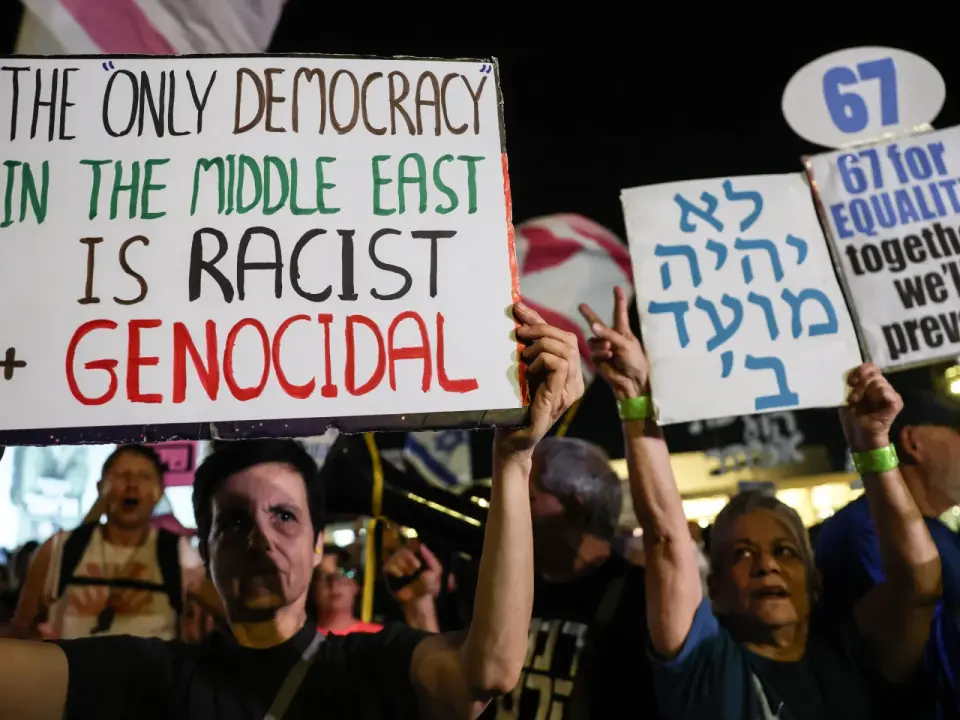
Israel’s election commission has officially certified the results of the October 27 vote, rejecting fraud claims by Prime Minister Benjamin Netanyahu’s Likud party. The certification confirms that Palestinian-led parties, including the Joint List and Ra’am, won a record 19 seats, potentially allowing opposition leader Gadi Eisenkot to form a government. Despite the official validation, Palestinian citizens face intensified state repression, including arbitrary arrests, police raids, and demands for interrogations by the Shin Bet security service. President Isaac Herzog has accepted the results and will begin coalition consultations, while Netanyahu’s allies continue to attack the Attorney-General for blocking security probes into Arab lawmakers.
Key points
- The Israeli election commission found no evidence of irregularities, stating the results accurately reflect voter choices and rejecting Likud’s claims of a stolen vote.
- Palestinian-led parties secured 19 seats, a record high, which could enable opposition leader Gadi Eisenkot to form a coalition if he secures their support.
- President Isaac Herzog accepted the certified results and will begin consultations with party leaders to determine who can form a government, with new elections possible if no coalition is reached.
- The Shin Bet requested to interrogate senior Arab lawmakers, including Ahmad Tibi and Mansour Abbas, over foreign interference claims, but Attorney-General Gali Baharav-Miara denied the request.
- National Security Minister Itamar Ben-Gvir demanded the removal of the Attorney-General, accusing her of incriminating ministers and obstructing security operations.
Background
The October 27 election took place amid a fragmented political landscape following the 2023 Hamas attack and subsequent wars. Prior to the vote, Netanyahu deployed AI tools to delegitimize Arab parties, while polls indicated a deadlock between his bloc and Eisenkot’s centrist alliance. Palestinian citizens had faced a surge in local crime and viewed voting as a mechanism to demand change, with earlier polls showing Ra’am as a pivotal kingmaker party.
How outlets are covering it
Al Jazeera emphasizes the systematic nature of the state’s intimidation campaign, citing pre-planned smear tactics and arbitrary arrests as part of a broader pattern of discrimination against Palestinian citizens since 1948. The outlet highlights the role of the Shin Bet and Ben-Gvir in attacking state institutions to undermine Arab political influence. In contrast, the Associated Press focuses on the procedural outcome, noting the election commission’s rejection of fraud claims and the upcoming coalition negotiations. The AP highlights the lack of a clear majority for either Netanyahu or Eisenkot, stressing the potential for a new election if no government is formed. While Al Jazeera frames the security crackdown as a deliberate strategy to suppress political participation, the AP presents the situation as a contested legal and political process with ongoing investigations into foreign interference.
Why it matters
The certification of election results and the subsequent security crackdown highlight the deepening polarization in Israeli politics and the marginalization of Palestinian citizens. The potential for a coalition between Eisenkot and Arab-led parties could shift the political balance away from Netanyahu’s far-right bloc, while the state’s aggressive response to electoral gains underscores the ongoing tensions between democratic processes and state security apparatuses. The outcome will determine whether Israel can form a stable government or face further political instability and potential new elections.
What to watch
President Isaac Herzog will conduct consultations with party leaders to determine who can form a coalition government. If no government is formed, Israel may hold new elections early next year. The Shin Bet’s investigation into foreign interference claims will continue, and the political battle over the Attorney-General’s role may escalate. Palestinian-led parties will leverage their increased parliamentary presence to address issues affecting their communities, while facing ongoing state pressure and security operations.
- Palestinian citizens of Israel face intimidation after election success Al Jazeera
- Israel political deadlock leaves Netanyahu’s future hanging in the balance Al Jazeera
- Israel’s President Will Start Talks on Whether Netanyahu or Eisenkot Can Form a Government The New York Times
- Israel’s president accepts certified election results, will start consultations for new government KCRA
- ‘There is no place for violence among us… The election is over’: Herzog’s remarks on receiving official 2026 results The Times of Israel
Want the full story? Read the original reporting
Read on Al Jazeera