
Israel Election Deadlock: Arab Parties Hold Balance of Power as Netanyahu and Eisenkot Both Fall Short
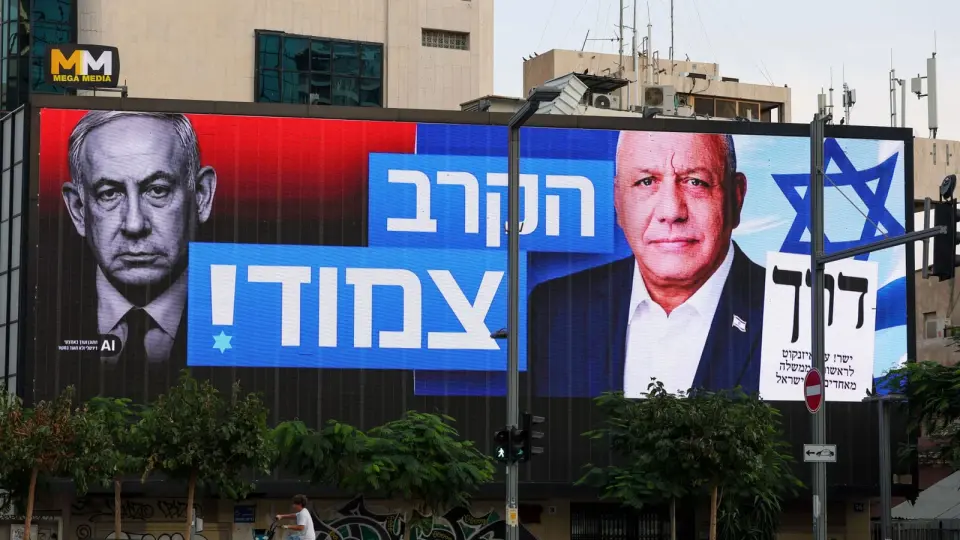
Israel’s October 27 election resulted in a fragmented parliament where neither Prime Minister Benjamin Netanyahu nor challenger Gadi Eisenkot secured the 61 seats required for a majority. Exit polls indicate a near-tie, with both blocs hovering around 50-52 seats, while Arab-led parties achieved a historic high of 17-18 seats. This outcome positions Arab parties as potential kingmakers, though coalition formation remains uncertain due to pre-election refusals by some opposition leaders to ally with them. Official results are due on November 4, with high turnout recorded at 77.7%.
Key points
- Neither Netanyahu’s Likud-led bloc nor Eisenkot’s opposition bloc reached the 61-seat majority needed to govern, with exit polls showing a split of approximately 51-51 or 52-50.
- Arab-led parties achieved their strongest result ever, winning 17-18 seats, and are now viewed as the decisive factor in forming a government.
- Voter turnout reached 77.7%, the highest in 27 years, with significant participation from Arab communities.
- Eisenkot declared victory and claimed the right to form a government, while Netanyahu asserted a majority among the Jewish public but stopped short of claiming overall victory.
- Official results will be published on November 4, with counting delayed by 600,000 absentee ballots, primarily from soldiers.
Background
This election followed the October 7, 2023 Hamas attack and subsequent wars in Gaza, Lebanon, and Iran, serving as a referendum on Netanyahu’s long tenure since 2009. Previous polls predicted a stalemate, with Arab turnout seen as the critical variable. Netanyahu faces an ICC arrest warrant and corruption trial, while critics cite his judicial overhaul efforts and war handling as reasons for his unfitness.
How outlets are covering it
CNBC emphasizes the deadlock and the potential for a prolonged negotiation, noting that even if Eisenkot wins more seats, forming a majority without Arab parties is unlikely. It highlights Netanyahu’s potential to stall government formation. BBC focuses on the 'kingmaker' role of Arab parties, noting that while most Jewish opposition parties pledged not to ally with them pre-election, post-election dynamics may shift. BBC also notes that early counts were skewed toward right-wing areas and that absentee ballots could change the final outcome. Both outlets agree on the historic Arab turnout and the lack of a clear winner.
Why it matters
The outcome determines Israel’s future policy direction on security, Iran, and domestic governance. A failure to form a government could lead to a caretaker administration or new elections, prolonging political instability. The role of Arab parties may reshape Israeli politics, potentially influencing relations with the Palestinian territories and international perceptions of Israel’s democratic character.
What to watch
Official results will be released on November 4. President Isaac Herzog will consult party leaders to determine who has the best chance to form a coalition. If no government is formed within six weeks, new elections may be called. Netanyahu’s government will remain in a caretaker role without major policy authority.
- Israel election appears to have no clear winner with Netanyahu, opponent Eisenkot far short of majorities CNBC
- Netanyahu, Eisenkot stake rival claims to lead Israel after deadlocked vote Reuters
- Likud-led bloc leads count with 55 seats, but short of majority; opposition at 49, Arab parties at 16 The Times of Israel
- Israel’s voters deny Binyamin Netanyahu a majority The Economist
- Israel elections: Arab parties could hold key as Netanyahu and Eisenkot fall short of victory BBC
Want the full story? Read the original reporting
Read on CNBC