
Israel Election Deadlock: Arab Parties Hold Key to Government Formation Amid Fraud Claims
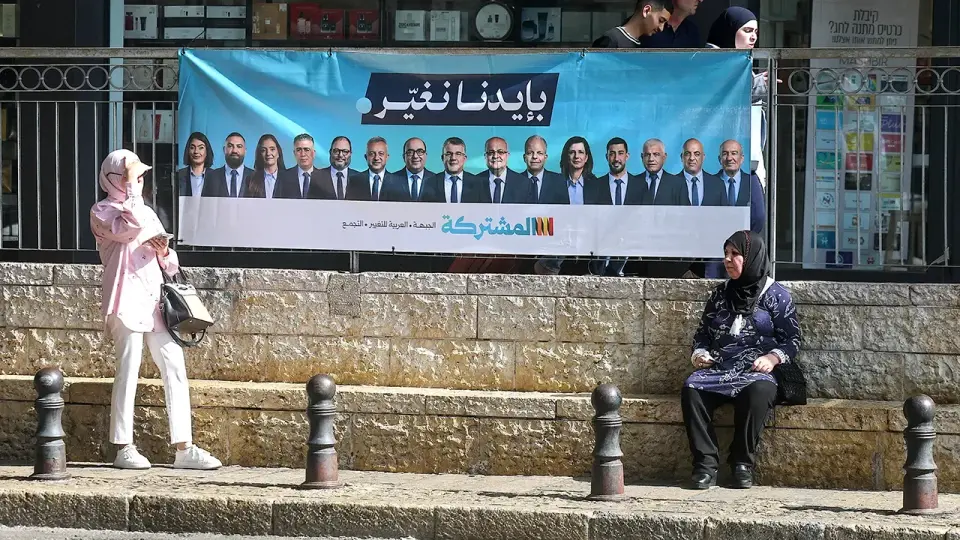
Israel's October 27, 2026, election resulted in a political stalemate, with neither Prime Minister Benjamin Netanyahu's right-wing bloc nor opposition leader Gadi Eisenkot's centrist bloc securing the 61 seats required for a majority. Arab-led parties, including the Joint List and Ra'am, are projected to win a record 19 seats, positioning them as potential kingmakers. Netanyahu has accused Arab parties of election fraud, while the opposition remains divided on whether to cooperate with them to form a government.
Key points
- Netanyahu's Likud-led bloc is projected to win 53 seats, while Eisenkot's opposition bloc is expected to secure 48 seats, both falling short of the 61-seat majority needed to govern.
- Arab-led parties, including the Joint List (12 seats) and Ra'am (7 seats), are projected to win a combined 19 seats, the highest in Israeli history, with turnout reaching 75-80%.
- Netanyahu has alleged widespread election fraud in Arab areas, citing bribery, violence, and prohibited software, and has demanded an investigation by the police and Shin Bet.
- President Isaac Herzog will begin consultations with party leaders to determine who can form a government, with a 28-day window to negotiate a coalition.
- The opposition is divided on whether to cooperate with Arab parties, with some leaders like Yair Golan urging cooperation, while others like Naftali Bennett and Avigdor Liberman oppose it.
Background
This election is the first since the October 7, 2023, attacks and the subsequent war in Gaza. Previous coalition negotiations in 2021 saw Ra'am join a government, but Arab parties have historically remained in opposition. The current deadlock highlights the growing political influence of Arab citizens, who make up approximately 21% of Israel's population.
How outlets are covering it
Fox News emphasizes Netanyahu's fraud allegations and the potential for a unity government, while CNN focuses on Netanyahu's survival tactics and the opposition's internal divisions. Al Jazeera highlights the record turnout among Arab voters and the Joint List's stance on cooperation, and AP News notes the uncertainty surrounding final results and the potential for a new election if no government is formed.
Why it matters
The outcome of these coalition negotiations will determine Israel's next government and its policies on security, the Arab community, and international relations. A failure to form a government could lead to a new election, further delaying resolution of ongoing conflicts and domestic issues.
What to watch
President Herzog will consult with party leaders to determine who can form a government. If no government is formed within the allotted time, Israel may face a new election. The final results, including the counting of approximately 500,000 absentee ballots, are expected by November 4.
- Netanyahu alleges fraud as Arab parties score record gains — emerge as potential kingmakers Fox News
- Netanyahu is the ultimate survivor. But can he survive this time? CNN
- Herzog urges 'thorough' probe into alleged election interference, warns against 'tarnishing' Arab community The Times of Israel
- No clear winner in Israel election with nearly 90 percent of votes counted Al Jazeera
- Israelis await final election results as claim of foreign interference emerges AP News
Want the full story? Read the original reporting
Read on Fox News