
Israeli Election Polls Show Stalemate as Arab Turnout Becomes Decisive Factor
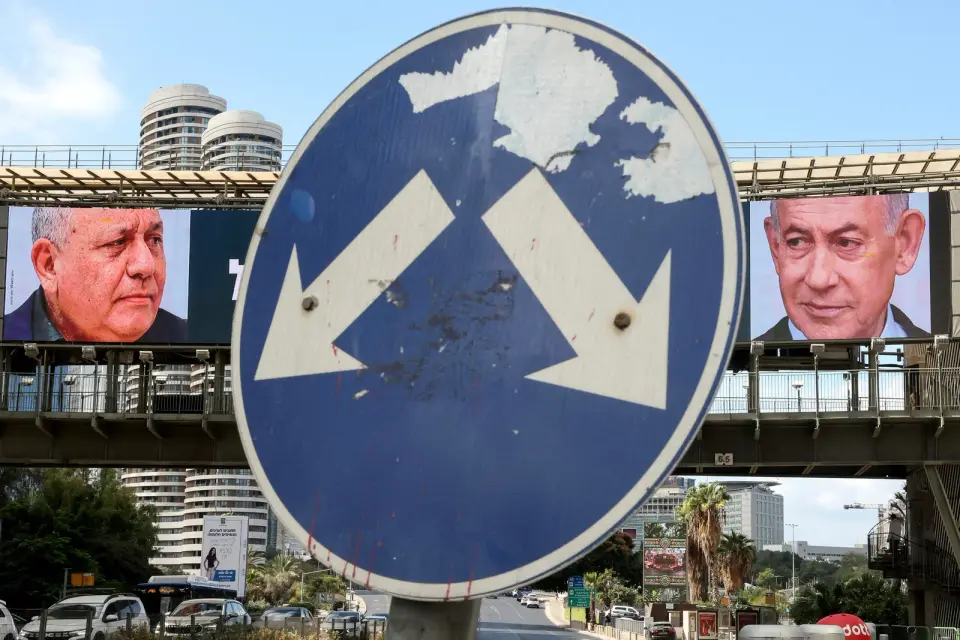
Israeli polls ahead of the October 27 election indicate a likely stalemate, with neither Benjamin Netanyahu’s bloc nor Gadi Eisenkot’s opposition reaching the 61-seat majority required for government. While mainstream polls show Eisenkot slightly ahead, right-leaning surveys favor Netanyahu. The outcome hinges on Arab voter turnout, which could shift the balance by several seats.
Key points
- The overall polling average projects Netanyahu’s bloc with 54 seats and Eisenkot’s bloc with 50, both short of the 61-seat majority needed to form a government.
- Mainstream media polls show Eisenkot’s bloc with 52 seats versus Netanyahu’s 50, while right-leaning outlets project a 61-seat majority for Netanyahu and only 45 for Eisenkot.
- Arab parties, including the Joint List and Ra’am, are polling for an average of 14 seats, but turnout could reach 68-69%, potentially increasing their representation.
- The election is the first since the October 2023 Hamas attacks, with security failures and the war in Gaza dominating the campaign.
- Official results are expected on November 4, with government formation potentially taking weeks or months due to coalition negotiations.
Background
This election follows a period of intense conflict, including the war in Gaza and tensions in the West Bank. Previous polls in October 2026 also indicated a deadlock, with Arab parties positioned as potential kingmakers. The current race is viewed as pivotal for Israel’s future and its relationship with Palestinians, with both major blocs supporting a phased withdrawal from Gaza but differing on West Bank policies.
How outlets are covering it
Jewish Insider highlights the divergence between mainstream and right-leaning polls, noting that mainstream outlets favor Eisenkot while right-leaning media favor Netanyahu. The New York Times emphasizes the paradox faced by Palestinian citizens of Israel, who are asked to vote in a system that excludes them from governing coalitions, yet their turnout could influence the outcome. BBC provides a broader context, noting that both Netanyahu and Eisenkot support a phased withdrawal from Gaza but differ on West Bank settlements, with Netanyahu’s coalition favoring expansion and Eisenkot opposing the E1 project. BBC also notes that no leading Jewish parties are campaigning on a two-state solution, a shift from previous decades.
Why it matters
The outcome of this election will determine Israel’s government and its policies on security, the West Bank, and relations with Palestinians. A stalemate could lead to prolonged coalition negotiations or a minority government, with implications for the region and global politics. Arab voter turnout is critical, as it could tip the balance in favor of either bloc, influencing the direction of Israeli policy.
What to watch
Exit polls will be released at 22:00 local time on October 27, with preliminary results expected the next day and official results on November 4. President Isaac Herzog will then invite a leader to form a government, a process that could take weeks or months. If no majority is formed, new elections may be called, as seen in previous years.
- Final Israeli polls point to stalemate ahead of Tuesday’s election Jewish Insider
- Opinion | Palestinian Voters Could Determine Israel’s Future The New York Times
- A deeply divided Israel prepares to vote The Economist
- How would a Netanyahu election loss change Israel's policies toward the Palestinians? Reuters
- How do Israel's elections work and who are the main contenders? BBC
Want the full story? Read the original reporting
Read on Jewish Insider