
Macron Bans Protests and Blames Ultra-Left as France Braces for Saturday Unrest
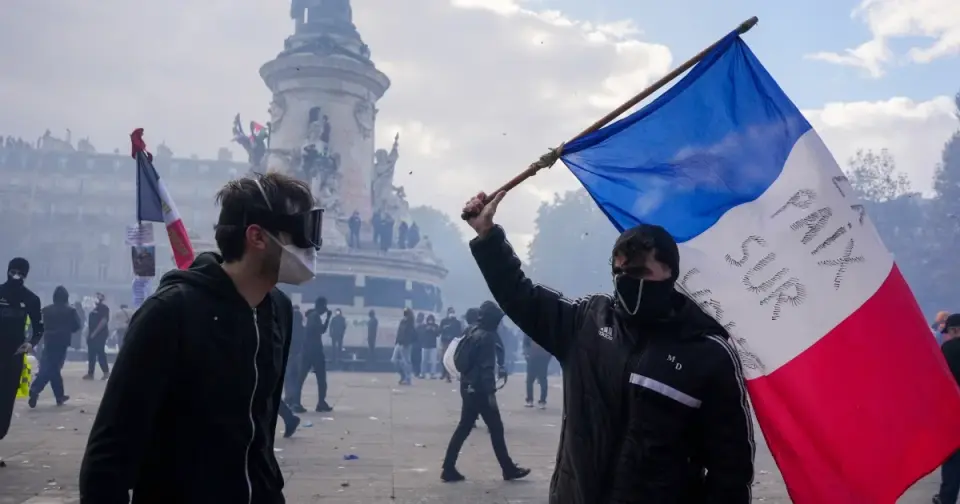
French President Emmanuel Macron announced that 'illegitimate' demonstrations will be banned in the coming days, blaming 'seditious' ultra-left groups for recent riots. Authorities have imposed curfews and banned protests in major cities like Paris, Lyon, and Lille to prevent a repeat of the violence that erupted last weekend. While Macron allows trade union marches to proceed on alternative routes, he emphasized the need to protect businesses and public order. The unrest, which began as student protests over education funding, has evolved into broader demonstrations against rising living costs. Prime Minister Sébastien Lecornu confirmed a massive security operation is planned for Saturday, though union representatives reported no concrete proposals emerged from recent meetings. The situation occurs amid a political crisis, with Macron’s approval ratings at 18 percent and presidential elections scheduled for April 2027.
Key points
- Macron stated that 'illegitimate' protests would be banned, distinguishing them from legitimate trade union demonstrations which may be rerouted to protect businesses.
- Authorities banned planned protests in Paris, Lyon, Lille, and Grenoble, implementing night curfews in parts of the capital and other cities to restore calm.
- The unrest began in September as high school students protested underfunded schools and staff shortages, spreading to nationwide demonstrations over soaring living costs.
- Prime Minister Sébastien Lecornu announced a 'massive' security operation for Saturday, following a meeting with intelligence chiefs and senior ministers.
- Union representatives stated that their meeting with Lecornu did not yield concrete proposals, and they are now focusing on a further day of action scheduled for November 5.
Background
The current unrest follows a period of escalating tensions in France, where student protests over education funding in September evolved into broader demonstrations against economic hardship. Previous coverage highlighted Macron’s rejection of foreign narratives blaming migrants for the riots, emphasizing instead domestic economic and social failures. The government has faced pressure to address root causes while managing public order, with security deployments increasing significantly compared to earlier weeks. The political landscape is strained, with Macron’s popularity at historic lows and far-right and far-left parties gaining traction ahead of the 2027 presidential election.
How outlets are covering it
NBC News focuses on Macron’s direct confrontation with 'illegitimate' protests and the immediate security measures, including bans and curfews, to prevent further violence. The outlet highlights the government’s justification for these actions based on the risk of street violence and looting. In contrast, The American Prospect frames the unrest as a symptom of deeper social and economic failures, arguing that the protests reflect a lack of hope and opportunity in French suburbs, or banlieues. This outlet emphasizes the political implications, noting that the crisis has energized far-left and far-right parties, with Marine Le Pen leading polls for the 2027 presidential election. While NBC News presents the situation as a public order issue, The American Prospect views it as a manifestation of systemic inequality and the collapse of the political center.
Why it matters
The escalation of unrest in France highlights the fragility of the political center and the potential for further instability ahead of the 2027 presidential election. Macron’s decision to ban protests and blame ultra-left groups risks alienating moderate voters and exacerbating social divisions. The economic dimension, including rising borrowing costs and proposed budget cuts, underscores the strain on France’s welfare state. If the government fails to address the root causes of the unrest, such as underfunded schools and rising living costs, the political vacuum may be filled by far-right or far-left candidates, potentially altering the trajectory of French politics and European stability.
What to watch
Authorities are preparing for a 'massive' security operation on Saturday to prevent a repeat of the violence seen last weekend. Union representatives are focusing on a further day of action scheduled for November 5, calling on private and public-sector employees to join. The government faces continued pressure to address the root causes of the unrest, including education funding and living costs, while managing public order. The political landscape remains volatile, with far-right and far-left parties gaining traction ahead of the 2027 presidential election. EU regulators are also investigating potential foreign disinformation campaigns related to the unrest.
- France’s Emmanuel Macron says ‘illegitimate’ protests will be banned as cities block demonstrations NBC News
- France's Macron tightens curbs on protests, blaming hard left for unrest Reuters
- France’s devastation and its aftermath The Economist
- Is Paris Burning? The American Prospect
- What We Saw at Fast-Track Trials of Riot Suspects in France The New York Times
Want the full story? Read the original reporting
Read on NBC News