
Israel’s coalition talks stall as Netanyahu and Eisenkot reopen security channels amid strategic ambiguity
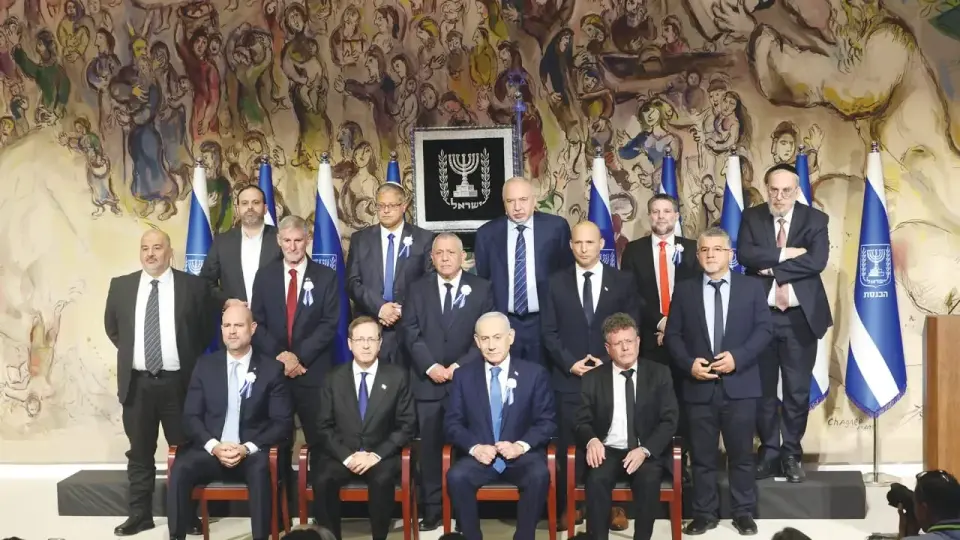
Israel’s 26th Knesset opened on November 10, 2026, with Prime Minister Benjamin Netanyahu calling for a 'unity' government while simultaneously attacking Arab parties. Gadi Eisenkot, tasked with forming a government, faces a fragmented opposition bloc of 67 seats but lacks a clear majority. Key obstacles include Avigdor Liberman’s shifting stance on ultra-Orthodox conscription and Netanyahu’s refusal to offer a premiership rotation. Despite initial cancellations, Netanyahu and Eisenkot reopened security consultations, signaling a fragile diplomatic thaw.
Key points
- Netanyahu called for a 'unity' government but criticized Raam and the Joint List, prompting Eisenkot to cancel Likud talks.
- Eisenkot’s bloc holds 67 seats but includes ideologically diverse parties, including Arab lists, complicating coalition formation.
- Liberman proposed a 61-seat coalition excluding Arab parties, requiring a compromise on ultra-Orthodox military service.
- Netanyahu and Eisenkot issued a joint statement on security consultations, reopening communication channels after a brief rupture.
- Eisenkot has 28 days to form a government, with the possibility of a 14-day extension if negotiations fail.
Background
Following the October 2026 elections, Netanyahu lost his parliamentary majority, dropping to 46 seats. Eisenkot received 67 endorsements from President Isaac Herzog but faces a fragmented opposition. Previous coverage noted Liberman’s shift on the ultra-Orthodox draft law and the swearing-in of the 26th Knesset on November 10, 2026. The current negotiations are part of a broader effort to avoid a fourth election in 2026.
How outlets are covering it
The Jerusalem Post frames the negotiations as a period of political bluffing, questioning whether Netanyahu’s calls for unity are genuine or tactical. It highlights the ambiguity in Liberman’s stance on conscription and Eisenkot’s warnings about military decisions. CNN emphasizes the structural deadlock, noting that Eisenkot’s 67 seats are not a cohesive bloc and that Arab parties are pivotal but controversial. CNN also details the mechanics of a minority government and the potential for a Netanyahu-Eisenkot unity deal, which Eisenkot rejects as 'pathetic spin.' Both sources agree that the current situation is a stalemate, but the Jerusalem Post focuses on the psychological and rhetorical aspects, while CNN provides a more technical analysis of the parliamentary arithmetic and historical precedents.
Why it matters
The outcome of these negotiations will determine whether Israel forms a stable government or faces another election. A successful coalition could address critical issues like the judicial overhaul and the aftermath of the October 7, 2023, attacks. Failure could lead to political instability and further polarization, particularly over the roles of Arab and ultra-Orthodox parties in the government.
What to watch
Eisenkot has until late November to form a government. If he fails, the mandate may pass to Netanyahu or another candidate. Key developments will include whether Netanyahu offers a premiership rotation, how Liberman’s compromise on conscription is implemented, and whether the Arab parties provide external support for a minority government. The next few weeks will be critical in determining the future of Israeli governance.
- Israel coalition talks: Benjamin Netanyahu, Gadi Eisenkot, Avigdor Liberman play political bluff The Jerusalem Post
- The U.S.-Israel Relationship Is Broken. Here’s How Eisenkot Could Fix It. The New York Times
- Benjamin Netanyahu struggles to block Eisenkot's haredi coalition The Jerusalem Post
- Israel's parliament sworn in as Eisenkot tries to forge a government Reuters
- Netanyahu’s grip on power is weakening. What will it take to end the disarray in Israel? CNN
Want the full story? Read the original reporting
Read on The Jerusalem Post