
Kazakhstan’s New Unicameral Parliament Faces Scrutiny Amid Press Crackdown
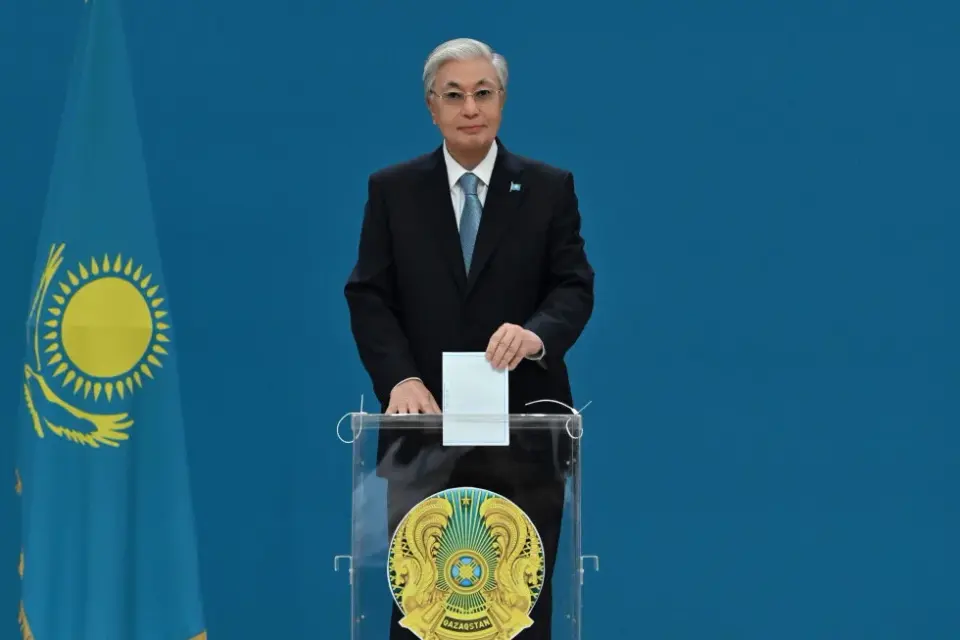
Kazastan held snap parliamentary elections for its new single-chamber legislature, the Kurultai, following constitutional reforms that reset President Tokayev’s term limits. While the pro-presidential Adilet party is expected to dominate, independent journalists report intensified repression, including criminal cases against critics, raising questions about the democratic nature of the vote.
Key points
- Voting took place on Sunday for 145 seats in the newly established Kurultai, replacing the previous bicameral system.
- The Adilet party, formed by merging the dominant Amanat party with pro-presidential figures, is expected to win a large majority.
- Independent journalist Lukpan Akhmedyarov faces up to seven years in prison on charges of 'disseminating false information' for listing citizens fighting in Ukraine.
- International observers from the OSCE Parliamentary Assembly, including nearly 80 parliamentarians from 30 countries, are monitoring the vote.
- The election follows constitutional changes that allow Tokayev to run for a third seven-year term, despite a new single-term limit.
Background
This election follows a referendum in 2022 and constitutional changes effective July 2026 that shifted Kazakhstan from a dual-chamber to a single-chamber legislature. Previous coverage of regional political trends, such as the banning of opposition parties in Russia, highlights a broader pattern of consolidating power in Central Asian and post-Soviet states. Kazakhstan’s GDP grew by 6.5% in 2025, but inflation and tax rises have impacted living standards, creating a backdrop of economic tension for the vote.
How outlets are covering it
AP News emphasizes the crackdown on dissent, citing journalist Lukpan Akhmedyarov’s criminal case and the ubiquity of Adilet party posters as signs of authoritarian consolidation. Al Jazeera focuses on the structural changes, noting that while the Adilet party is expected to win, analysts like Rustam Burnashev argue the parliament will not be transformative and that all candidates are known to the state. Al Jazeera also highlights Kazakhstan’s geopolitical positioning as a 'middle power' balancing ties with China, the EU, and the US, whereas AP focuses on domestic repression. Both sources agree that the outcome is predictable, but AP frames it through the lens of media suppression, while Al Jazeera frames it through the lens of constitutional reform and economic policy.
Why it matters
The election determines the composition of Kazakhstan’s new legislative body, which will shape the country’s foreign policy and domestic reforms. The outcome signals whether Tokayev’s 'New Kazakhstan' reforms will lead to genuine political pluralism or further consolidation of power, with implications for regional stability and Kazakhstan’s role as a neutral mediator in global conflicts.
What to watch
Results are expected to confirm Adilet’s dominance, with smaller parties likely entering parliament but lacking independent influence. The international observer mission will issue a report on the election’s fairness. Tokayev’s ability to run for a third term will be tested in future presidential elections, while the government faces pressure to address inflation and living standards.
- Kazakhstan votes in a parliamentary election expected to strengthen president’s grip on power AP News
- Kazakhs begin voting in election set to tighten president's power Reuters
- Kazakhstan's future after the elections: Russia, EU or China DW
- Kazakhstan parliamentary elections begin: What’s at stake? Al Jazeera
- Kazakhstan prepares to vote in a cosmetic election The Economist
Want the full story? Read the original reporting
Read on AP News