
Russia’s 2026 Duma Vote Tests Wartime Legitimacy Amid Economic Strain
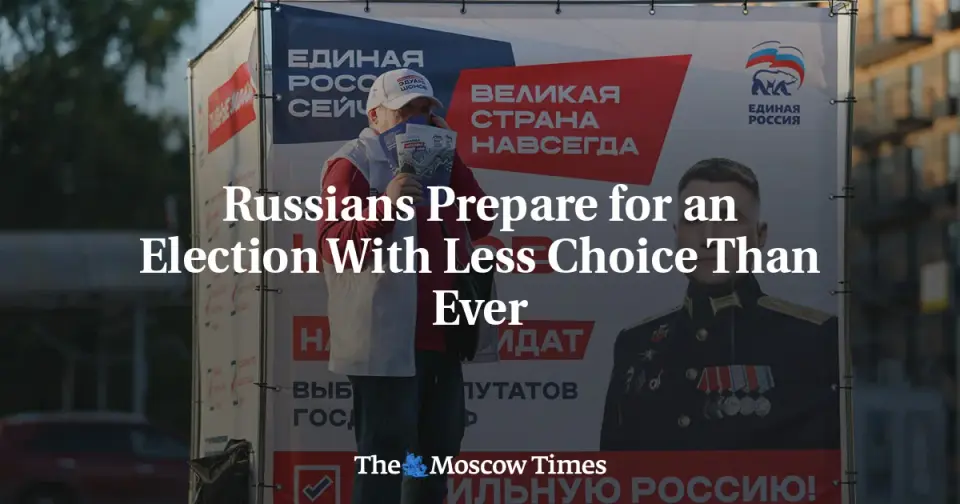
Russia holds its first parliamentary elections since the 2022 invasion of Ukraine, with the ruling United Russia party expected to dominate despite plummeting public support. The vote, held Sept. 18-20, features severely restricted opposition, including the disqualification of the anti-war Yabloko party, and is viewed by analysts as a critical gauge of domestic discontent over the war’s economic costs.
Key points
- Voting takes place Sept. 18-20 across 11 time zones, including four occupied Ukrainian regions, with 33 regions offering electronic voting.
- United Russia, currently holding 321 of 450 seats, is expected to win a majority, though its approval rating has hit a four-year low of 32%.
- The anti-war Yabloko party was barred from the nationwide party-list vote by the Supreme Court, leaving no registered opposition party on the ballot.
- At least 36 opposition candidates were disqualified, often for minor online posts or links to banned platforms like Facebook and Instagram.
- Independent watchdog Golos was forced to close, and European observers were not invited, raising concerns about vote manipulation.
- 66% of Russians are unaware of the election date, and 28% plan not to vote, citing futility or lack of fairness.
Background
This election follows a decade of tightening political controls in Russia, including the abolition of direct mayoral and gubernatorial elections in many areas and the designation of opposition figures like Alexei Navalny as extremists. The 2026 vote is the first major national contest since the full-scale invasion of Ukraine in 2022, a period marked by increased repression and the closure of independent media outlets like The Moscow Times.
How outlets are covering it
The Moscow Times emphasizes the erosion of democratic competition, noting that the number of registered parties has dropped from 75 to 17, and that even pro-Kremlin parties face internal pressure. CNBC focuses on the economic dimension, highlighting a fuel crisis, rising inflation, and budget deficits as drivers of public discontent, while noting speculation about future military mobilization. The Conversation argues that while the outcome is predetermined, the margin of victory and turnout will reveal the true level of public support, suggesting that low participation may signal deeper societal dissatisfaction. All sources agree that Yabloko’s exclusion is a key indicator of the Kremlin’s desire to eliminate anti-war voices, though they differ on whether this reflects a genuine shift in public opinion or a calculated risk assessment by the authorities.
Why it matters
The 2026 Duma election sets the legislative agenda for the next five years, including the 2030 presidential election. A low turnout or narrow margin for United Russia could signal growing public fatigue with the war and economic hardship, potentially influencing Kremlin policy on mobilization and peace negotiations. The exclusion of opposition parties and the use of electronic voting also raise concerns about the integrity of the vote and the future of political pluralism in Russia.
What to watch
Analysts will closely monitor voter turnout and the final vote share for United Russia, as well as any reports of coercion or fraud. The Kremlin may use the results to justify continued war efforts or, conversely, to signal a need for economic concessions. The fate of the Yabloko party and other opposition figures will also be watched as indicators of the regime’s tolerance for dissent.
- Russians Prepare for an Election With Less Choice Than Ever The Moscow Times
- Russian Offensive Campaign Assessment, September 16, 2026 Institute for the Study of War
- Russia’s sham election is descending into farce The Economist
- Putin braces for election stress test as Russians ‘feel the pain’ of struggling economy cnbc.com
- Putin’s United Russia will win – but vote tally, turnout and level of coercion will tell the real story of Russia’s wartime elections The Conversation
Want the full story? Read the original reporting
Read on The Moscow Times